Mission Point Plumbing arranges plumbing visits across the northern end of the Valley and the foothill communities along its edge. The ground, the housing and the rules change from block to block here. Below is how to read that, with a link to the page for each neighborhood. For the full range of services we arrange, start at the home page, and to begin a job use the quote form.
Which neighborhoods does Mission Point Plumbing cover?
We cover fourteen areas: upper Sylmar and the Hubbard Street terraces, Granada Hills, Porter Ranch, Pacoima, Panorama City, Mission Hills, Arleta, Sun Valley, Tujunga, Sunland, La Crescenta, Reseda, West Hills and Canoga Park. Every neighborhood gets a separate page, built on what is true there and nowhere else.
Requests are welcome from every one of them. For a street near the border of an area, state the neighborhood and cross streets, and the reply will say whether a visit can be arranged. Areas beyond this territory are not listed, and knowledge of every street inside it is not claimed. The pages below hold the detail.
How do the hillside neighborhoods differ from the flat ones?
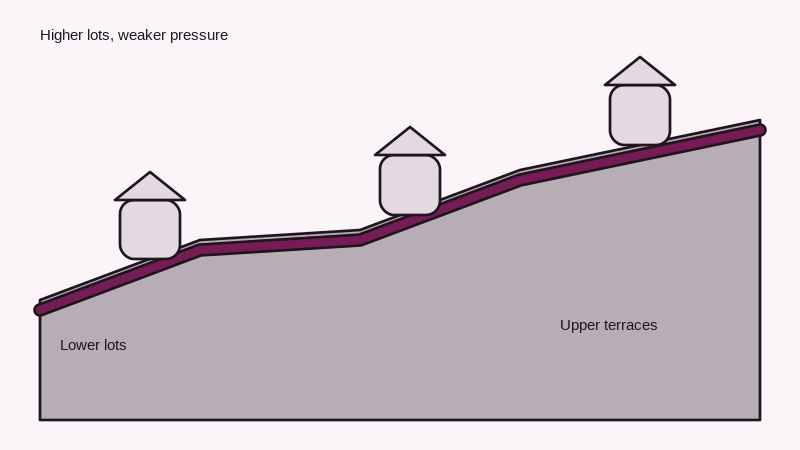
Hillside and foothill neighborhoods raise access, runoff and pressure questions, while the flat valley floor mostly raises the question of age. In the foothills, steps, retaining walls and steep driveways shape how a visit is planned. On the valley floor, access is simple and the main variable is when the house was built.
The hillside group runs along the northern and eastern edges. Upper Sylmar rises from about 1,100 to about 1,700 feet and its homes sit on man-made terraces; read the upper Sylmar and Hubbard Street page for what that means. Granada Hills sits at the foothills of the Santa Susana Mountains, with Mission Point as its high ground. Tujunga lies near 1,500 feet with about 21 inches of rain a year, and Sunland, which began as Monte Vista in 1885, adjoins the equestrian community of Shadow Hills. La Crescenta rises to about 1,540 feet at the edge of the Angeles National Forest.
The flat group is the valley floor: Mission Hills at about 913 feet, West Hills at about 899 feet, plus Reseda, Canoga Park, Panorama City, Arleta and Pacoima. Sun Valley sits at the base of the Verdugo Mountains and is mapped at the end of this page.
What happened in this region that still shapes plumbing?
Earthquakes, floods and a postwar building boom. The 1971 San Fernando earthquake left Sylmar residents without water and gas, the 1994 Northridge earthquake started fires that burned over 70 homes, and the 1934 New Year's flood destroyed more than 400 homes across the La Crescenta area. Each left its mark on how people think about shutoffs and drainage.
The building boom matters just as much. Panorama City was developed in 1948 as the Valley's first planned community, Mission Hills grew fastest in the early 1950s, and Reseda's population jumped from 4,147 in 1940 to over 16,000 by 1950. That is why so many homes in the region are now seventy years old or more, and why original pipe, valves and water heaters are a recurring topic. Porter Ranch is the mix: a small tract from around 1960 to 1963, then large-scale building in the 1990s and 2000s.
If you are choosing what to read first, the pages on earthquake gas shutoff valves and when a house needs repiping apply across the region.
Who provides the water here, and where do permits come from?
For most of these neighborhoods the answer is the city government. The LADWP 2025 report lists Arleta, Canoga Park, Granada Hills, Mission Hills, Pacoima, Panorama City, Porter Ranch, Reseda, Sun Valley, Sunland, Sylmar, Tujunga and West Hills among its San Fernando Valley service areas, and permits are handled by the Department of Building and Safety.
There are two things to watch. La Crescenta sits in unincorporated county territory, outside Los Angeles city limits, and its water is understood to come from the Crescenta Valley Water District, so check your bill. The City of San Fernando, which sits among Sylmar and Pacoima, has its own water department and is not an LADWP area. Your own water bill names the supplier for your address, and we have not checked every street.
LADWP's source water is a blend of Los Angeles Aqueduct water, local groundwater and Metropolitan Water District State Water Project water, and the blend varies. Hardness differs accordingly, so use the utility's annual Drinking Water Quality Report for your own figure instead of a general claim. For city permits the Valley office is LADBS in Van Nuys, at 6262 Van Nuys Boulevard, with weekday-specific hours, so confirm them before you go. A permitted job has to be done by a contractor with a California license.
Does the price depend on the neighborhood?
Not much because of the address alone. What moves a price is the house: its age, the pipe material, the difficulty of reaching the work, the size of the household and any permit requirement. A foothill terrace with steps costs more labor than a flat driveway job, but that is access, not the postal code.
This site shows no dollar figures, because published numbers cannot know your pipe. Have each business put a quote on paper that lists labor, parts, permit and disposal on separate lines, and weigh the scope before the price. What a plumber costs and why walks through the line items, and what a repipe costs and water heater replacement costs cover the two biggest jobs.
Which neighborhood page should I read?
Read the one that matches your address, and then the neighbor if you live on a boundary. The pages are different on purpose: one is about slope and earthquakes, another about renters, another about large households, another about remodels. Pick by the question you have.
For earthquake and slope questions go to upper Sylmar. For old tract homes try Granada Hills, Mission Hills or Reseda. For a rental, Panorama City, Canoga Park and Sun Valley have the largest shares of renters. For household size and water use read Arleta. For newer builds, Porter Ranch and West Hills. For floods and drainage see Pacoima and Sun Valley, and for foothill access try Tujunga, Sunland and La Crescenta.
Which areas are more rented or more owned?
Renters held 64.8 percent of Panorama City's housing at the 2010 census, 63.6 percent in Canoga Park, 48.5 percent in Reseda in 2010 and 46.1 percent in Sun Valley. Granada Hills has 26.4 percent renters, and owners held 87.4 percent of West Hills housing in 2000, 80.4 percent of Arleta and 63.0 percent of occupied homes in La Crescenta.
The figures come from different years and sources, so read them as a pattern, not a count. The practical point is who calls the plumber. In rental-heavy areas, a landlord or manager often approves the work, and the quote form works best with the unit, the symptom and who gives access. In owner-heavy areas, the owner usually decides directly.
What about Sun Valley, and the area's floods?
Sun Valley lies at the base of the Verdugo Mountains and is prone to flash floods. On February 20, 2005, a flood opened a 30-foot-deep sinkhole on the 8000 block of Tujunga Avenue. Sun Valley has covered 9.42 square miles under its current name since 1950, with 46.1 percent renters, so storm drainage and sewers stand out.
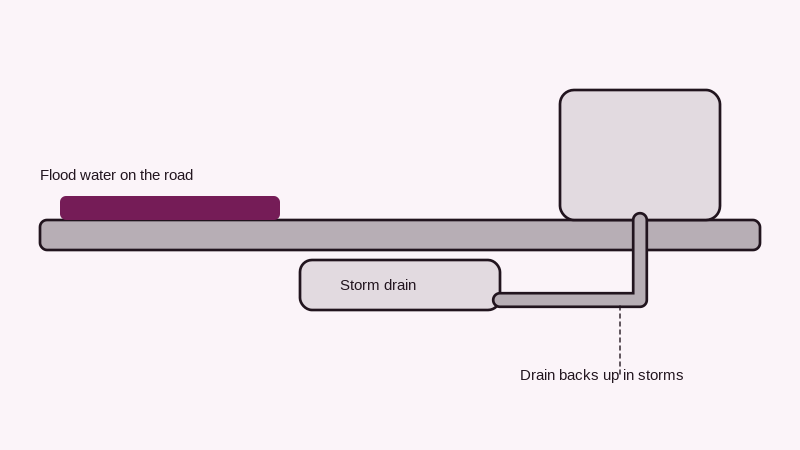
Pacoima has a similar story: it sits between two flood channels, and a 1955 account describes its dirt roads turning into streams in hard rain. If water pools near your foundation after rain, or a drain backs up in a storm, mention it in your request. Whether the fault sits inside the house or farther out is a question the plumber has to answer on site.
How does a request from one of these areas work?
Put your neighborhood, the symptom and the way into the house on the quote form. A nearby plumbing business replies with a written quote, and nothing starts until you accept it. Requests are read Monday to Friday, 9am to 5pm, and nothing on this site runs around the clock.
If water is escaping, close the main valve first, then send the form. If you smell gas, leave the building and contact 911 or your gas utility from outdoors. The rest is on the quote page.
Common questions
Do you cover the whole San Fernando Valley?
No. We cover the north end and the foothills listed above: fourteen neighborhoods, each with its own page. If you are on the border, name your neighborhood and cross streets in the form. We would rather say we cannot help than send a request into an area we have not checked.
Is La Crescenta handled differently from the rest?
Yes. It is unincorporated Los Angeles County, outside Los Angeles city limits, so county rules apply and water is understood to come from the Crescenta Valley Water District. We have not confirmed the permit office, so ask the county. The La Crescenta page goes through what we do know.
Who supplies my water?
Check your bill. Most of these neighborhoods are City of Los Angeles areas served by LADWP, but La Crescenta and the City of San Fernando are not. The bill names the supplier for your address and is the document to trust over any list, including ours.
Is the water here hard?
We cannot quote a hardness number with a year and a source, so we will not. LADWP publishes a yearly Drinking Water Quality Report, and your own utility does the same. Water comes from several sources, so readings can differ by street. Use the measured figure before buying a softener.
Which area has the oldest homes?
That depends on how you count. Mission Hills holds an 1834 adobe, but most houses across the Valley are postwar. Panorama City's original tract homes date from 1948. Age tells you what to look for, not what you will find, so an inspection is the only real answer.
Guides in this section
- Arleta
Plumber in Arleta, where owners live in four out of five homes and households average 4.0 people: water heaters, bills, supply lines and…
- Canoga Park
Plumber in Canoga Park: dense blocks, a renter majority and a town that joined Los Angeles for its water.
- Granada Hills
Plumber for Granada Hills homes: mid-century tracts, foothill lots, owners and renters, LADWP water and LADBS permits, plus how to request…
- La Crescenta
Plumber in La Crescenta: a county area with its own water district, a storm history and foothill lots.
- Mission Hills
Plumber in Mission Hills, from the 1834 adobe to 1950s tract homes: remodels, additions, inspections, permits and how to request a written…
- Pacoima
Plumber in Pacoima: a dense, busy neighborhood between two washes.
- Panorama City
Plumber in Panorama City: the Valley's first planned community, mostly rented.
- Porter Ranch
Plumber for Porter Ranch: a neighborhood of early 1960s homes beside 1990s and 2000s builds, with notes on gas, water, permits and how to…
- Reseda
Plumber in Reseda: postwar boom housing, aging pipe and a near-even split of renters and owners.
- Sun Valley
Plumber in Sun Valley: flood-prone ground, storm drains, renter-heavy blocks and how to request a visit and a written quote from a local…
- Sunland
Plumber in Sunland: large old lots, long pipe runs and the Shadow Hills edge.
- Tujunga
Plumber in Tujunga: foothill streets, steep driveways, winter rain and how to request a visit and a written quote from a local plumber.
- Upper Sylmar
Plumber for upper Sylmar and the Hubbard Street terraces: slope, earthquake gas valves, permits and how to request a written quote for a…
- West Hills
Plumber in West Hills: an owner-heavy neighborhood of 1960s-era subdivisions, upgrades and water heaters.