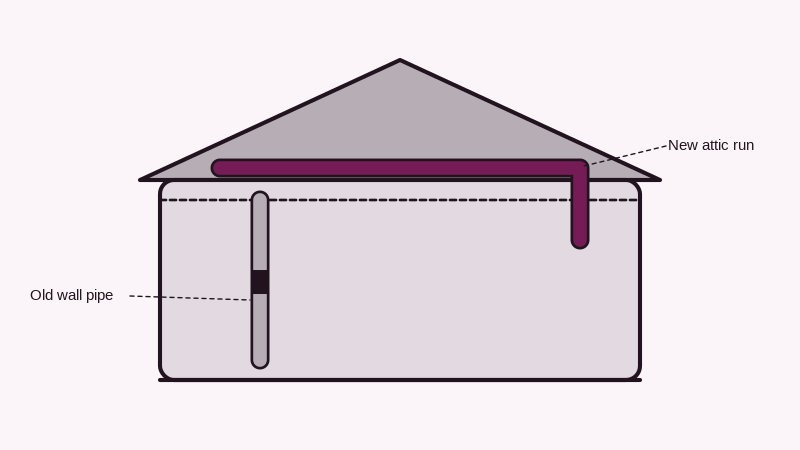
Pick a repipe if the pipe inside your walls is a troublesome material, if new leaks keep surfacing in different places, or if rust has squeezed the lines until the shower only dribbles. The word means the whole supply network behind the drywall, not a single mended joint. Mission Point Plumbing, which describes the service on its front page, sends a local plumber to inspect the house, and the work is laid out on paper before any wall is opened.
Is a repipe worth the money?
Frequently, if the lines are a failure-prone type or you have already paid for a second or third leak. Patching repeatedly inside a failing system tends to cost more over time and leaves water damage risk behind finished walls. One pinhole in sound copper seldom justifies it. The plumber's findings on material, age and leak spots tell you which situation applies.
Many north Valley homes were built between the 1950s and 1970s, when builders favored galvanized steel and copper. Polybutylene, a grey or blue plastic with a poor reputation, shows up in some later builds and remodels. A remodel can leave fresh tubing under the sink while old pipe remains in the wall, so ask for checks at more than one spot.
The EPA estimates that an ordinary household loses over 9,300 gallons of water yearly to leaks. A slow leak closed up inside a wall costs more than water, because it softens framing and drywall well before a stain appears.
A simple test: write down each leak with its date, then note whether the water has gone rusty or weak. Three or four entries point toward a whole-house repipe. One entry with clear water points toward a repair.
Does insurance pay to repipe a house?
Seldom for the pipes. Policies usually respond to sudden, accidental damage, such as a line bursting overnight and flooding a hallway, and exclude corrosion, wear and slow seepage. Few will fund new plumbing simply because the old is aged. Your own contract decides. Read the water damage section and the list of exclusions, or ask the insurer to answer in writing.
Certain policies cover the demolition needed to reach a leak even though the pipe stays your cost. Others cap or exclude it. If water has already harmed the house, photograph everything before cleanup and keep the plumber's written notes, because the stated cause affects how the claim is handled.
Coverage questions fall outside our lane, as this site matches no policy and pays no claims. Gathering a written scope of work for the adjuster is something we can help with.
What should I avoid telling a homeowners insurer?
Leave out theories. Report what you observed: where the water appeared, when you noticed it and how you stopped it. Avoid calling the pipe "worn out" before anyone has inspected it, and let the plumber's report name the cause. Above all, say nothing untrue, since an inaccurate claim can be refused outright.
Helpful habits:
- Give the date and location of the damage, not a guess about the reason.
- Mention that you closed the main valve, and when.
- Record the claim number and who answered.
- Delay accepting any settlement until you know what the repair is scoped to include.
If the insurer denies a claim, request the reasons in writing. Those lines are useful to set beside the plumber's report.
Does homeowners insurance pay for new plumbing pipe?
Typically no. Standard policies treat replacing aging pipe as upkeep. They may pay for ruined floors, walls and belongings after a sudden leak, and sometimes for the demolition exposing the source. At renewal, some insurers add a surcharge to homes plumbed in polybutylene or galvanized steel, or decline them, so ask yours where your material stands.
Some owners discover a pipe-material surcharge or exclusion only when the renewal letter lands. Ask your agent beforehand. Watch for the phrases "water damage," "seepage" and "continuous or repeated leakage" in the policy, as those terms decide many disputed claims. A short written reply from the insurer outweighs a verbal assurance.
What tells me it is time to replumb?
Replumb if the material has a poor record, repairs keep stacking up, or a remodel has opened the walls and the pipe looks rough. Warning signs: brown water, weak flow at several fixtures, repeated pinholes, and green crust where copper joints meet. A single sign deserves a look. Several at once deserve a plan.
A remodel is the least wasteful moment, since drywall is cut and patched only once. Redoing a kitchen or bath in a 1960s house? Have the pipe inspected before tile goes down. The page on plumbing for a bathroom remodel lays out the order of work.
By material:
- Galvanized steel corrodes inward, shrinking flow. See galvanized pipe replacement.
- Polybutylene has a record of letting go at fittings. See polybutylene pipe replacement.
- Copper usually lasts, though pinholes do occur. See fixing a pinhole in copper pipe.
For the reasoning behind each trigger, read why repipe a house alongside how often to repipe.
What is the timeline for repiping an entire home?
Plan on a handful of working days for a modest single-story house, more for a big or two-story one. Speed depends on the pipe type, attic and wall access, how many fixtures there are and whether patching and painting drywall belong in the price. Get a start date and a projected finish written into the bid.
Water will be shut off during the day, so fill some jugs and ask which days will be dry. Some plumbers go room by room so one bathroom stays usable.
In Valley tract houses, new lines can often travel through the attic, which means fewer holes in walls. Slab-on-grade homes cannot easily get at pipes under concrete, so owners sometimes reroute overhead rather than dig. When water is coming up near the floor, slab leak repair or repipe weighs the choice.
Should I repipe the house myself?
An owner can do some work on their own property, but a full repipe is demanding, needs permits and sits next to gas work that California does not allow amateurs to improvise. Errors inside a wall show up later as hidden leaks. Most owners do better by hiring a plumber and keeping their own effort for patching and painting.
State law expects a contractor license when a job passes a set value limit (raised in January 2025), and any job with a permit requires one at every size. A full repipe sits far above that threshold. Permits for Los Angeles addresses come from LADBS, whose Valley office is in Van Nuys. Check with them first, as rules change.
Should a repipe use PEX or copper?
PEX is a bendable plastic tube, quick to install and light on joints. Copper is stiff metal pipe with decades of history. Either one works when installed well, and workmanship matters about as much as material. The PEX versus copper page lays the tradeoffs out side by side for you.
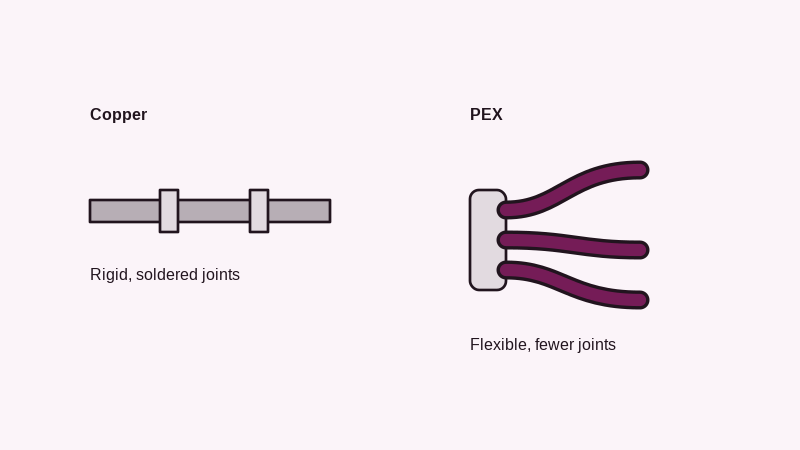
Ask each bidder which material they propose and why. A quote naming the material, pipe diameter and fitting type compares far more easily than one reading only "repipe."
What belongs in a repipe bid?
Check for pipe type and diameter, the fixtures and walls included, who applies for the permit, who repairs drywall and paints, and the schedule. Exclusions belong on the page as well. Lacking these lines, two bids cannot be compared fairly.
What lifts one bid above another is explained in repipe house cost and how to repipe a house. When you want to proceed, send the quote form and a plumber nearby is lined up to view the house.
Common questions
What would repiping a 2000 sq ft house run?
No figures are given here. The end price shifts with pipe material, bathroom and fixture count, whether new lines rise through the attic or cross the walls, and how much wall patching is included. The only trustworthy price is one the plumber puts on paper after walking your house, with pipe, labor, permit and repair listed separately.
What would repiping a 1500 sq ft house run?
Square footage is a poor guide. A 1500 sq ft house with three bathrooms can cost more to repipe than a 2000 sq ft house with one bath. Fixture count, access and finishes make the difference. Collect two or three bids for the same scope and compare them item by item instead of by total.
Is there a plumbing "135 rule"?
No official source checked defines a plumbing rule under that name, and none will be invented here. If a contractor or website cites it, ask which code or standard prints it. Genuine requirements live in the state plumbing code and city amendments, not in rules of thumb circulating online.
Which three kinds of plumbing systems exist?
A common breakdown names three: supply lines delivering clean water, drain and vent lines taking used water away, and gas lines serving appliances. Repiping normally means the supply side, the in-wall lines feeding every tap. Gas piping is regulated work, reserved by law for contractors.
Can I legally do my own plumbing?
Sometimes, on your own home, but permits and inspections still apply, and gas piping or large water-line work goes to a contractor. For a Los Angeles address, learn from LADBS which permit applies before starting, and keep receipts and inspection sign-offs for the day you sell the house.
Guides in this section
- Galvanized pipe replacement
Galvanized pipes rust from the inside. Learn the signs, how a replacement works, whether a permit applies, and how to ask a Sylmar plumber…
- Repiping and pipe replacement
Houses have no repipe schedule. Pipe material, water, leaks and past repairs decide when it is time, and this page lists the signs that…
- Repiping and pipe replacement
How a whole-home repipe runs from the first walk-through to the final test, including PEX, slab homes and what to expect in a Sylmar house…
- Repiping and pipe replacement
PEX or copper for repiping a Sylmar home: flow, lifespan, cold weather, mess and cost drivers compared in plain words, with how to get a…
- Repiping
Polybutylene pipe in a Sylmar house: how to spot it, why it fails, what replacing it involves, how to pick the new pipe and what a written…
- Costs
What drives the cost to repipe a house in Sylmar: size, fixtures, pipe material, access and walls.
- Repiping and pipe replacement
Why owners in Sylmar and the north Valley repipe: pinhole leaks, rusty water, weak pressure and old pipe types, and how to decide between…