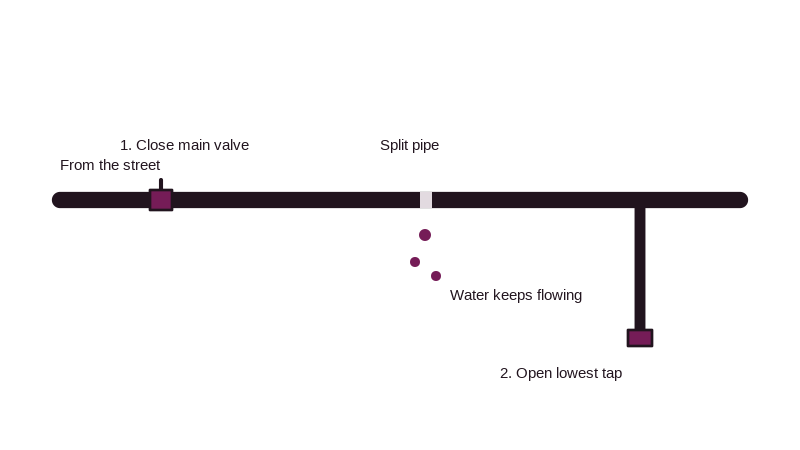
A split pipe is a plumber's repair, full stop. Tape and putty only buy minutes. What you control is how much water reaches the walls before work begins, and that comes down to one valve and a few open faucets. Read what follows in the order a flooded morning unfolds: stop the flow, keep the electrics safe, take pictures, then submit the form. If you are only browsing, the Mission Point Plumbing home page shows how requests are handled across the north Valley.
Is a burst pipe a do-it-yourself repair?
No, it is plumber's work. A pipe that has split along a seam, slipped off a fitting or rotted through inside a wall has to be cut, re-piped and pressure tested. Your part is small but urgent: shut the house main, empty the pipework through the faucets and keep power off in wet rooms. Then complete the form, which passes the job on to a plumbing business close to you.
Locate the main valve today. Tract houses built across the Valley from the 1950s to the 1970s usually have it near the hose connection out front, or under the lid of the curbside meter box. Old brass seizes after decades untouched, so give yours a quarter turn each spring; a plumber can swap a stubborn one during the same visit.
Once it is shut, open your lowest tap, then your highest, and flush each toilet once. That drops the pressure forcing water through the break. Leave the hot taps alone while the heater has no supply behind it.
Wet wiring is a separate hazard. If water has reached a socket, a floor lamp or the panel, back away and call 911. If the floor by the breaker box is bone dry, you can switch off the affected circuits.
Photograph before you mop: the split, the stained ceiling, damp flooring, ruined belongings. Pictures carry weight in a claim, and the page on what insurers expect after a burst covers the paperwork side.
What does the repair actually involve?
Most repairs fall into three buckets: the damaged stretch is cut out and replaced, a failed joint gets a new fitting, or enough of the line is tired that replacing a longer run makes sense. A decent plumber tells you which bucket you are in, and why, before a single tool comes out. The scope goes on the quote.
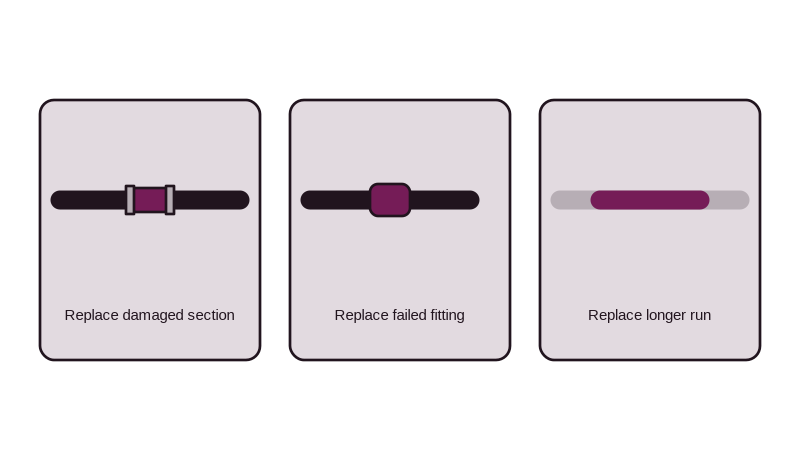
Pipe material steers the decision. Mid-century copper can pinhole and later split lengthwise. Galvanized steel corrodes inwards and fails in several spots at once, so a plumber may raise whole-house repiping instead of another patch. Plastic systems usually fail at crimped or glued connections rather than mid-pipe.
When the break is hidden, finding it comes first. Leak detection work uses acoustic gear and pressure testing so a small opening in the wall or floor replaces a big one. If the line runs through concrete, the process differs; see slab leaks, found and fixed.
The pipe is only half the story. Soaked carpet, baseboards and insulation have to dry fast, because mold can begin inside a few days. Plumbers stop water; drying companies dry buildings. Check which one the quote actually covers.
Can a pipe still burst after the water is shut off?
Yes, but the damage is small. The main stops fresh water arriving, yet the pipes and the heater still hold a lot, and a split line keeps emptying into your house until you open the taps. A thawing freeze can also expose a crack only when pressure comes back.
Reopen the main slowly, with taps still open, and watch ceilings and walls for ten minutes before closing them. Water surging through a damaged section is how a quiet crack becomes a second flood.
One more thing about the heater: if the shutoff left the tank drained, switch off its gas control or breaker so the burner or heating elements are not left firing on an empty tank. Corrosion, pressure, cold and shifting ground are the common triggers, covered under why pipes burst.
Who ends up paying for a burst pipe?
Homeowners pay for plumbing inside the walls and up to the meter. If you rent, email or write the landlord the same day, pictures attached. Shared risers and hallway lines in an apartment block are the owner's problem; your furniture and clothes sit under a renter's policy, assuming you bought one.
The buried line from the street to your house is the unclear part. LADWP supplies most City of Los Angeles neighborhoods in the north Valley, but your bill and the utility's own pages show where its piping ends and yours begins. If water bubbles up in the yard, report it to the utility and ask the question directly.
Insurance usually responds to sudden, accidental discharge and cools quickly on slow seepage. The policy wording decides that, so read yours before assuming either way.
Winter, bathrooms, rentals and sprinklers: how do bursts differ?
Freezing is rare on the valley floor, though clear nights can chill foothill pockets of Sunland, Tujunga and upper Sylmar. Attic runs, exterior-wall lines and spigots are where it bites. No single temperature triggers a split; insulation, wind and how long the cold lasts all matter.
Indoors, bathrooms usually trace back to a toilet or vanity supply line, or the shower valve. Try the little stop under the vanity or behind the toilet first. If it weeps on, go back to the main. On an upper floor, water will fall into the apartment beneath, so alert the neighbor.
Houses here seldom have basements, so water settles in the crawl space, garage floor or under the slab. Sprinkler lines are a separate system: find the valve box, shut that zone, and if the break is ahead of the zone valves, the house main has to go off.
How do you send a request for a burst pipe?
Give the form your address, what burst, where the water is pooling and whether you got the main shut. A plumbing business that works your part of the Valley takes it from there. Office hours for the form are 9am to 5pm, weekdays only. Nothing moves overnight through this site, so if the flow will not stop, your water utility or 911 comes before the form.
Keep a few details ready: the pipe material if known, a photo, how to reach you, and anything about gas, power or vulnerable people in the house. Mention a rental if it is one. The request a quote page holds the form, and what happens once you submit is explained under how a job runs.
Unsure whether you have a burst or only a seep? Run through how to tell a burst from a seep and the shorter burst water pipe page. Even a slow drip counts: according to the EPA, a typical household quietly loses more than 9,300 gallons a year to leaks.
Common questions
How much of my day will the repair take?
A simple split in a reachable pipe is generally done within half a day. Cutting a wall, breaking concrete or running new pipe may push it into a second day. Find out whether the first trip merely stops the water, with the real repair booked later.
What should a quote show before I say yes?
Look for the scope, the parts, and whether any wall or floor will be opened. Ask who handles the permit paperwork, if one is needed. California limits bigger jobs, and any job under permit, to contractors who hold a license from the state; you can search a number on the contractors board site.
Should an adult be home?
Preferably, to show where the main valve, the damage and the heater are. A neighbor or building manager can stand in once the plumber knows who is coming. Renting? Warn the landlord first, since shared pipes may need the owner's say-so.