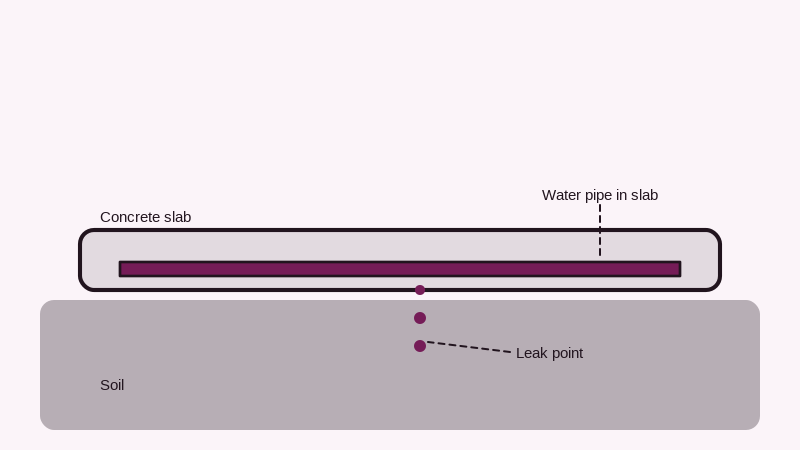
A supply pipe leaking under a concrete slab leaves three paths: fix the failed spot, coat the pipe's interior with epoxy, or repipe, which usually means new supply lines overhead and inside walls rather than beneath the floor. A lone leak in sound pipe suits repair; pipe failing in several places suits repiping. Start at Mission Point Plumbing or send details with the quote form.
What are the signs of water escaping under the slab?
Watch for a bill that climbs without cause, water noise while every fixture is idle, floor patches that feel warm, damp or buckling flooring, and a meter that turns with every tap shut. Each sign warrants a test, though none proves a leak alone.
Begin with the meter. Switch off all fixtures and appliances, then look at the low-flow indicator or dial on the street meter; any motion shows water getting out. Then close the house main and check once more. A meter that halts puts the fault inside the house plumbing; one that still moves points to the buried run between meter and house, a separate repair.
Warm spots matter because slab homes often route hot lines through or beneath the concrete. A leaking hot line heats the floor above it, which bare feet can feel. Cold lines leak too but are harder to find by touch.
Sylmar and neighboring areas have many 1950s to 1970s tract houses, plenty built on slabs. Copper under concrete of those decades can pinhole where soil and moisture meet it. Other homes have been replumbed in other materials since, so a house's age does not tell you what runs underground. The EPA estimates that an average household wastes more than 9,300 gallons yearly through leaks, and a slab leak never takes a break, so act on any suspicion.
Spot repair, epoxy lining or repipe: which fits?
There are three approaches. Spot repair means locating the leak, opening the slab above it and swapping that length of pipe. Epoxy lining brushes a resin coat into the existing pipe. Repiping installs new supply lines, often overhead, and leaves the old ones behind. Each fits a different pipe condition.
Spot repair (cutting the slab). A leak detection technician pins down the spot, a crew breaks out a section of concrete, swaps the failed length and patches the floor. It suits one leak in otherwise healthy pipe. Expect a patch in your flooring, dust, and the chance of another pinhole nearby next year.
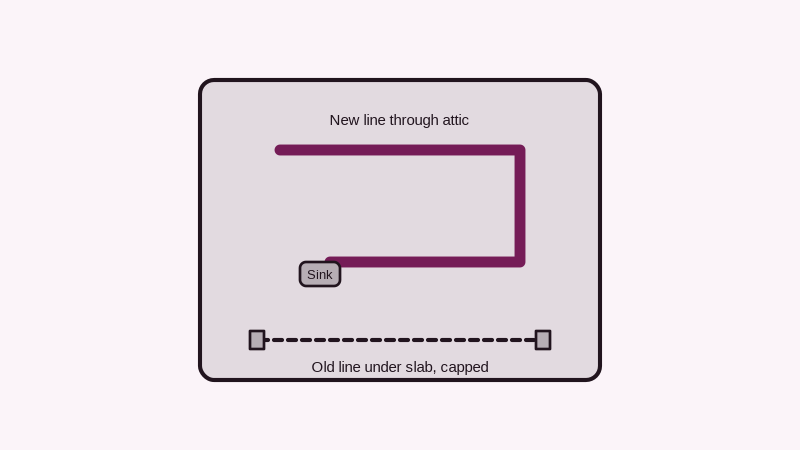
Rerouting. Rather than dig the slab, a plumber caps off the failing line, then runs a replacement overhead, through attic space or wall cavities, to that fixture. No concrete gets broken. It works when one line has leaked and the layout lets you reach the fixture another way.
Epoxy lining. The pipe is cleaned and given an interior coating, leaving the floor closed. Plumbers who offer it describe it as suited to pipe sound enough to hold the coating. Ask what the plumber has seen go wrong in your kind of pipe, whether the lining cuts flow, how it affects fittings and whether its warranty is in writing. We do not give a verdict on it for your house.
Repipe. New pipe, most often PEX or copper, replaces the old lines throughout. For a head-to-head look at the materials, read PEX versus copper; the repiping process takes you through the steps.
In which cases does repiping win over repairing?
Repiping wins when the pipe is failing throughout rather than at one point: a second leak within a year or two, pitted or green copper, a pipe type with a failure record, or a plan to open floors and walls regardless. For a single event in healthy pipe, a spot repair is usually the wiser spend.
Tally the leaks. A single one in a house with no history is bad luck; two or three slab leaks within a few years form a pattern, and each repair breaks another piece of floor. Have removed pieces of pipe shown to you by the plumber. Thin, pitted or scaled metal is easy to point out.
Pipe type shifts the answer. Polybutylene plumbing, put into many American houses from about 1978 to 1997, is known for leaks and bursts that led to major lawsuits, so replacing the whole system is the lasting answer. Details are in replacing polybutylene pipe. Galvanized steel rusts from the inside and chokes flow; swapping out galvanized pipe explains how that goes.
Weigh the bigger project too. When a kitchen or bath is being remodeled, or walls stand open for another reason, the cost gap between repair and repipe shrinks. Further triggers are listed under why repipe a house, and the right age to repipe deals with age.
Who does slab leak work, and what should a quote spell out?
The job belongs with a contractor holding the proper California license, usually following a detection visit. Insist on a written quote ahead of any start. It should name the method (spot repair, reroute, lining or repipe), the pipe material, where floors or walls will be opened, who patches them, how permits are handled and the payment schedule.
A contractor license is required in California whenever a job exceeds the small-job dollar threshold, and a job needing a permit requires one at any size. A license number and its standing can be looked up through the Contractors State License Board. Deposits are capped by law, generally the lower of a fixed ceiling and ten percent of the contract total, so be suspicious of a request to pay most of it up front.
For a house inside the City of Los Angeles, ask whether the Los Angeles Department of Building and Safety requires a permit and which party obtains it. The same question applies to gas line or water heater work done along the way. We cannot state the rules at your address.
Ask for plain-word line items so the quote reads clearly:
- the leak detection visit and what it found, with the location marked on a sketch
- the repair or repipe method and the pipe being installed
- what happens to flooring, baseboards, drywall and paint
- water shutoff time, so you know how long you are without water
- cleanup and haul-away of concrete and old pipe
- the written warranty terms, if the plumber offers one
With two quotes in hand, compare method first and price second; a cheap spot repair and a higher repipe are not the same product. To line them up, use the guide to what a slab leak repair costs plus the one on how slab leaks are located and mended; for questions to put to a company, see how to choose a slab leak company.
Will insurance step in for a slab leak?
Sometimes. Many homeowner policies cover sudden damage from a leak, like ruined flooring, and some also pay to reach the pipe. Few cover the pipe itself. Policies differ widely, so read the water damage clause, or put the question to the insurer before any work begins, and photograph the damage first.
Report the leak promptly and keep every invoice, the detection visit included. Questions worth putting to an insurer are listed in burst pipe insurance coverage. This site sells no insurance, so only the insurer can say what your policy includes.
What should you do while waiting for the plumber?
Shut the main water valve if water shows or the meter is running, and keep it shut apart from moments when you need water. Raise valuables off the floor, and open windows if the flooring is wet. Never drill or cut the slab yourself; gas lines and electrical conduit may run close by, and a wrong cut is dangerous.
Note the meter reading and time, close the main, and read the meter again an hour later. That result shows the plumber if the loss is inside the house or out toward the street. Photograph wet or warm patches. If a floor is hot and the water heater burns gas, check for a gas smell; if you notice any, leave the building and contact 911 or your gas utility from outside.
Common questions
Can the slab be left intact?
Sometimes. Running a replacement line overhead, or lining the pipe with epoxy, keeps any slab opening small, although both depend on pipe condition and layout. Lining may suit a short leak in sound pipe, while a system on its way out calls for new pipe. Have the plumber say why a given method fits your pipe.
How does repiping a slab house work?
New supply lines typically go in above, via the attic space and wall cavities, and the old under-slab pipes are abandoned in place, so the floor stays intact. Typically the new pipe is PEX or copper. The best approach depends on layout, access and your plans for the walls. A written plan should show the route, the openings and who restores drywall.
How many days should I expect it to take?
A spot repair often takes a day or two, locating the leak and patching the floor included. Rerouting or repiping takes longer because many fixtures need reconnecting, and epoxy lining has to cure. Part of that time you will have no water. Ask for the water-off schedule and an estimate for the drywall and flooring repairs afterward.
Is epoxy lining permanent?
No one can promise that for your house. The lining is a coat applied to existing pipe, and its lifespan depends on the pipe, the cleaning and the installation. Ask the plumber for the warranty in writing, what it excludes, and what they would do if the pipe leaks elsewhere. Where corrosion is severe, replacement may be the honest advice.
How can I tell whether it is the street line?
Close the house main and watch the meter. If the dial keeps turning, the leak lies between meter and house, a different repair that often needs a different kind of plumber. If it halts, the fault sits in the plumbing inside the house. Photograph the reading and tell the plumber what you saw.
Ready to go ahead? Describe the problem in the quote form; it is forwarded to a nearby plumbing business, which arranges to look at the job.