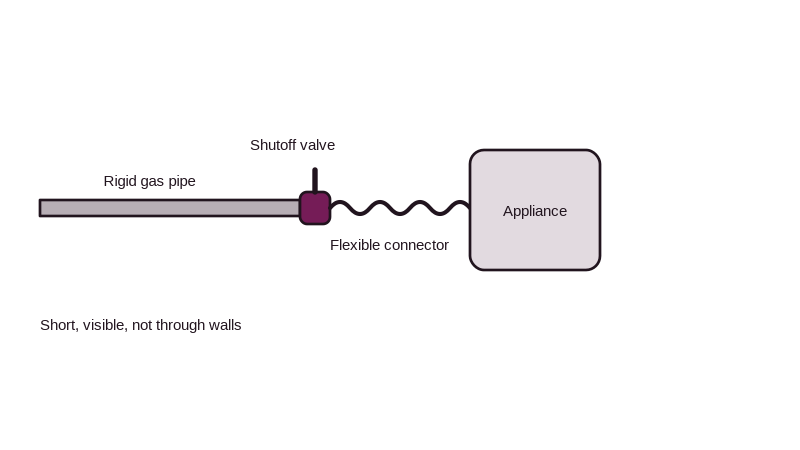
A bendable metal connector with a fitting at each end joins fixed gas piping to a range, dryer, water heater or similar appliance. The half inch figure is nominal; the gas actually delivered depends on length, supply pressure and the appliance. Gas piping is regulated in California, so this page is background on the part only. When you want a plumber arranged, the front page and the quote form are the way in.
Where does a half inch flexible gas connector get used?
Appliance connectors are brief corrugated metal lengths with threaded ends, made for equipment that must move a little or slide out for cleaning. Half inch is the nominal size. The piece ties a shutoff valve on the rigid pipe to the appliance inlet, and it can never stand in for the supply pipe.
Common spots:
- Ranges and cooktops. The connector allows the range to be pulled forward.
- Dryers. Same logic, with a shutoff valve behind the machine.
- Water heaters. A flexible connector runs from the heater's gas inlet to the supply, following the maker's instructions.
- Outdoor equipment. Barbecues and fire features have connector rules of their own.
What it must never do: pass through a wall, floor or ceiling, or act as a long supply run. Connectors have length limits and must stay visible and reachable. Those limits come from the manufacturer and local code, and none are quoted here. Whether a connector suits an appliance depends on the appliance's gas input, so read its data plate. Throw out any connector with kinks, corrosion or age, and never reuse an old one when an appliance is moved.
Smelling gas is an emergency, so get out first. Once outdoors, use the emergency number printed on your gas bill, or 911 if someone is in danger. SoCalGas serves most of Los Angeles and the Valley wherever a gas main runs under the street.
What about gas piping for a mobile home?
Gas piping for a mobile home is regulated too, and manufactured-home rules can differ from those for site-built houses. Requirements are unverified on this page, so assume nothing. The work goes to a contractor with the right California license, and the office that issues the permit depends on where the home is located.
Topics to raise with the business:
- Whether the home sits in a park or on private land, since that decides who inspects.
- The pipe material under the home, plus how it is protected and supported.
- Whether the home connection uses a listed connector.
- How earthquake and shutoff considerations apply.
The gas line cost page itemizes what a gas quote should contain, while water heater pages such as gas tankless water heater installation show how the gas side of a heater job is handled.
Are outdoor gas lines covered by code?
Yes. A line run outside, for example to a barbecue, pool heater or generator, falls under building and fuel gas rules on material, protection, support and testing. Specifics for the City of Los Angeles are unverified on this page, so put the question to LADBS and the business doing the work. Never guess.
Worth asking:
- Which pipe material goes outdoors, and what shields it from weather and damage?
- Is a permit required, and who applies for it?
- Where is the shutoff valve, and can you reach it?
- Will the line be pressure tested and inspected?
LADBS operates a Van Nuys office at 6262 Van Nuys Boulevard, 2nd Floor, Room 251, and hours vary by day, so check before heading over. Gas piping, and any job that requires a permit, is contractor work under California's licensing rules.
How deep must a home gas line be buried?
Depth depends on the pipe material, the route and the governing code. No City of Los Angeles figure has been verified here, so none appears. Ask the contractor which code section applies and how the line will be inspected before it is covered. Backfill should wait for that check.
Good to know:
- The code sets underground depth, and it can differ for plastic versus steel and beneath driveways.
- Utility-owned lines upstream of the meter are the utility's concern. A line beyond the meter generally belongs to the owner, though that should be confirmed.
- Digging near gas lines is dangerous. Have buried utilities located and marked before any dig, and ask the contractor how that gets arranged.
- Inspection of a buried line before backfill is normally part of the permit process.
Not sure who owns a line? Ask SoCalGas, if your street is on its network, or the contractor.
Which pipe materials are used for natural gas?
Rigid black iron steel pipe has long been the indoor standard. Many newer jobs use corrugated stainless steel tubing, sold as flexible gas line. Copper and some plastics appear in certain places, while buried gas pipe is often plastic or coated steel. What is permitted depends on the code and the setup.
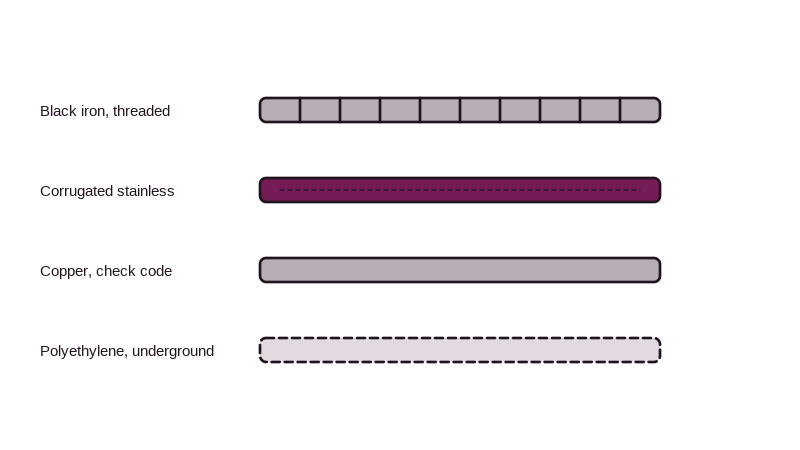
A comparison of the types:
- Black iron (steel). Threaded joints. Typical of houses from the 1950s to 1970s, with fittings that need sealing and testing.
- Corrugated stainless steel tubing. Flexible and quicker to run, which suits long distances. Manufacturers require particular fittings and often bonding, and installers need training on it.
- Copper. Permitted for gas in some places and prohibited in others. Read the local code.
- Polyethylene. Gas utilities bury it, and some installations use it.
- Appliance connectors. Short flexible pieces right at the appliance, never for long runs.
The safest course is to let the plumber pick the material under the code, and to ask what went into your job. Not every code detail was checked for this page, so put the question to LADBS or the business doing the work. How gas jobs get quoted is explained in gas line cost.
How do earthquake shutoff valves tie into gas lines?
Los Angeles building code calls for an approved seismic or excess-flow gas shutoff valve in particular cases: new buildings, some larger alterations, gas meter replacement and when a building is sold. Exact triggers can change, so confirm them against the current code and LADBS before relying on any summary.
In the 1971 San Fernando earthquake Sylmar residents lost both water and gas, and Wikipedia adds that fires from the 1994 Northridge earthquake burned down more than 70 homes. Those events show why gas shutoff matters locally. The earthquake gas shutoff valve page describes the valve and what to ask. It applies to City of Los Angeles addresses; La Crescenta, which is unincorporated county, and the City of San Fernando were not checked.
Which gas jobs need a plumber?
Bring one in for a new line, a moved appliance, an extended run, a hardwired connection, a meter change, a gas smell or any pipe inside a wall. Swapping a flexible connector on a cold appliance can look easy, but a leak is a serious hazard, so most owners leave it to a contractor.
CSLB says jobs above a set labor-and-materials value generally need a contractor license, and any job requiring a permit always does; its site lists the current threshold. Because gas piping is regulated, no do-it-yourself steps appear here. Use this page to ask for a written quote naming the pipe, connectors, valve, permit, test and inspection.
Start by entering your address, the appliance involved and the work you want in the quote form. Mission Point Plumbing passes the request to a nearby plumbing business, and that business writes back to you. This site shows no prices, and requests get read on weekdays from 9am to 5pm. Smell gas? Skip the form, leave the building and use the gas utility's emergency line from outdoors.
Common questions
Can a flexible gas connector serve as a new gas line?
No. A flexible connector is only the short last link to an appliance and never a supply line, and both the manufacturer and the code restrict its length and routing. New or extended gas piping needs a contractor with a California license, normally along with a permit and an inspection.
What is the maximum length of a 1/2 inch flexible connector?
No figure is given because the limit depends on the connector's listing, the code and the appliance. Check the manufacturer's directions together with the code, or put the question to the plumber. Keep any connector as short as practical, in plain view and clear of walls.
Will a half inch gas line supply a tankless water heater?
Often not. A tankless unit can draw more gas than a half inch line can deliver over a long run, which means the plumber has to size the line against the unit's input rating. For what that involves, see gas tankless water heater installation.
Does swapping a gas connector need a permit?
Whether a like-for-like swap needs a permit in the City of Los Angeles is unverified here, so ask LADBS and the business. New or altered gas piping usually does need one. Whoever does the work should settle permit questions before the job starts and write the answer into the quote.
What should I do about a gas smell near a flexible connector?
Get out of the building straight away, stay clear of switches and anything that could spark, and once outside use the gas utility's emergency number, or 911 if anyone is at risk. Do not tighten or replace the connector yourself. Wait for the utility to declare it safe, and keep everyone away until then.