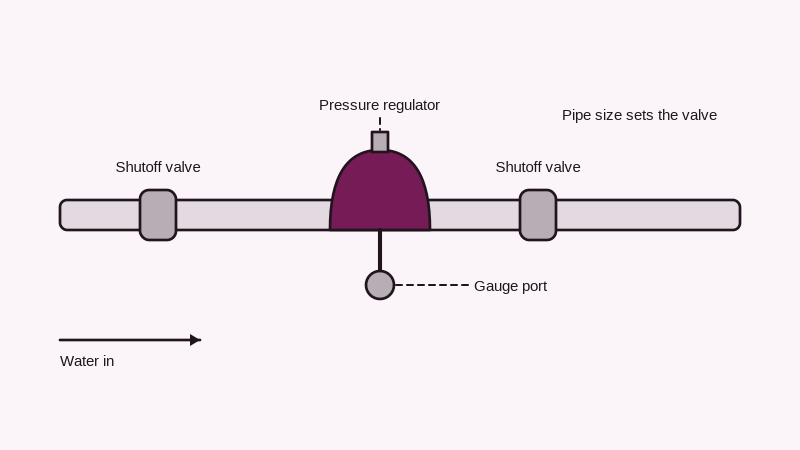
The biggest share of a regulator's cost is the plumber's time and the access, while the valve itself is the smaller part. This site lists no dollar amounts, because the true number belongs on a written quote for your own house. What follows breaks down what goes into that quote. For the wider topic of weak or harsh flow, see water pressure and valves.
What goes into the price of replacing a regulator?
Expect four components in a swap quote: the valve with its fittings, the labor, extra pipe work needed to seat the new body, and permit or disposal items. On a plain swap the valve is the smaller piece. Labor and the condition of the nearby pipe usually decide the final figure.
Divide the job like this:
- The valve. Regulators differ in size, brand and body style. A bigger pipe needs a bigger valve, and certain models include a port for a gauge, or a union end, which eases the next replacement.
- Labor. Water off, old valve out, new valve in, pressure set, system checked. Swapping in the same spot is quicker than a new install somewhere else.
- Fittings and extras. Unions, shutoff valves, a gauge, and at times a short piece of new pipe if the old connections will not seal.
- Permit and cleanup. Where a job needs a permit, check whether the quote includes it and who submits the paperwork.
If you have not yet confirmed that a regulator is at fault, start with where the regulator sits.
Why is a first installation dearer than a replacement?
When a regulator is already in place, the plumber can usually reuse its location and the main pipe connections, so the job is mostly a valve exchange. A first install means cutting into the line, adding fittings, finding a spot with enough room and sometimes adding a second shutoff. The extra planning and pipework raises the quote.
What has to happen for a first install:
- Cut into the supply line near its point of entry to the home.
- Add unions or fittings on both sides of the new body.
- Fit a gauge port or gauge, which helps whoever services it next.
- Test and set the outlet pressure, then restore the water.
Houses built from the 1950s to the 1970s in the north Valley may have older copper or galvanized pipe at the entry. Corroded pipe where the regulator must connect can turn a swap into replacing a section, so ask the plumber for photos of whatever turns up before work starts.
Which factors make a quote rise or fall?
Four things shift the figure most: pipe size, access to the main line, the state of existing pipe and your choice of valve. A larger line, a regulator buried in a wall or crawlspace, corroded fittings and a premium brand all add time or material. A simple swap in the garage or near the front hose bib riser costs less.
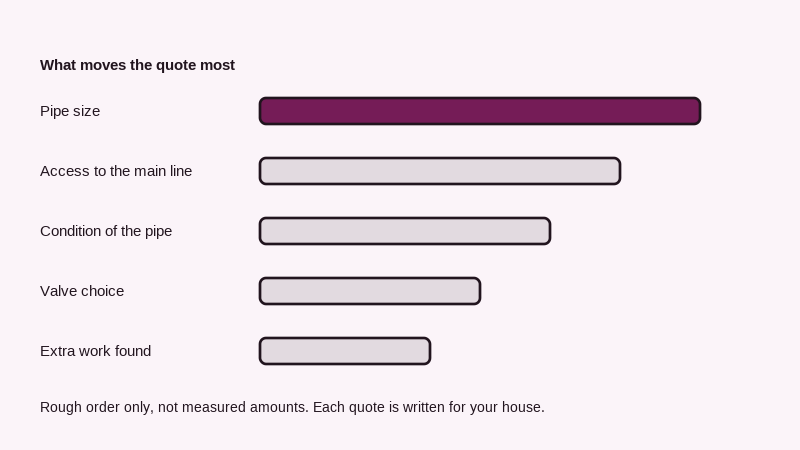
Factors, roughly in order of influence:
- Pipe size. Houses commonly have three quarters of an inch or one inch. Our pages on a 3/4 pressure regulator and a 1 inch regulator describe what each suits.
- Location. Beside the meter box, within the garage, in a crawlspace, behind a finished wall or in a vault. On hillside lots in upper Sylmar, the run from the street can be long and steep.
- Pipe condition. Corroded or brittle pipe at the connection can mean extra repair.
- Valve choice. A plain valve and a model offering a gauge port, a union or better materials carry different prices.
- Extra work found. While on site, many plumbers also glance at the thermal expansion tank, a shutoff valve that sticks and the heater's pressure relief valve.
Could a regulator save me money?
It can save water and wear if house pressure is running too high. Too much pressure strains faucets, supply lines, the heater and appliance valves, so a correct setting may extend their life. It will not cure a clogged pipe or a weak municipal supply, so measure first and buy afterward.
A gauge screwed to an outdoor spigot gives you the figure in about a minute. Read it early in the morning or late at night, when no one is using water, because pressure varies through the day. A high reading is your cue to ask the plumber which range the manufacturer advises and how it will be set. A low reading suggests the regulator may not be at fault: see sudden low pressure for other causes.
Banging pipes, a toilet tank that tops itself up, a dripping relief valve at the heater and pressure that climbs overnight all hint at a failing regulator. See also water hammer and hot water pressure regulators.
What belongs on a regulator quote, line by line?
A quote worth having names the valve brand and size, the pressure the plumber will set, the fittings and gauge included, whether it covers a permit and who handles it, and when payment is due. Anything vaguer is impossible to compare with another.
Ask each plumber to write down:
- Valve brand, model and pipe size
- Target outlet pressure and the way it is verified
- Fittings, unions and shutoffs included
- Whether access work such as opening drywall is included
- Permit and inspection, if any, and who arranges it
- Disposal of the old valve
- Payment schedule and deposit
State law limits the deposit a contractor may ask for on home work, generally to the lesser of a fixed amount or a tenth of the contract. A contractor license is also expected for anything beyond a modest job and for every permitted job; you can look one up on the CSLB site beforehand. To proceed, tell us about the house in the quote form, and a local plumbing outfit replies with a written figure.
How should I compare two regulator quotes fairly?
Look at contents, not totals. One plumber may price a basic valve only, while another adds unions, a gauge and a pressure check. Line up valve model, pipe size, access work and permit. A lower total with items missing is not a lower price.
Ask each plumber why that valve was chosen. A good answer refers to your pipe size, your measured pressure and your access. Be careful with a quote that never mentions measured pressure; it may be a guess.
Common questions
How does replacing a regulator compare with fixing another pressure problem?
A replacement is priced by valve, pipe size, location and the pipe around it. A weak supply or a clogged line is a different repair with its own quote. Since this site shows no dollar figures, ask the plumber to separate parts from labor in writing, whichever fault turns out to be yours.
How long is the water shut off during a swap?
When the new valve replaces an identical one, the shutoff is usually brief and finished in one visit. A first-time install, or corroded pipe at the connection, stretches that. Request the expected window beforehand and keep laundry, dishwashers and showers off the schedule until the plumber says the system is back up.
Which questions come first when talking to the plumber?
Start with the valve and its size, the outlet pressure to be set, who arranges any permit, whether the pressure relief valve and expansion tank on the heater get inspected, and how payment is staged. Then confirm the contractor on the state licensing board site before accepting.
Does someone need to be at the house during the work?
Yes, ideally a grown-up who can unlock the garage or gate, point out the shutoff and approve any change of scope. Even with the valve outdoors, the plumber needs indoor faucets to test the result. Settle on a time window once the written quote is agreed.
Is a regulator the same thing as a pressure relief valve?
No, they are separate parts. The regulator trims incoming pressure to a set level for the whole house. A relief valve on the water heater serves as a safety outlet for excess pressure or heat. A valve that drips regularly can hint at high house pressure, which is why plumbers look at both.
Budget sorted? plumber in Sylmar explains the rest of the job.