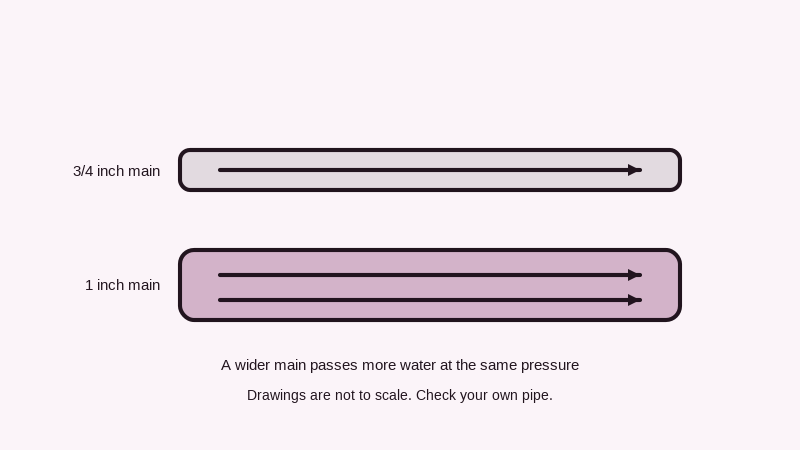
Valve size is dictated by pipe size. If the line entering the house measures 1 inch, the regulator has to be 1 inch as well, since a smaller one would pinch flow to the whole property. Such mains show up at larger homes, houses with several bathrooms and lots with heavy irrigation. For the broader subject of weak or harsh pressure, start with the low water pressure guide.
Which homes call for a one-inch valve?
The deciding factor is the diameter of the supply pipe feeding the house. If that pipe is 1 inch, the valve has to be 1 inch too. This tends to happen on bigger homes, on lots with long supply runs, and where a lot of fixtures or a large sprinkler system share one line. Measure the pipe before buying anything.
A larger main exists to move more water. A wider pipe loses less along the way, so a house that runs several showers, the laundry and sprinklers at once may have been built with a bigger line. Newer homes in areas like Porter Ranch may differ from the 1950s to 1970s tract houses around Pacoima, Arleta and Panorama City, but the neighborhood proves nothing. Read the pipe itself.
EPA figures put annual leak losses for the typical household above 9,300 gallons. A worn regulator can contribute, since high pressure strains fixtures and hoses.
How does a 1 inch regulator differ from a smaller one?
Mainly in capacity. Water moves through it at the same pressure in greater volume, so several fixtures can run at once without a drop. The body is larger, with a stronger spring and diaphragm and bigger connections, so it weighs more and takes more effort to fit. Putting a smaller valve on a 1 inch line restricts the whole house.
The practical differences:
- Flow capacity: higher, so outlet pressure sags less when many fixtures are open.
- Body size and weight: a large valve needs firm support so it does not pull on the pipe.
- Fittings: 1 inch unions or threaded ends, not the 3/4 inch parts many stores stock first.
- Access: more clearance is needed around it for adjusting and removing it.
If your main turns out to be smaller, read about the 3/4 inch regulator instead.
How can I tell whether my main is 1 inch?
Start with any stamped or printed markings on the pipe, the valve or the meter. Then take the pipe's circumference with a flexible tape and check it against a sizing chart, since nominal size differs from the outside measurement. Photograph the main and the area around it so the plumber can see what is there.
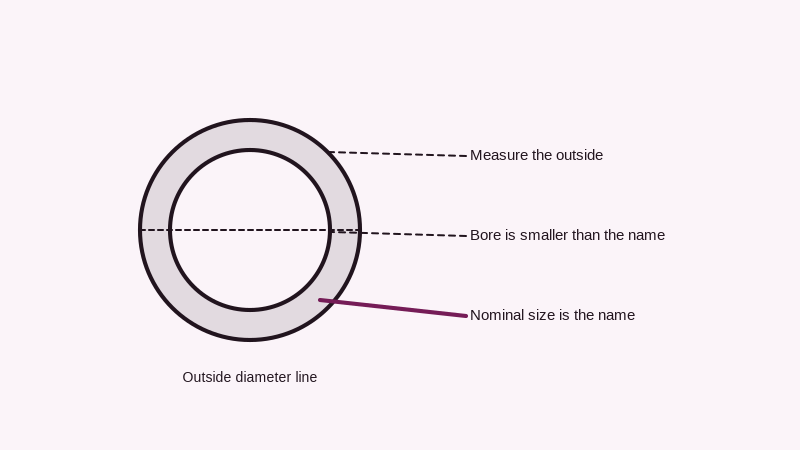
What to look at and send:
- where the line enters the building: a utility closet, the garage wall or the box beside the meter
- stamped or printed markings on the pipe or the shutoff valve
- the pipe material, whether copper, galvanized steel or plastic
- the current regulator, if there is one, and its label
The meter size from your water supplier is not the same thing as your pipe size, because a meter can differ from the house line. If your water comes from LADWP, as it does across most of the north Valley per its 2025 Drinking Water Quality Report, your bill names the account. On a property with a separate irrigation line, check which pipe the regulator sits on.
What should the installation include?
A sound installation covers a correctly sized valve, unions or fittings that let it be removed later, a gauge port or gauge, an outlet pressure that has been set and tested, a look at the main shutoff and a quick check of the water heater relief valve. All of it belongs in the written quote.
Items to look for in the quote:
- Valve brand, model and size
- The pressure setting and the way it is verified
- Which fittings and unions are included
- Condition of the shutoff valve and any replacement
- Whether an expansion tank is recommended
- Any permit, and who files it
- How payment is scheduled
Larger pipe puts more weight on support and access. A heavy valve hanging from old pipe can strain a joint, and corroded steel at the connection can turn a simple swap into replacing a section. On pricing, see what sets regulator cost; for what a swap involves, see pressure regulator replacement.
Does a larger regulator fix weak pressure?
No. The job of a regulator is to hold pressure down, not raise it. If pressure at the house is low, look at the supply, a shutoff valve that is partly stuck, a blocked pipe, a regulator that has closed too far or a setting that is too low. The plumber should read pressure on both sides of the valve.
A regulator that has failed can restrict flow, which is why a gauge reading comes first. Other causes are covered in sudden low water pressure and low pressure at the kitchen tap. If one fixture alone is weak, the problem likely sits with that fixture.
Gas appliances have a separate rule: should you smell gas, get everyone out of the building, then contact 911 or the gas utility from outside.
Who is allowed to replace the regulator, and are permits needed?
Work on the main supply line is for a California contractor. State rules generally require a contractor license once a job passes a small value threshold, or whenever a permit is required. Inside Los Angeles city limits, permits come from LADBS, the city building department, so ask the plumber who files.
California also caps deposits on home work, usually at the lesser of a set sum and 10 percent of the job's price. Check any contractor on the CSLB website before hiring. When you are ready, use the quote form to send pipe photos and a description; a local plumbing business then replies with a written price.
Common questions
Can a 3/4 inch regulator be used on a 1 inch main?
Only if the pipe is reduced, and that restricts flow to the entire house. The valve should match the line size. When you are unsure which size you have, measure the pipe and send photos instead of guessing, because the plumber needs the right parts on the first visit to avoid a second trip.
Does a 1 inch regulator cost more than a smaller one?
Usually yes, since the valve and fittings are bigger, though this site shows no prices. The written quote makes the difference clear. Ask for the valve and the labor on separate lines, which lets you compare two quotes side by side without guessing what is included in each.
Where is a 1 inch regulator usually installed?
Right after the main shutoff, which can be inside the garage, in a utility closet, in a meter box or along an exterior wall. It must stay reachable so it can be adjusted. If yours is hard to spot, see where the regulator is located for help finding it.
Does a bigger regulator need an expansion tank?
Installing a regulator can turn the plumbing into a closed system, which often calls for an expansion tank near the water heater. Valve size does not alter that. Ask the plumber to check for a tank and for a dripping relief valve before work begins, and make sure any tank appears in the written quote.
What are the signs that a regulator is wearing out?
Look for banging pipes, a relief valve that leaks, pressure that climbs overnight, swollen hoses or noisy fixtures. Each one is worth measuring. Attach a gauge to an outdoor spigot and you get the actual number within minutes, before spending anything. Water hammer is one related sign worth reading about.
This guide is one of many on plumber sylmar.