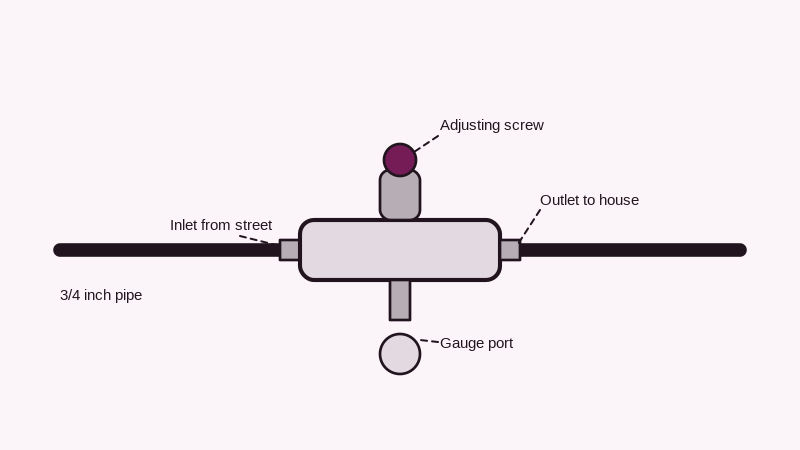
Built for 3/4 inch water lines, this regulator is one of the commonest sizes in houses. Before buying, confirm your pipe size, the connection type and whether the pipe beside the valve is in good shape. A regulator is also only one part of the wider problem of weak or harsh flow, covered under water pressure and valves.
Why would a house need a regulator in this size?
Water coming in through a pipe of this diameter arrives at street pressure, and the valve lowers it to a calmer level fixed inside the body. Placed on the main just beyond the shutoff, it shields the pipes, fixtures and water heater from the force of the supply.
Inside are a spring and a diaphragm. When pressure on the outlet side rises, the diaphragm pushes against the spring and narrows the opening, so the outlet stays steady even when street pressure varies. A screw on top changes the setting, and some models include a gauge port so a plumber can read the outcome.
Three-quarter inch is the connection's nominal size, not an exact measurement across the pipe. Valve and pipe have to match for the fittings to seal.
How can I confirm that my main is 3/4 inch?
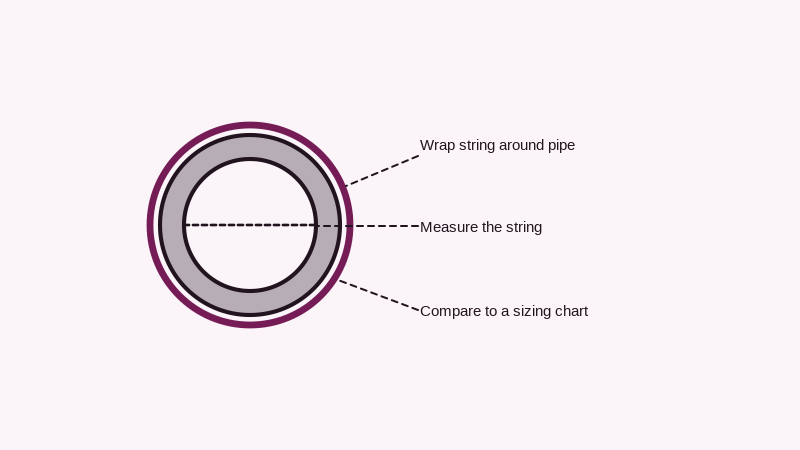
Look for stamped markings on the pipe or meter, or else wrap string or tape around the pipe and compare the length with a sizing chart. Nominal sizes are not actual outside diameters, so a copper pipe labeled three-quarter inch is slightly wider across than that.
Steps:
- Find where the pipe enters the house, commonly near the front wall, inside the garage or at the meter box.
- Look over the pipe and valve for printed sizes.
- If none exist, loop string around the pipe, then measure the string. Compare the number with a pipe sizing chart.
- Photograph the pipe, the shutoff and the area around them.
- Add the photos to your request, since a plumber can confirm the size from them.
When the measurement lands between sizes, do not guess, because a mismatched valve leaks at the joints. Also note the pipe material, as each of copper, galvanized steel and plastic needs its own fittings. A house from the 1950s to the 1970s may have galvanized steel at the entry, which is more likely to be corroded where the new valve must attach. See galvanized pipe replacement.
What connection types are available?
Regulators come with threaded, soldered (sweat), compression or union ends, and the choice has to suit the pipe and keep future replacement easy. A union end lets a plumber unscrew the valve without cutting pipe. Threaded valves fit threaded pipe. Soldered ends fit copper but are harder to replace later.
What to ask for:
- Union ends: easiest to service later, often a good choice.
- Threaded: common on steel or brass fittings.
- Sweat or solder: used on copper, and needs a torch.
- Compression or push-fit: faster to install, though the plumber should say whether it fits the spot.
Brand and model count for less than a good match to the pipe, the pressure range and the access. A valve with a gauge port helps whoever services it next. What a changeover involves is described in water pressure regulator replacement.
How does the plumber set the pressure?
Using a gauge, the plumber adjusts the outlet pressure to suit the house, within the range the maker allows. The change is made with the screw on top, and a gauge threaded onto an outdoor spigot checks the result. Tune it for the house rather than the factory default, and recheck after a few days.
Things to know:
- Take the reading when no one is using water, because flow drops the pressure.
- Too low a setting gives weak showers and sluggish appliances.
- Too high a setting undoes the purpose and strains fixtures.
- After adjusting, test hot and cold at the fixture farthest from the main.
No number appears here, since the right setting depends on the house, the fixtures and the maker's range. Ask the plumber which figure was used, and have it written on the quote.
What else should the plumber check while installing a regulator?
Expect inspection of the main shutoff, the pipe near the valve, the thermal expansion arrangement at the water heater, the relief valve, and whether pressure was truly high to begin with. A regulator can make the plumbing a closed system, which often needs an expansion tank. If the shutoff is failing, it makes sense to swap it on the same trip.
Practical extras:
- test the main shutoff and replace it if it is stiff or leaks
- check the relief valve on the heater for any dripping
- weigh an added expansion tank, covered in water heater expansion tank replacement
- listen for hammering, a clue to other valve trouble, see water hammer
Gas appliances are a separate subject. Should gas ever be in the air, get outside first and report it to 911 or the gas utility from there.
Where does the regulator sit, and is it a big job?
The valve goes on the main line right after the shutoff, whether inside the house, in the garage or in a box by the meter, with enough room to reach it. A like-for-like swap is generally quick, and the work grows when pipe has to be cut and refitted.
On placement, read where the water pressure regulator is located and what a regulator looks like. On cost, see what sets the price. Permits in the City of Los Angeles come from the Los Angeles Department of Building and Safety, and a job needing one has to go to a California contractor.
Common questions
Do most houses use this size?
Plenty of single-family homes have a three-quarter inch main, though not every one. Some have 1 inch lines and certain older houses vary. Confirm by measuring or reading markings, and send photos with your request. A mismatched valve will not fit.
Can I put a 3/4 inch regulator on a 1 inch line?
Not directly. Reducing the line to fit a smaller valve can choke flow to the whole house, which defeats the point of correcting pressure. A 1 inch line calls for a 1 inch valve. See 1 inch water pressure regulator.
What is the lifespan of a regulator?
Water quality and pressure decide it. Many run for years, but the internal spring and diaphragm wear, and grit can hold the seat open. Pressure that creeps up, banging pipes or a relief valve dripping at the heater all suggest attention is due. Replacement is usually a short visit.
Should I get a regulator with a gauge?
A gauge port helps whoever services the system later, since a plumber can read pressure without adding fittings or tools. A plain valve works, but the port makes future checks easier. Ask the plumber which model they would suggest for your pipe and access.
Who is allowed to replace a regulator?
In California a contractor license is expected once a job passes a low value limit or needs a permit, so work on the main regulator normally goes to a contractor. Search for the business on the CSLB website before you agree to anything, and ask who files any permit that applies.
This guide is one of many on Mission Point Plumbing plumber.