Canoga Park has an odd claim in the history of Los Angeles water: it joined the city because it did not have enough of its own. These days its plumbing questions are about shared walls, shared lines and who pays. Elsewhere in the Valley, the service areas page has the neighboring pages; this one sticks to Canoga Park.
Why did Canoga Park join Los Angeles?
Canoga Park was founded as Owensmouth on March 30, 1912, and annexed by Los Angeles on February 26, 1917, because it lacked its own water supply. It took its present name in 1931. The result is that its water has come through the city system for over a century, and LADWP lists Canoga Park among the neighborhoods it serves.
LADWP's San Fernando Valley supply draws on a blend of sources that varies over time, so no single source applies to one house. The supplier and the account both appear on your bill. For anything related to water quality or hardness, read LADWP's yearly Drinking Water Quality Report rather than relying on a general claim about the Valley.
How does density change plumbing in Canoga Park?
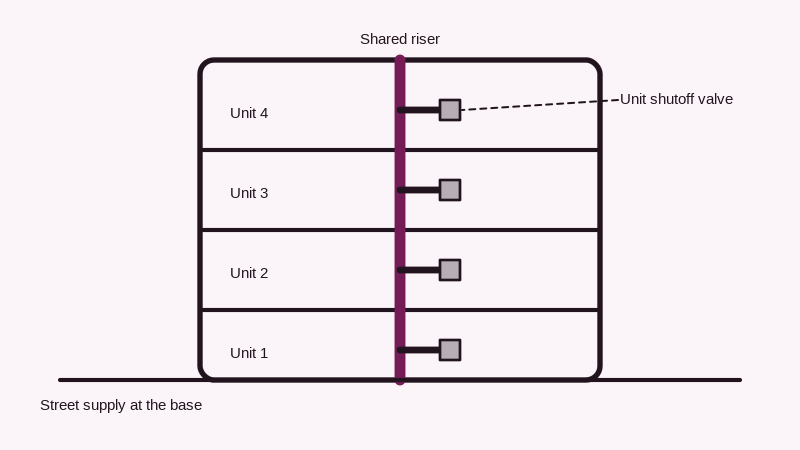
Canoga Park has about 12,240 people per square mile, a high figure for the Valley. More people per block means more buildings sharing walls, shared supply lines in multi-unit properties, and more drains feeding the same city sewer. A fault in one unit can reach another, so speed of access and clear information matter.
In a building with several units, the first job is often to find which valve isolates which apartment. Ask the property manager, or look for labeled shut-offs in a utility closet. If water is already coming through a ceiling from the unit above, ceiling water leak lists what to do before anyone arrives.
What should renters in Canoga Park do about plumbing problems?
About 63.6 percent of Canoga Park housing is rented, so most plumbing faults here involve a tenant and a landlord. Report the problem in writing straight away, describe it exactly, keep photos and copies, and note dates. A plain written record is the strongest thing you can have if the repair is slow.
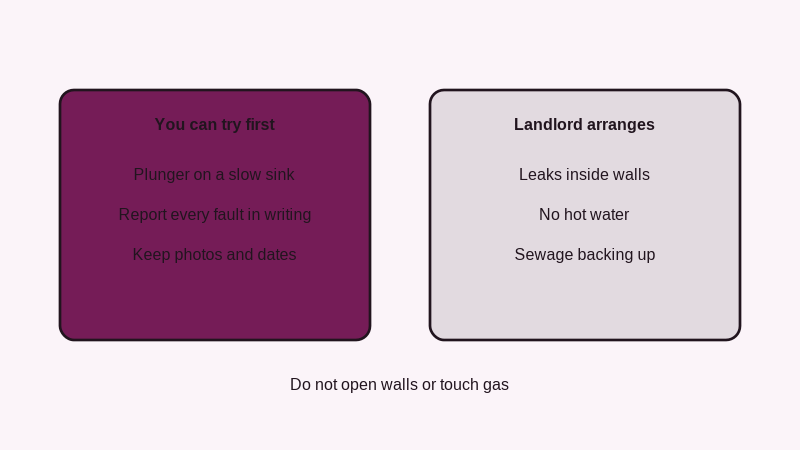
For a clogged toilet or a slow sink, a tenant may be able to try a plunger first; plumber for clogged toilet separates what to try from what to leave. Leaks in walls, no hot water and sewage backing up are the landlord's to arrange or authorize. Do not open walls, touch gas or tamper with the water heater yourself.
What should landlords and property managers know?
If you manage units, the best way to cut plumbing cost is to find faults early. Look for ceiling stains, damp cabinets under sinks and rising water bills across the building. A single meter on a multi-unit property can hide a leak for months, so a quick walk through of shut-offs and visible lines pays off.
Ask for quotes that name each unit or fixture, list parts and labor, and say whether a permit is needed. When a building has old pipe in several units, repipe house explains how replacement is scoped, and the plumber can quote it per unit or per riser. Request the same written format from every plumber so quotes compare.
Who handles permits and rules in Canoga Park?
Canoga Park sits inside Los Angeles city limits, so plumbing permits are issued by the Department of Building and Safety, whose Valley office is in Van Nuys. LA Sanitation and Environment operates the city's sewers. Look up the department's current hours before visiting, since schedules differ by day.
California generally requires a contractor license once labor and materials reach $1,000, and any permitted job needs one whatever its value. Leave gas piping and water heater work to a contractor. If you smell gas, walk outside and reach SoCalGas from there, or use 911 when anyone is in danger.
The Los Angeles River begins where Bell Creek and Calabasas Creek meet behind Canoga Park High School, so the neighborhood sits on the ground where the river's story starts. That is local trivia rather than a plumbing rule, but it explains why storm drains here are taken seriously.
What shapes the cost of a job in Canoga Park?
In a dense area, the property type sets the cost. A single house is straightforward. A unit in a larger building adds shut-off coordination, access through hallways and sometimes notice to neighbors. A fault in a shared line can mean work in several units, and the quote should state which parts you are being asked to pay for.
No dollar figures appear on this site. Collect itemized written quotes and set them side by side. Plumber cost explains the method, and emergency plumber covers what to expect when a fault cannot wait.
What is the route from request to visit in Canoga Park?
Open the quote form and state the building type, the unit or fixture involved, whether water is still flowing and what you have tried, with photos. A nearby plumbing business picks up the request, and a plumber visits and writes the quote down before any work starts.
The form is read on weekdays, 9am to 5pm. Our other services are listed on the Mission Point Plumbing home page.
Common questions
Why was Canoga Park annexed by Los Angeles?
According to published sources, Canoga Park was annexed by Los Angeles on February 26, 1917, because it lacked its own water supply. The town had been founded as Owensmouth in 1912. Its water and sewer service have been part of the city framework since.
Who pays for plumbing repairs in a Canoga Park rental?
Generally the landlord pays for the home's plumbing and water supply. Report faults in writing, keep photos, and let the landlord arrange the work or approve a plumber. If you cause damage, responsibility may change, so read your lease and ask a tenant resource if unsure.
What will a plumbing job in Canoga Park run?
No single price exists, and dollar figures are not published here. Cost depends on the fault, the building type, how accessible the work area is and any permit requirement. A shared line serving several units is priced differently from one fixture. Compare written, itemized quotes from two plumbers before you decide.