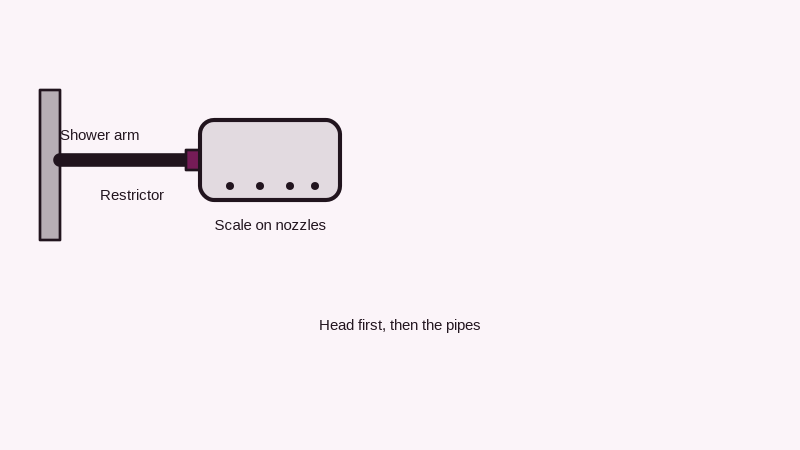
Shower heads cannot add pressure, but some are shaped to make a weak supply feel livelier through tight jets, a tapered spray or built-in compensation. Brand rankings are not part of this page. What we can show is which features matter and how to rule out a cheap fix before you spend. More fixture topics gather on the fixtures hub.
Which shower head styles suit weak pressure?
Favor heads that concentrate water instead of fanning it out: fewer small nozzles, a focused or pulsing pattern, or an aerated design that folds air into the stream. Pressure compensation, which keeps flow from collapsing as household pressure shifts (a point made by EPA WaterSense), is a further plus.
Features worth comparing:
- Nozzles: a handful of fine jets feels firmer on the same flow.
- Spray pattern: a narrow cone beats a wide rain head when pressure is weak.
- Air-injection: adds volume feel without adding water.
- Pressure compensation: keeps flow steady when pressure dips.
- Adjustable settings: lets you pick the narrowest pattern.
Rain-style heads with wide faces usually feel weakest at low pressure, because the same water covers a bigger area.
Does flow rate matter, and can I remove the restrictor?
Yes. According to the EPA, a standard head runs at 2.5 gallons per minute, whereas WaterSense-labeled heads are held to 2.0 or less. A lower rating does not always mean a weaker shower, since good designs make the most of less water. Removing the flow restrictor can raise flow, but it also raises water and energy use, and rules on flow limits vary, so check before modifying.
If you want more punch without removing parts, choose a model that is designed to feel strong at its rated flow. Check the packaging for the rating, and compare ratings rather than trusting words like "high pressure" on the box.
A restrictor is a small disc inside the head or a cap in the arm. If yours is missing or clogged with scale, that alone can change the spray. Treat modifications as a last resort.
Is the fault in the head or in the plumbing?
Often the head. Mineral scale can strangle a head, and a quick soak frequently revives it. Weakness at other taps, or only on hot, puts the cause upstream: a valve, a pipe, the heater or a regulator. Sorting it takes a few minutes.
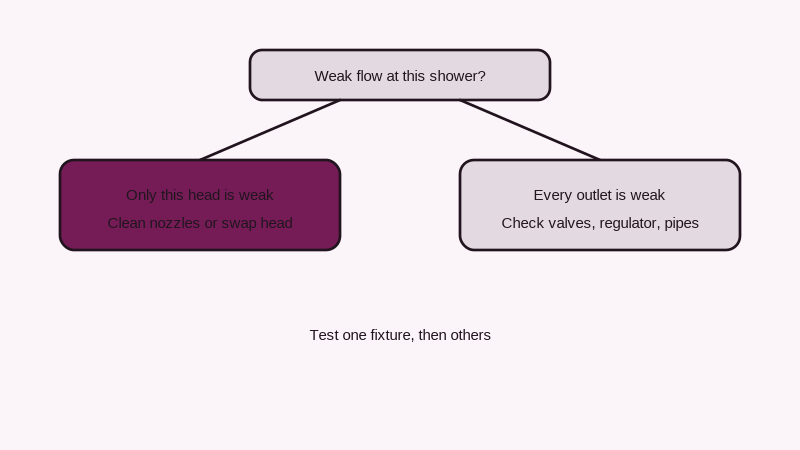
Quick sorting tests:
- Unthread the head and let the arm run bare; strong flow there convicts the head.
- Try the kitchen and bathroom taps; weakness everywhere implicates the main or regulator.
- Compare hot against cold; a weak hot side alone suggests the heater or its pipes, see hot water pressure low.
- Retest at another hour, because street pressure drifts.
How do I clear a clogged shower head?
Unscrew it and soak it in white vinegar for about an hour, then brush the nozzles with an old toothbrush, rinse it and screw it back on with fresh thread tape. Silicone nozzles often rub clean with a thumb. Special finishes can be harmed by vinegar, so read the maker's cleaning notes first.
Scale builds faster where water carries more minerals. LADWP's yearly Drinking Water Quality Report is where to look for your area's water quality, and the water source mix can vary by street. For heavy buildup, see removing hard water scale.
Which symptoms mean the shower needs a plumber?
Book one if every fixture is weak, pressure fell overnight, the shower valve sputters or drips, or the water runs rust-colored. Those suggest trouble with the main line, a half-closed valve, a worn regulator, a leak or corroded pipe. A shower head cannot cure any of them, and a new head can hide a problem that keeps growing.
Many north Valley houses date from the 1950s to the 1970s, and older steel supply lines can narrow with rust. The causes are listed under low water pressure, and a weak kitchen sink shows how to compare taps. For a dripping valve, see a leaky shower faucet.
Want the whole system checked? Complete the quote form, and it reaches a local plumber who can book a visit. The Mission Point Plumbing home page lists the areas.
Common questions
Will a more expensive shower head fix low pressure?
Not necessarily. A higher price does not buy performance by itself, and no head can create pressure that the pipes fail to supply. A well-designed head can make weak flow feel better. Clean your current head first, test the bare arm, and only then compare models by nozzle design and flow rating.
How long does a low-pressure diagnosis take?
Replacing or cleaning a head takes minutes. Finding a pipe or regulator problem takes longer, since a plumber may need to test pressure at several points. The quote should state a time window for the diagnostic and for any repair, and say whether a gauge reading belongs to the visit.
What should I ask a plumber about low pressure?
Ask whether pressure will be read with a gauge, what the diagnosis includes, which repairs are possible and what the bid covers. Look up the contractor's classification on the licensing board's website, and ask for the findings in writing, pressure readings included, so a second opinion has something to compare against.
Would a booster pump solve it?
Rarely a first step. A booster or a regulator adjustment treats symptoms, while the real cause in many homes is a closed valve, a clogged line or a leak. Have a plumber test pressure and flow first, and confirm that boosting is allowed and needed for your house.
Do I need to be there when the plumber tests?
Yes. An adult should be present to show the shower, list the weak fixtures and agree to any testing at the main valve. Tenants should tell the landlord first. When booking, mention parking and pets, and say whether the weakness is constant or comes and goes during the day.