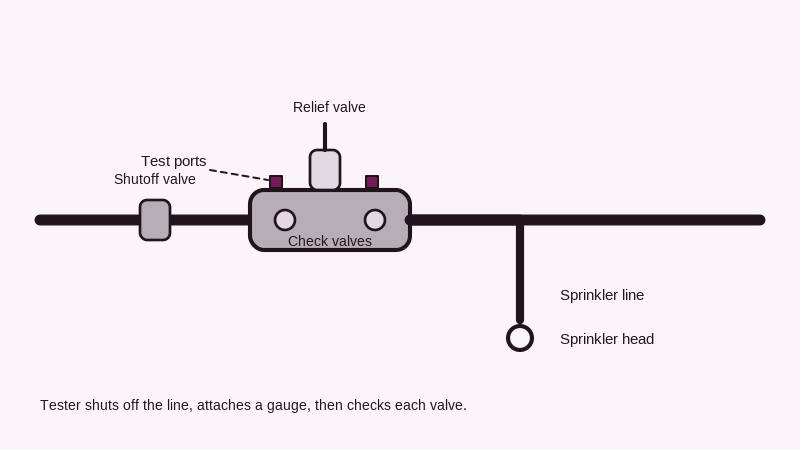
Backflow testing services inspect and test the device that keeps water from flowing backwards from a lawn sprinkler, a pool line, a fire system or a boiler into the drinking water supply. A tester attaches a gauge, verifies that the check valves and the relief valve work as designed, records the result and files it wherever the water supplier requires. Send the quote form and a local plumber receives the request and comes out. For the other work we arrange, start at the Mission Point Plumbing home page.
What does backflow testing involve?
The tester shuts the water to the device, connects a test kit to its test ports, runs a set of pressure checks on each valve inside, records the readings and says whether the device passes. If it fails, a repair, usually new seals or springs, is quoted, and the device is tested again. The result goes on a report for the water supplier.
The device is called a backflow preventer or assembly. It sits on a line where contamination could flow backwards, which can happen when supply pressure drops, as in a broken main or heavy fire-fighting demand. A common home example is a lawn irrigation system: sprinkler heads can sit in soil, fertilizer and animal waste, and the backflow device keeps that water from being drawn back into the house line.
A typical visit follows these steps.
- The tester confirms the device type and location, and checks that it is accessible and not buried in a flooded box.
- The water to the device is shut off, then a gauge goes onto the test ports.
- From the kit's readings, the tester judges each check valve and the relief valve in turn.
- The tester records the results, notes any failure and tells you what repair is needed.
- If the device passes, the report is signed and submitted as the supplier requires. If it fails, the plumber repairs it and retests.
Helping is simple: clear the space around the device, keep any cover accessible and know where the irrigation line's shutoff sits. For a closer look at the test itself, see how backflow testing is done and backflow prevention testing.
Which homes need a backflow test?
Homes with devices installed on irrigation, fire sprinkler, pool fill, boiler or similar lines are the ones usually asked to test them, and the water supplier decides which devices need annual tests. A plain house with a single supply and no such connections may not have a device. Check with your water supplier, which is named on your water bill.
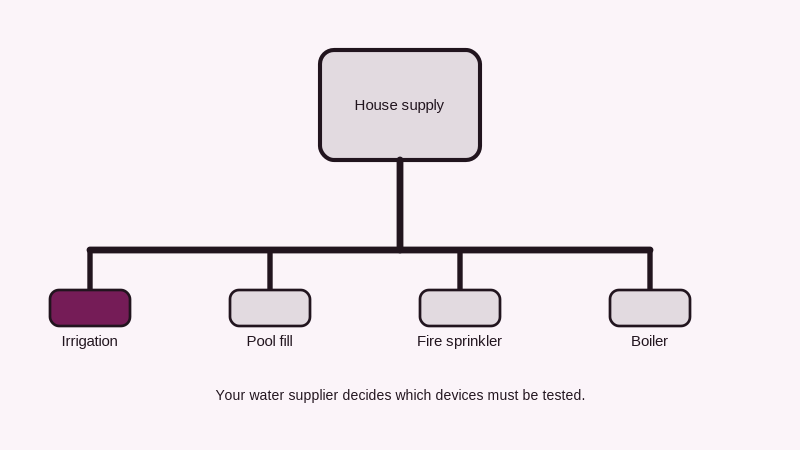
LADWP's 2025 Drinking Water Quality Report lists most north Valley neighborhoods inside Los Angeles city limits as its customers. La Crescenta is served by the Crescenta Valley Water District, and San Fernando has its own water department, so rules and paperwork differ. We have not verified the testing rules of any of these suppliers, so no schedule is stated here. Ask your supplier whether your device must be tested, how often and by whom.
North Valley homes from the 1950s to the 1970s may have no backflow device at all on the irrigation line, though a newer irrigation system or a remodel can add one. If you are adding a sprinkler system or a pool, check with the plumber on whether a device is needed and where it goes. Porter Ranch and other newer neighborhoods tend to have more recent irrigation setups.
Which testers are permitted to work on a backflow device?
Suppliers generally require a tester to hold an approved qualification and appear on their list. Rules differ by supplier. LADWP's requirements have not been verified here, so get the approved tester list from your supplier before booking. Any plumber you consider should state their qualification and show proof.
An online course or a "cheat sheet" does not make anyone a tester, and a certificate from a random website may not be accepted. Look for the supplier's own list or the qualification the supplier names. Ask the tester for their qualification number, the date of their last gauge calibration and how the report gets to the supplier.
Plumbing work that needs a permit must go to a contractor with a California license. Repairing or replacing a device may fall under that, and a tester who is not a plumber cannot always fix it. Ask whether the person testing can also repair, because a failed test with no repair option means a second visit.
How do I choose a backflow testing company?
Request a written, itemized quote that states what is tested, the per-part price of any repair, how the report is filed and how a failed device is handled. Check the tester's qualification with your supplier. Compare scope, not only the total. A very low quote may leave out the filing or the retest.
Look at these points when you compare.
- Scope. How many devices, which types and where. Several devices mean several tests.
- Report and filing. Who sends it to the supplier, and when.
- Failed tests. What repairs are priced, which parts are included and whether retesting is free or charged.
- Access. If a device is in a box under water or behind a locked gate, say so in advance.
- Scheduling. Some suppliers set deadlines, and a tester who can fit the date matters. Form requests are read Monday to Friday, 9am to 5pm, and next-day service cannot be promised.
We do not publish figures. To read a quote in broad terms, see what plumbing visits cost.
What about permits and gas piping codes?
A backflow device on a water line is not a gas matter, but the two appear in the same searches. Residential gas piping follows the California Plumbing Code and local rules, and it is regulated work that needs a permit and a contractor with the right license. Permit portals from other counties do not cover homes here.
For homes in the City of Los Angeles, the Department of Building and Safety issues permits, and its Van Nuys office is open Monday, Tuesday, Thursday and Friday 7:30 AM to 4:30 PM, and Wednesday from 9:00 AM, according to its page, closed on weekends. Check before you go, because we cannot verify appointment rules. La Crescenta is unincorporated county, so a different office applies, and we have not verified which.
If you are weighing gas work, read gas line costs and earthquake gas shutoff valves. If you smell gas, leave the building and report it from outside, to 911 or your gas utility.
Common questions
How long does a backflow test take?
One device usually takes less than an hour from the moment the tester arrives. A repair adds time, and a retest follows it. Hard access, a device in a flooded box, or several devices on one property take longer. The written quote should say how long the visit is expected to run.
What should I ask a backflow tester before hiring?
Ask about their qualification and how you can verify it with your water supplier, whether the quote is written and itemized, how the report is filed, how a failed device is handled and whether a retest costs extra. In California, jobs that need a permit require a contractor license, so ask about repairs too.
Do I need to be home for backflow testing?
Yes, an adult should be present at the start to give access to the device and the shutoff, and at the end to receive the result. The irrigation line stays without water for a short while. Unable to be there? Agree access in writing, including any gate codes.
What happens if my backflow device fails the test?
The tester names the failed part, and a repair, often new seals, springs or valves, is quoted. After the repair, the device is retested and the passing report goes to the supplier. If the device is old or damaged, replacement may be recommended. Ask for both repair and replacement on the written quote.
Can I test my own backflow device?
Generally no. Most suppliers accept reports only from testers on their approved list, and the test needs a calibrated gauge kit. What you can do is keep the area clear, learn where the shutoff is and watch for leaks from the device. Ask your supplier what it accepts before you do anything yourself.