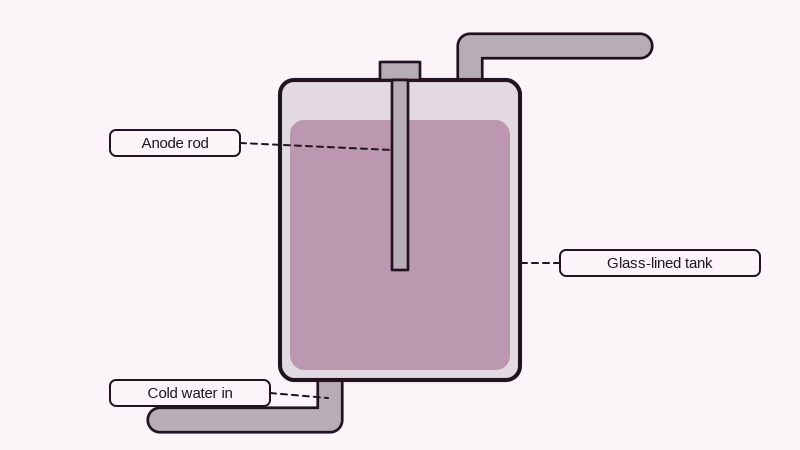
Inside a storage water heater sits a metal rod built to rust away deliberately, which spares the steel tank. After the rod is worn down to its core wire, the tank itself begins to corrode, and a leak is only a matter of time. Swapping a spent rod is among the cheaper pieces of water heater repair, and it can give years more life to an otherwise sound tank. Tankless heaters have neither a tank nor an anode rod. To line up a local plumber, send the quote form.
What does the anode rod do inside a water heater?
It sacrifices itself so the tank does not have to. The rod is made of a metal more reactive than steel, so the corrosive elements in the water attack the rod first. As long as some rod remains, the tank wall is spared. Once it is gone, nothing stands between the water and the steel.
Storage heaters are lined with glass, but the lining has tiny gaps, and the rod covers those gaps electrochemically. This explains why a heater with a good rod can outlive a neglected one by years. Most tank heaters have one rod, and some have two. The rod threads in through the tank's upper surface, often under a hex head, or forms part of the hot outlet nipple.
Three common types:
- Magnesium. Protects well, wears quicker, and can produce a rotten egg smell with some water.
- Aluminum. Lasts longer in many installations, and is often chosen where the smell is a problem. Aluminum has its own drawbacks, so the plumber can say which suits your water.
- Powered (impressed current). Draws a tiny electrical current and does not erode the way the others do, but costs more and needs a power connection.
The best choice depends on your water. LADWP, the utility for Sylmar and the north Valley's City of Los Angeles areas, publishes a yearly Drinking Water Quality Report that describes the supply, and your own bill shows who serves you.
Is changing the anode rod a DIY job, or one for a plumber?
A confident homeowner can swap a rod on an easy heater, but it is a poor starter project when the fastener is seized, the closet is tight, a gas heater has limited clearance, or the heater is so old that something else may break. In those cases the plumber's tools and know-how are worth it.
Hire a plumber when:
- The rod will not turn with reasonable force.
- The heater is in a cramped closet or under a low ceiling, and a flexible rod is needed.
- The tank is old, rusty at the bottom or leaking anywhere.
- The shutoff valves do not hold, which makes the job a mess.
- The gas or electric controls leave you unsure.
Be honest with yourself about what you are saving. Money spent on a rod is a gamble if the tank is nearly at the end of its life. The alternative is covered in water heater replacement cost; read it before you decide.
What does changing the anode rod involve?
On paper the job is simple: cut the energy, close the cold supply, relieve pressure, unscrew the old rod and fit a new one. The trouble lies in the fastener, often seized, and in the clearance above the heater, since many closets leave little room to withdraw a rod.
Here is the order a plumber follows:
- Turn off the breaker for an electric heater, or put a gas heater's control on pilot or off.
- Close the cold water valve feeding the heater.
- Open any hot tap in the house to release pressure, then run a few gallons out of the drain valve so the level falls below the top.
- Find the rod. It usually has a hex head, commonly fitting a 1 1/16 inch socket, on the tank's top, sometimes under a plastic cap. Do not confuse it with the relief valve or the hot outlet.
- Break the fitting loose using a long breaker bar, or an impact wrench if you have one. Steady the tank, because the heater can twist.
- Withdraw the old rod. Where head room runs short, a segmented flexible rod can be bent into the space.
- Wrap Teflon tape around the new rod's threads, thread it in and tighten it firmly.
- Reopen the cold supply and let the tank fill with a hot tap left running until the flow is steady, then restore power or gas.
If the old rod will not budge, stop. Forcing it can crack the tank fitting or twist the heater off its connections.
A word on gas. A gas heater has a gas control valve, a flue and a vent. Do not disconnect any of them. If you ever smell gas, exit the building, avoid switches, and contact your gas utility from outside, or 911 if there is danger. California requires a contractor license for gas piping work.
What else should you check when you replace the rod?
While the heater is open, check the relief valve, any expansion tank, the drain valve and the sediment in the tank. A rod change is a good moment for a quick flush and an inspection of the whole heater. These small checks can find the next problem before it becomes a leak.
- Relief valve. Lift the lever briefly. It should discharge and reseat. If it drips afterward, the page on relief valve replacement applies.
- Expansion tank. Frequently required on a closed system. A waterlogged one should be replaced; expansion tank replacement has the details.
- Sediment. Hard water leaves scale at the bottom. Draining a few gallons helps, but a very scaled tank may not be worth saving.
- Supply lines and connections. Look for corrosion at the fittings, since those can leak first.
Many north Valley homes went up in the 1950s through the 1970s, so the original heater has long gone, but a replacement installed 10 or 15 years ago may be in its second half of life now. Looking at the rod tells you something about the whole tank.
What will an anode rod replacement cost?
Price turns on the rod type, the heater size, the access and whether the job is done alone or with a flush. We do not publish dollar figures on this site, because a figure hides those factors. The quote a local plumbing business writes for you names the rod, labor and any extras.
Ask the business to itemize the rod itself, the labor, the trip charge or minimum, and any flush or valve work. Ask whether you will be shown the condition of the old rod. Find out too what follows if the rod refuses to come out and the visit ends unfinished. The plumber cost guide explains how to compare quotes.
To get a plumber, fill in the form with the heater's brand, its age if known, fuel type and location. A local plumbing business picks up the request and reaches out to you. Someone checks form requests on weekdays, 9am to 5pm.
What tells you the anode rod is used up?
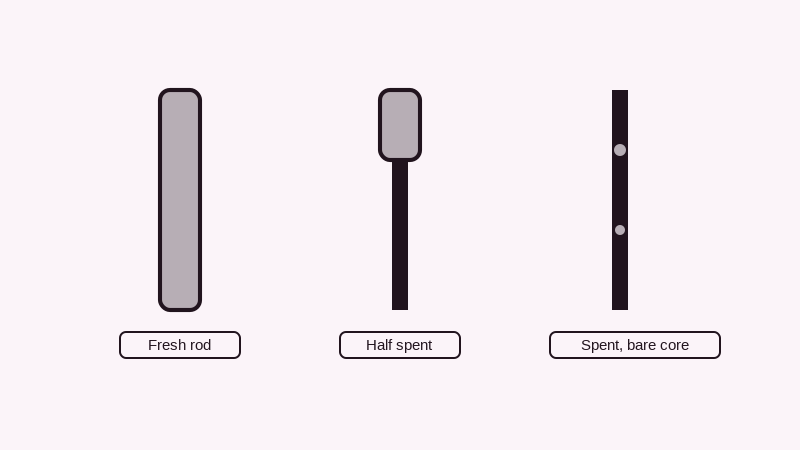
Only an inspection tells you. A rod is spent when it is mostly bare steel core wire, pitted, or thin in places. Outside signs include popping or rumbling noises, a rotten egg smell, rusty hot water and small leaks around the tank's upper end. Checking every few years is a reasonable habit.
How often to check is a judgment call. Manufacturers publish their own guidance for their models, and the best interval varies with your water and how hard the heater works. Many plumbers suggest looking at the rod once the heater has been in for a few years, and again at intervals afterward. We give no fixed schedule, because the correct one varies with the tank and the water.
What a worn rod looks like:
- A fresh rod is a thick, even bar.
- A half-spent rod has bare sections and a thinner body.
- A spent rod is mostly the thin steel wire at the center, sometimes with lumps of mineral.
Pull it and check. If the heater is old, with a tank that is already rusting or leaking at the base, a new rod will not save it. How often a water heater needs replacing helps you judge that.
Common questions
How often should an anode rod be changed?
No single interval applies. It depends on the water, the rod type and how hard the heater works, so manufacturer guidance for your model is the best reference. Many plumbers suggest inspecting the rod once the heater has a few years on it and periodically after that, and changing it once bare wire dominates.
Is there an anode rod in a tankless unit?
No. Tankless water heaters heat water on demand and have no storage tank to protect, so there is no anode rod. They do need descaling in some water, and their heat exchangers can be damaged by mineral buildup. Read about tank versus tankless if you are weighing a change.
Why does my hot water smell like rotten eggs?
A rotten egg smell in hot water often comes from a reaction between the anode rod and bacteria inside the tank, most often with a magnesium rod. A plumber may suggest an aluminum or powered rod, and a tank flush. Ask them to confirm the cause first, since the smell can have other sources.
Is draining the tank required to change an anode rod?
The water level has to drop below the top fitting, which usually means draining a few gallons rather than the whole tank. First close the cold supply and cut power, and release pressure through a hot tap. A full drain is needed only if you are flushing sediment.
Does a fresh anode rod cure a leaking tank?
Not if the tank itself has already rusted through. A new rod protects sound steel but cannot repair a hole. When water seeps from the tank body itself, the heater must be replaced. The next step is in plumber for a water heater leak.
This guide is one of many on Mission Point Plumbing plumber.