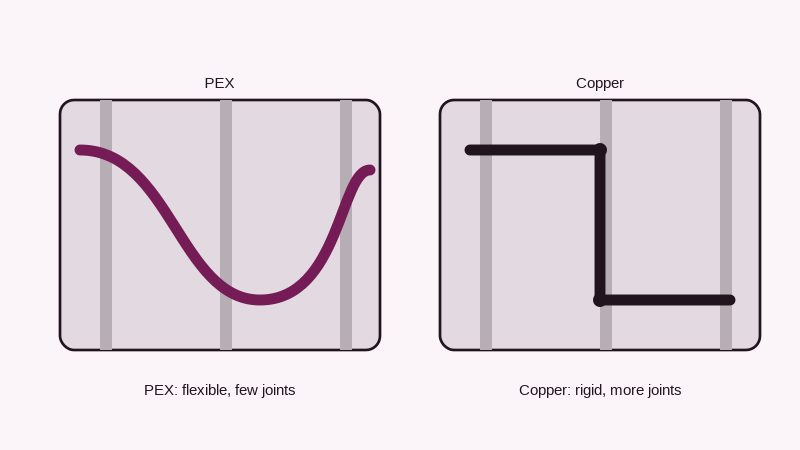
Either material works well in most houses, and the real difference lies in how the pipe moves through your walls. PEX, a bendable plastic tubing, snakes through framing with fewer cuts and fittings. Copper is a stiff metal with a very long history, joined by soldering. When you size up a whole-home repipe, study the house harder than the pipe.
This page belongs to the broader write-up on repiping a house in Sylmar. To get a written comparison of both for your address from Mission Point Plumbing, send the quote request and state which material you lean toward.
What sets PEX apart from copper?
PEX is cross-linked polyethylene, a flexible tube sold on coils. Copper is a rigid metal tube sold in straight sticks. PEX curves around corners and joins with crimp or expansion fittings, while copper needs an elbow at each bend and soldered joints. Both carry drinking water, and both get used in repipes.
In practice the gap is installation. A flexible line can often be pulled through an existing wall via a small access hole, so less drywall is cut and patched. Copper wants straighter paths and more joints, so the plumber opens more wall. Neither needs special handling in the wall apart from protection where pipe crosses studs. Your framing decides which route is possible, and the plumber can tell you.
Which pipe lasts longer?
Copper has the longer record, with many systems running for decades, while PEX has been in houses long enough that makers back it with lengthy written warranties. No honest source can promise an exact lifespan for either, because water chemistry, pressure, workmanship and sunlight all change the result. Read the warranty wording rather than the headline number.
Pinhole leaks are copper's weak point, and they can appear where water is harsh on the metal. The cause varies with the water and the house, so blaming one utility or one street is unsafe. LADWP supplies most of the north Valley from a shifting blend of sources, and its yearly water quality report is where to read about your local water.
Sunlight is PEX's weak point. Makers say it must not stay exposed to UV before or after installation. In a wall that does not matter, but an exposed run in a garage or on a hose bib line needs a cover or a different pipe. The page on reasons to repipe a house covers warning signs that matter more than material.
Which handles cold snaps better?
Sylmar is milder than many places, but frost happens in the foothills and on exposed lines. PEX tolerates freezing better because it can expand a little without bursting, although a fitting can still fail. Copper may split once water freezes inside. For both, insulating exposed runs matters more than the pipe you choose.
If pipes pass through an attic, an exterior wall or a hillside crawl space, say so on the form so the plumber can plan where to insulate. The guide to preventing burst pipes covers the insulation and shutoff habits that help with either material.
Which moves more water?
At the same nominal size, copper normally has a slightly wider inside diameter, so it carries a little more water at equal pressure. PEX fittings, especially the insert kind, narrow the opening where they sit, which can matter on long runs or at the end of a branch. Plumbers sometimes go up one size on PEX trunk lines to offset this.
On a 1/2 inch branch serving a bathroom sink or toilet, the difference rarely shows in daily use. It appears when several fixtures run together, such as a shower while the washing machine fills. Sizing the whole system correctly counts for more than the pipe type. Ask the plumber for the main supply line size and the planned manifold position, if one is used.
Is PEX or copper cheaper?
This site shows no price figures because the only number that applies to your house is the one on your written quote. Broadly, PEX costs less in materials and labor since it is quicker to run. Copper costs more for materials, and metal prices follow the market. Labor, wall repair and the permit often outweigh the pipe itself.
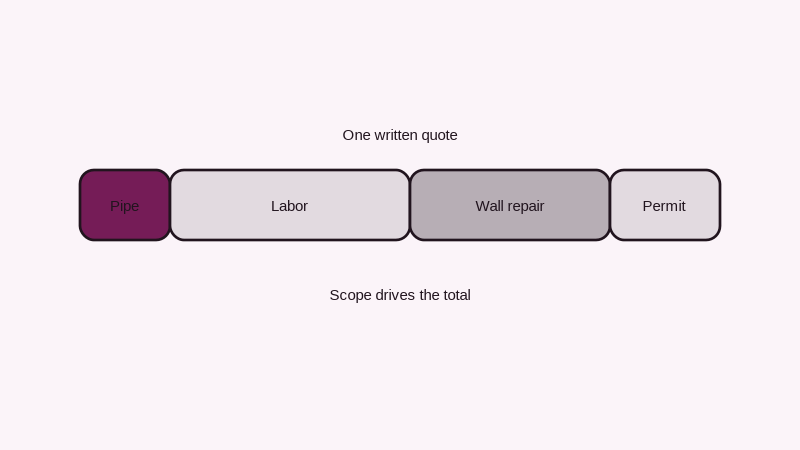
When comparing quotes, line up the scope first: number of fixtures, access holes, who fixes drywall and paint, who is responsible for the permit and what the pipe warranty says. The page on repipe costs lists what a good written quote should itemize. Compare materials only after the scope matches.
How does 1/2 inch PEX stack up against 1/2 inch copper?
Half an inch is the usual branch size for one sink, toilet or shower. Half-inch copper has a slightly larger bore than half-inch PEX, so it flows a bit more. Half-inch PEX suits a typical fixture and is easier to route through a wall. On most branches, ease of installation, not flow, is the real difference.
What matters is the pressure at your meter and the size of the line feeding the branches. If pressure worries you, a plumber can measure it at an outdoor hose bib. Excess pressure wears out every pipe and valve sooner, and a regulator may show up in the repipe quote. See the page on whole-house pressure regulators.
What suits older north Valley houses?
Many homes in Sylmar, Pacoima and Panorama City date from the 1950s into the 1970s, and a repipe there often replaces aging galvanized or copper lines. Both new materials can work. What decides it is access, the state of plaster or drywall, and whether tile or a slab forces rerouting.
Upper Sylmar and the Hubbard Street terraces add a wrinkle: houses sit on man-made terraces, so crawl space access and pipe runs differ from one house to the next. Newer homes, such as those in Porter Ranch, probably have later plumbing already and may need only partial work. The 1971 San Fernando and 1994 Northridge earthquakes left many owners alert to leaks and gas shutoffs, and flexibility is one reason owners ask about PEX, though no pipe protects a house from a major quake. When the leak is beneath the floor, the slab leak repair or repipe article is the better read.
Do both need a permit and a contractor?
Generally, yes. In California a contractor license is needed once labor and materials together pass a modest value, and a job needing a permit always needs one. A whole-house repipe usually involves a permit, and inside the City of Los Angeles permits run through LADBS, so ask LADBS what applies to your address. Visit the CSLB site before signing.
The plumber giving the quote should print a license number on it and name who obtains the permit. A deposit above the legal cap is a warning sign. California limits a home improvement deposit to the lesser of a set dollar amount or 10 percent of the contract price, and the CSLB explains current figures.
Common questions
Can one house have both PEX and copper?
Yes. Plumbers connect PEX to copper with approved transition fittings, and many repairs and partial repipes mix the two. Keep dissimilar metals from touching directly where corrosion can occur, and use the fittings the plumber specifies. A mixed system causes no trouble on its own, and it is common in older houses that have been repaired over the years.
Is drinking water from PEX safe?
PEX meant for drinking water should carry a mark showing it meets the potable water standard, and the plumber should use only such tubing. Beyond that, taste and chemistry vary by house, so consult your LADWP water quality report and bring up any specific worry with the plumber before work begins, since that is the time to change materials.
Which pipe makes the house quieter?
PEX tends to be quieter, being flexible and absorbing some pressure shock, while rigid copper can carry water hammer noise. Neither cures hammer caused by high pressure or a loose pipe. If your pipes bang, read the article on the water hammer sound, which explains the usual causes and fixes.
How long does a whole-house repipe run?
It depends on fixture count, wall access and the permit inspection, so the plumber sets the timetable in the written quote. The water is off for some of the work, so ask how long and when. Treat drywall repair as a separate step unless the quote includes it, and ask who schedules the inspection.
Which questions come before hiring a repipe crew?
Ask for the contractor license number, a written scope listing fixtures and access holes, the name of whoever files the permit, what the pipe and labor warranties say and how drywall repair is handled. Ask about the schedule and payment terms, and never pay more than the legal deposit up front.
Is a do-it-yourself repipe realistic?
Owner work is legally possible in some cases, but a permit and an inspection still apply, and a poor joint can leak inside a wall for months unseen. If you are thinking about it, learn from LADBS what an owner-builder must do first, then compare that with a written quote.