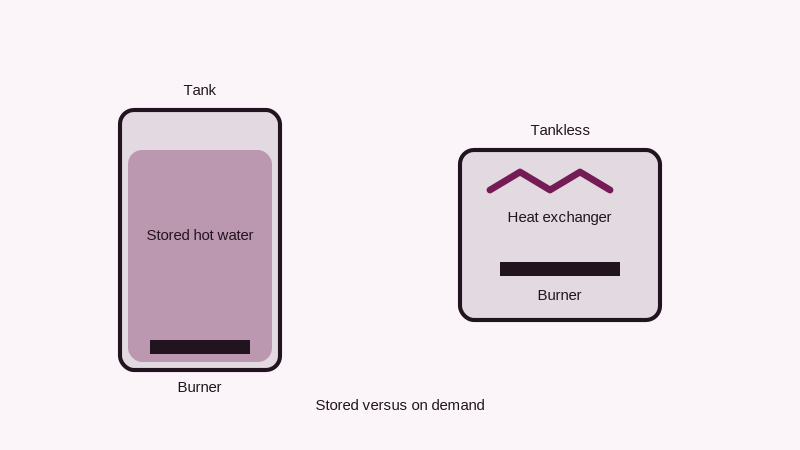
A storage heater keeps a set amount of hot water ready and holds the temperature day and night. An on-demand model has no reservoir: its burner or element fires when a hot tap opens and shuts off when it closes. Storage units are simpler and usually cheaper to put in. On-demand units supply endless hot water at a limited flow and need much less wall space. The better fit depends on your gas line, vent route, how many people shower at once and how long you plan to stay.
The sections below compare both for homes across the north Valley. If the current heater is failing, start with water heater repair and replacement, then come back to choose what replaces it. When you have decided, submit a request for a written quote and name the type you want priced.
What separates the two designs?
Inside an insulated steel shell, a storage heater holds about forty to eighty gallons and reheats whenever the temperature dips. An on-demand heater warms water as it flows through a heat exchanger. The storage type delivers a large burst and then runs out; the on-demand type never runs out but is capped at a number of gallons per minute.
That one contrast explains the rest. A storage tank loses a little heat through its walls all day, called standby loss, and can rust from the inside over the years. An on-demand unit avoids standby loss but must be sized for peak demand. Two showers and a dishwasher at the same moment can leave a small unit sending lukewarm water to all three.
Many tract homes from the 1950s to the 1970s in Sylmar, Pacoima and Granada Hills put the heater in a garage corner or hall closet. A storage tank drops into that spot as is. A wall-hung on-demand unit needs the plumber to check what already hangs on that wall, then the gas supply, then where exhaust can leave.
Which type is cheaper to buy and fit?
Without a price range to quote, the honest answer lies in the shape of the work: exchanging one tank for another is usually the cheaper path, while changing to on-demand tends to cost more because more of the house is altered. This site shows no dollar figures, so use the items below to compare the written quotes you get.
A tank exchange mostly covers the heater, flexible connectors, a new shutoff valve and a safe discharge pipe from the relief valve. On-demand installs can add a larger gas line, a new vent run, a condensate drain for high-efficiency models, an electrical outlet, isolation valves for flushing, and sometimes a new mounting wall. Those extras separate a modest quote from a big one.
Electric on-demand units bring one more item: power. They draw heavy current, so the panel and wiring need inspection before any date is promised. Ask whether the quote includes electrical work or leaves it to another trade.
How do yearly running costs compare?
Annual running cost depends on fuel, rates, household size and model efficiency, so no single figure suits every house. To compare, estimate your hot water use, read each model's yellow EnergyGuide label, and apply your own gas or electric rates to reach a yearly number.
A simple paper calculator:
- Copy the model's rated efficiency or energy factor from its label.
- Estimate daily hot water use. Long showers and warm laundry loads push it up.
- Multiply by the utility rate on your latest bill.
- Do the same for the other type and compare.
Low-use households tend to gain most in percentage terms from on-demand, since standby loss is what they avoid. Larger households with steady heavy use usually see a smaller gap. Whatever you work out, weigh the lower running cost against the higher installed price, and ask whoever quotes to show both on a single page.
Propane storage heaters follow the same logic as natural gas, with fuel price the main variable. Mini tank units, the small point-of-use heaters under a sink, are a third choice for one far-off bathroom or a kitchen, and they cost much less to run for a single tap than heating a long pipe from the main unit.
Does gas or electric suit each type in a Sylmar house?
Where your street has natural gas, both gas storage and gas on-demand units are common, and gas is how most older north Valley homes are already piped. Electric tanks suit homes without gas, and electric on-demand is usually practical only when the panel can carry the load. Your bill names your gas supplier. SoCalGas serves much of Southern California, provided your street has gas at all.
On regulation, low-NOx and zero-NOx requirements for regional water heaters have been discussed. In June 2025 the South Coast Air Quality Management District board decided not to amend Rules 1111 and 1121, which means the current rules stay in force. For now, the choice depends on your house, not on a mandate.
Gas work is regulated. Piping, venting and any new gas line need a contractor holding the right California license, and anything needing a permit always does. On smelling gas, leave the building immediately and phone 911 or your gas utility from outside.
Will an on-demand heater keep up with my household?
Sizing starts from flow rate, not tank volume. Count the hot fixtures that might run together during your busiest morning, add up each one's gallons per minute, and confirm the heater can raise incoming water to your chosen temperature at that flow. Winter inlet water is colder, so a unit that copes in August may struggle in January.
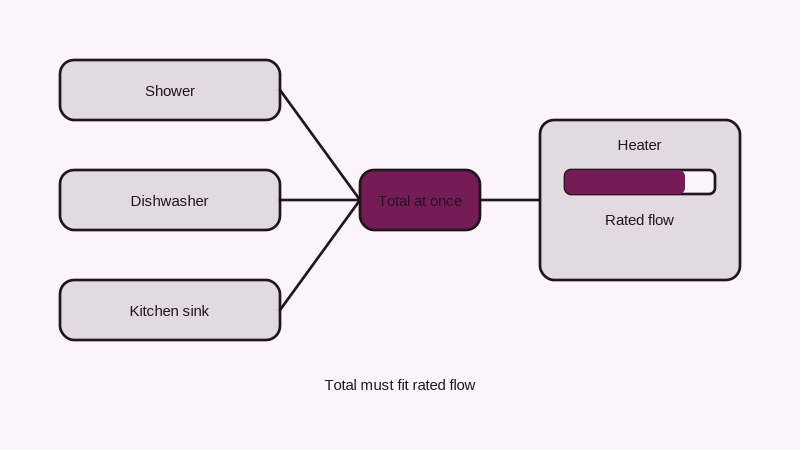
A quote worth accepting names the model, rated flow, gas input and venting plan. If any are missing, ask. An undersized on-demand heater is the leading reason people regret switching.
Hard water matters as well. Scale collects within the heat exchanger and narrows its passages, cutting flow and shortening life. Check LADWP's annual Drinking Water Quality Report for your area, or your own district's, and decide if a softener or regular descaling flush belongs in the plan. The page on hard water scale prevention covers the options.
Where does repair end and replacement begin?
Repair fits a younger unit with a single failed part. Replacement deserves a quote when the tank leaks through its body, repairs keep recurring, or the heater has reached the age at which its maker suggests planning a swap. Lifespan figures vary by source, so ask the plumber for the maker's figure for your model instead of trusting one number.
Hints toward replacement: pooling water at the foot of the unit, brown hot water, rumbling from sediment, or a pilot or igniter that keeps failing. A tank that leaks cannot be patched. Close the cold supply, switch the heater off and arrange a visit; water heater leaks lays out the safe order of steps.
Common questions
Which type has the longer life?
On-demand units are generally advertised with longer lives than storage tanks, and parts can often be replaced to stretch them. Published figures differ by source, so no single number is reliable. Water quality and upkeep matter more than design, since sediment and scale shorten both kinds. Request the manufacturer's stated life and warranty terms for the exact model quoted.
Will the present gas pipe feed an on-demand unit?
Sometimes, but often not. An on-demand burner pulls more gas at once than a storage burner, so pipe size and meter capacity need checking. A plumber measures the run, adds up the other gas appliances and decides if an upgrade is needed. Never assume the swap is drop-in, and never change gas piping on your own.
Is a permit needed for a heater change?
The City of Los Angeles permit rule for replacing a water heater has not been confirmed here, so check with the Los Angeles Department of Building and Safety before booking. Any work requiring a permit must be done by a contractor with a California license. On your quote, find out who files for it and whether an inspection is part of the price.
Does on-demand pay off for one or two people?
Possibly, because small households lose proportionally more to standby heat in a tank. The installed price is higher, so payback depends on how long you stay and on fuel prices. Run the paper calculator above and compare it with simply fitting a new high-efficiency storage tank, which has a lower upfront cost.
What do I ask before accepting a quote?
Ask for the model and size in writing, what the connections and venting cover, who handles permits, how old parts are disposed of and what the warranty includes. Ask when payment is due. California limits the deposit a contractor may request on home improvement work; the state contractor board publishes the current limit.
Return to Mission Point Plumbing for every service listed, or check coverage on the service areas page.