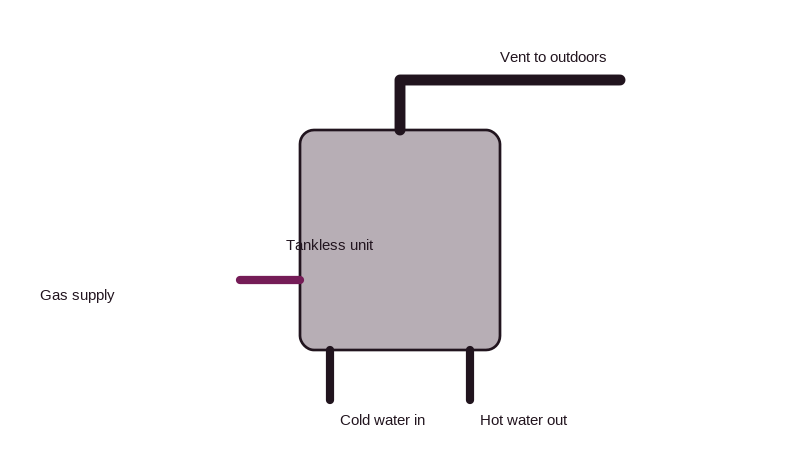
A gas tankless conversion replaces the tank with a wall-hung unit that fires only when a hot tap opens. The unit is small, but the work around it is not: a larger gas supply, a different vent, a condensate drain on many models and a permit. It normally belongs with a contractor who holds a California license, and it is no weekend project. Broader background is in the water heater repair guidance. Ask for a plumber through the quote form.
What work does a gas tankless installation include?
The plumber removes the old heater, hangs the tankless unit on a wall, connects the water lines and the gas, runs a vent outdoors, fits a condensate drain for models that need it, wires power for the electronics, then tests everything. Gas and vent steps make this a bigger job than a tank-for-tank replacement.
The usual sequence:
- Plan and size. The plumber counts how many fixtures will run together, notes your incoming water temperature and the gas supply, then picks a unit.
- Shut off and drain. Gas and water are closed, then the old tank gets emptied and taken out.
- Mount. The unit is hung on a wall, inside or out, with the clearances the maker specifies.
- Water. Hot and cold lines connect, usually through a pair of isolation valves that allow later flushing.
- Gas. The gas line is extended, resized or replaced as needed, and leak tested.
- Vent. Exhaust exits via the roof or a side wall, using the material the manufacturer requires.
- Condensate and power. High-efficiency models produce acidic condensate, which needs a drain, and the control board needs an outlet.
- Commissioning. The plumber fires the unit, checks flow, temperature and error codes, and walks you through settings.
Insist that the manufacturer's installation manual is followed, and that the work is inspected where a permit applies.
Will I have to upsize the gas line for a tankless unit?
In many homes, yes. Tankless burners consume plenty of fuel in a short burst, so demand can exceed what the old tank heater drew. The present line may be undersized, and the plumber should size it from the unit's rated input and the run length. Pipe that is too small makes the unit fault or heat poorly.
What the plumber looks at:
- The unit's gas input rating, which is on the data plate and in the manual.
- The pipe size and material now serving the old heater and other appliances on the same line.
- The length of the run from the meter, since longer runs lose capacity.
- Whether the meter and regulator are able to deliver the extra load. SoCalGas is the gas utility for most of Los Angeles and the Valley where a street has gas service, and it may need to join in if the meter has to change.
Some installers use flexible gas line sections to connect the unit. Our guide to flexible gas connectors at 1/2 inch explains the connector and the limits manufacturers set. For how gas work is quoted, see gas line cost.
Gas piping falls under California contractor licensing, and so does every job that requires a permit. Never alter gas piping yourself.
Which venting setup suits a gas tankless water heater?
Venting depends on the model. Non-condensing units usually need a stainless steel vent. Condensing, high-efficiency units give off cooler exhaust and many use plastic pipe, plus a condensate drain. The manufacturer's manual governs material, length, clearances and termination, and the installer has to follow it; the vent must go outdoors.
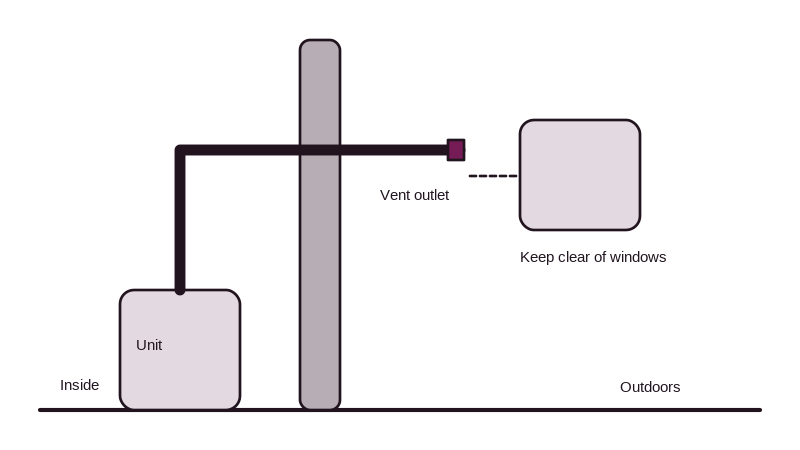
Venting is where cheap installations go wrong. Bad venting can allow carbon monoxide to enter the house, so a plumber should seal joints as specified and check that the termination clears windows and vents. Install a carbon monoxide alarm close to the bedrooms and the heater, and test it. We have not checked California's alarm rules for this page, so read the official source if you need the rule.
Outdoor models, built for the weather, skip indoor venting but need protection from wind, and the water lines outdoors need care in freezing weather. Ask the installer how exposed outdoor lines are protected in a cold snap.
Is gas tankless worth it compared with a tank, and will rules force a change?
Endless hot water is the draw of gas tankless, and it suits homes with free wall space, though the up-front work is bigger. Whether it pays off depends on how you use hot water, on your gas line and on the installation. A zero-NOx mandate is not coming, since the regional air board voted not to amend Rules 1111 and 1121.
On June 6, 2025, the South Coast AQMD Governing Board voted 7 to 5 not to approve Proposed Amended Rules 1111 and 1121, and the existing rules remain in effect. That means you are not being forced to replace a gas heater on a deadline because of that proposal. Choose on your own use and budget. Our tank versus tankless comparison and gas tankless versus tank pages set the pros and cons side by side.
For a quote, fill in your address, the size and fuel of your present heater, and where it is installed. A local plumbing business receives the request and reaches out to you. Forms are read on weekdays between 9am and 5pm. For everything else we cover, start from the Mission Point Plumbing home page.
Does the City of Los Angeles require a permit for a gas tankless heater?
Permits usually come with gas water heater work, but we have not verified the City's rule for a heater replacement, so ask the business and check with LADBS. The contractor typically obtains the permit and schedules the inspection. Under California law, anything needing a permit has to go to a contractor who holds the state license.
Where to go: LADBS has a Van Nuys office at 6262 Van Nuys Boulevard, 2nd Floor, Room 251, with different hours on different days, so check before you go. The business you hire should handle this, but request the permit number and the inspection date. Work valued at $1,000 or more in labor and materials generally needs a contractor license, according to the CSLB, so a gas tankless install in practice falls on the contractor side.
Ask the business three things in writing: who pulls the permit, who is present at the inspection, and what you receive when it closes.
La Crescenta is unincorporated county territory, not part of Los Angeles city, so a different permit office applies, and we have not verified which.
How does the earthquake gas shutoff valve rule work?
Under the Los Angeles city building code, an approved seismic or excess-flow gas shutoff valve is required in certain cases: on new construction, on some larger alterations, when the work alters or replaces the gas meter, and when a building is sold. Check the current code and LADBS for the exact trigger, since we have only read a copy of the text.
Why it matters here: the 1971 San Fernando earthquake left Sylmar without water and gas, and the 1994 Northridge earthquake started fires that burned over 70 homes, according to Wikipedia. When a tankless installation touches the meter or a larger line, it makes sense to ask whether your home has the valve. A separate page on seismic gas valves explains it.
What does gas tankless installation cost, and how do you compare quotes?
The price rests on the unit, the gas line work, the vent route, the permit, the access and hauling off the old tank. We do not publish dollar figures here. A local plumbing business's written quote states each of them, and going line by line is how you find the fair one.
A good quote lists:
- The make, model and input rating of the unit.
- The gas line work: new pipe, sizes, materials and testing.
- Vent material and routing.
- The condensate drain and any neutralizer.
- The permit and inspection.
- Taking the old heater away.
- The warranty terms printed by the manufacturer, and what labor is covered, if any.
See the installation cost guide and tankless replacement cost for the structure of those lines. Pages on individual makers, for example Rinnai units and Navien units, go through how each differs.
Common questions
Is the existing gas line good enough for a gas tankless heater?
Sometimes, but often not as it stands. A tankless unit draws a bigger share of gas in one go than most tank heaters, so the plumber has to compare pipe size and run length against the unit's rating. An undersized line gets upsized; that goes into the quote and, as gas work, needs a contractor who holds the state license.
Do tankless water heaters need annual maintenance?
Manufacturers generally call for periodic flushing to remove mineral scale, with the interval set by your water and the model. Isolation valves make this easy. Check the manual for your unit and ask the installer to leave a short maintenance note, since neglected scale shortens a heat exchanger's life.
Can I do a gas tankless installation on my own?
State law reserves gas piping for contractors who hold a license, and permitted jobs go to them as well. Beyond the law, a bad gas or vent connection can cause leaks or carbon monoxide. This is a job to hire out, and our guide exists to help you understand the quote.
How much time should a gas tankless installation take?
A day's work covers most jobs where the gas line and vent are simple, and the job takes more time when the gas line is upsized, the vent route is hard or the wall needs repair. No time can be promised, so ask the business for an estimate and what could stretch it.
Does a small house suit a tankless water heater?
It can be, since it saves floor space and removes standby heat loss. A small house still needs enough flow for the fixtures that run at once. Ask the plumber to size the unit for your household and your cold-water temperature, and compare that with a quote for a tank.