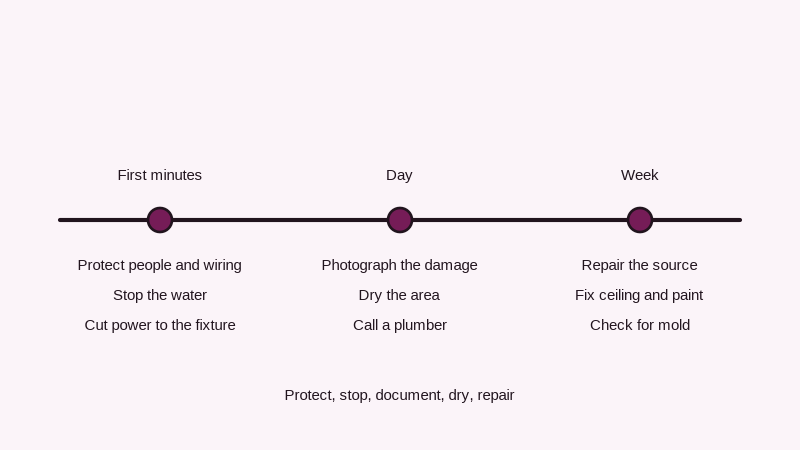
Electricity comes before everything else. Water showing up beside a light, fan or outlet is a cue to switch off that room's breaker and stay out until the area is dry. Only then handle the water itself: close the house main when the flow is steady, set a pail beneath the drip, and snap pictures for later. Those few moves limit the damage and protect any insurance claim. Mission Point Plumbing picks up from there with the longer plan below.
What belongs in the first ten minutes?
Safety and containment own those minutes. Cut power to the wet area, close the main, and catch whatever is falling. Where the ceiling bulges, one small hole in the lowest spot above a bucket drains the water on your terms rather than waiting for the drywall to collapse. Move belongings away and keep everyone from standing under the sag.
Do these in order:
- Trip the breaker that feeds the room's lights and outlets.
- Close the main water valve, found next to the meter or at the point the supply reaches the building.
- Set out pails and towels, and lift valuables out of reach.
- Take pictures of the stain, the drip and the full room.
- Write down the time you first noticed it.
Never stand under a bulge, and never run a plugged-in vacuum in a wet room. If water reaches the electrical panel, leave the house and contact 911 should anyone be at risk.
Where is the water really coming from?
Look straight up first, then to the sides. Water frequently travels down a joist before dripping, so the stain can sit several feet from the true leak. Likely sources are a bathroom above, an attic supply line, the roof, a water heater or the drain pan under an air conditioner.
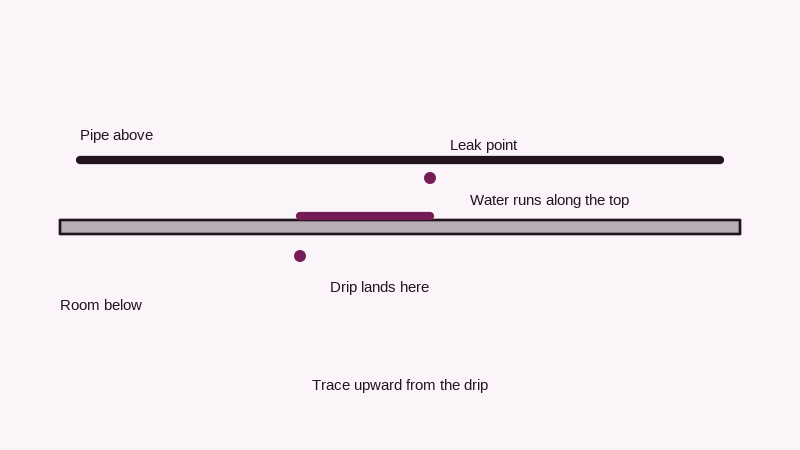
Pointers:
- Shows only after rain: the roof, not the plumbing.
- Bathroom above: a worn tub or shower seal, a drain fitting, or a supply pipe.
- Steady drip in dry weather: a leak under pressure.
- Beside a light fixture: water has followed the wiring, see water leak in ceiling light.
- Brown stain, nothing dripping: may be old or caused by condensation, see ceiling stains without a leak.
A meter dial that keeps spinning while every tap is shut suggests a pressurized leak. Further clues appear under signs of a leak in the ceiling.
What changes if a pipe has burst above the ceiling?
Treat it as urgent. Shut the main and leave it shut, then drain the line by opening the faucet at the lowest point of the house. Cut electricity to anything soaked, and arrange a plumber. Timing depends on the pipe's route: an exposed pipe can be mended in hours, while a concealed one means opening walls.
Step-by-step help is on the burst water pipe page, and emergency plumbing describes how urgent requests are handled. In north Valley homes from the 1950s to 1970s, a ceiling leak from older supply pipe can mean other runs are wearing out too.
By the EPA's estimate, a typical household wastes more than 9,300 gallons a year through leaks, reason enough to chase even a faint drip.
Is a small ceiling leak a DIY job?
The drying and patching, often. The pipe or roof defect behind it, rarely. If an overflowed tub caused a one-off stain, an owner can dry and patch it. A leak with no clear story needs its source found first, or the stain comes back.
Never paint over a damp ceiling, since trapped moisture feeds mold. Dry the space with fans and moving air, remove any soft drywall, and then finish in this order: patch, stain-blocking primer, paint.
Epoxy putty, wraps and clamps can slow a pinhole on an exposed pipe for a short while, but they buy time rather than fix anything. A failed joint or corroded run needs that section replaced.
Will mold follow a ceiling leak?
It can. Damp drywall and insulation may start growing mold inside two days, so speed matters. A small patch on a hard surface is something an owner can clean; spreading growth, a lingering musty smell, or soaked insulation inside the ceiling calls for a mold professional. People with asthma should stay away from the work.
Older ceilings raise a second issue. Textured or popcorn finishes in houses from before the 1980s can contain asbestos, so have a sample checked by an accredited lab before scraping or cutting. Look at the EPA's asbestos guidance and the state contractor board's advice before any demolition.
When should a plumber be called in?
Right away, when water flows steadily, the source is unknown, the meter keeps moving with taps off or the stain keeps spreading. A plumber traces the leak, sometimes with detection equipment, then mends or replaces the pipe. Send the quote form and Mission Point Plumbing forwards it to a local plumber.
To learn what detection involves and what drives its price, see leak detection cost; on coverage, see insurance and burst pipes.
Common questions
How soon can a ceiling leak be repaired?
A pipe in plain view can be mended within a few hours. A hidden pipe, a roof source or wide soaking lengthens that, and drying can take days before drywall and paint. Ask for a pipe-work window on the bid, and treat the drying schedule as its own line.
Which questions suit a contractor handling the leak?
Ask how the source will be traced, whether detection is part of the price, what the bid includes (access holes, pipe, patching) and who handles drywall and paint. Check the contractor with the state licensing board, and request written findings for your insurer.
Is there a best sealant for a leaking pipe?
No sealant repairs a pipe for good. Putty, tape and clamps can slow a small leak on a reachable run until a plumber arrives, but pressurized joints tend to fail again. Plan to replace the damaged section, and never trust sealant on gas piping.
Does insurance pay for ceiling water damage?
Often for sudden, accidental leaks, though usually not the cost of fixing the pipe, and slow seepage is frequently excluded. Read the policy, report early with photographs and the plumber's notes, and ask your insurer. We cannot say what a particular policy pays.
Do I have to be at home during the visit?
Yes, a person needs to point out the damage, find the shutoffs and approve access to ceilings and walls. Tenants should tell the landlord first. Mention pets and parking at booking, and clear the rooms beneath the wet area so work can start without moving furniture.