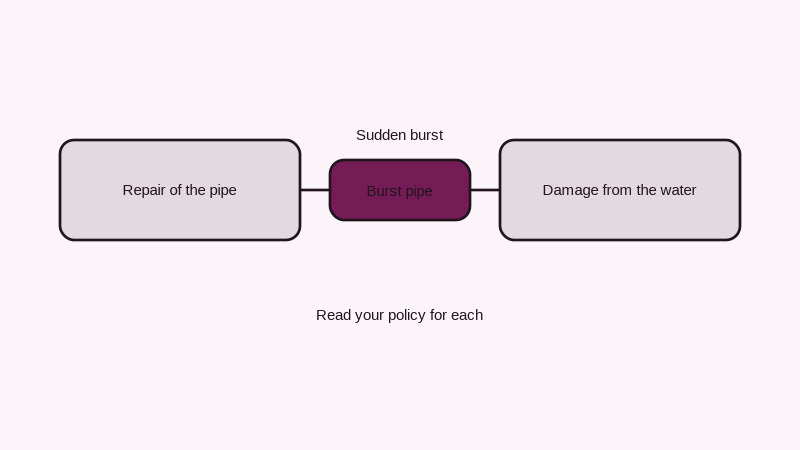
Often, yes for the damage and no for the pipe. A standard homeowners policy typically pays for sudden, accidental water damage after a pipe bursts: ruined floors, drywall and belongings. Replacing worn pipe is usually outside it, and damage from a leak that ran for weeks or months is frequently excluded. The policy wording settles it, so read it and put your questions to your insurer before signing a repair contract. We cannot tell you what your own policy says.
Mission Point Plumbing is not an insurer and offers no coverage advice. This page lays out the usual pattern and the actions that safeguard a claim, and the site can pass your request to a nearby plumbing business to stop the damage. If a pipe has burst right now, skip to the section on the first hour.
What does home insurance usually cover when a pipe bursts?
Most standard homeowners policies cover damage that is sudden and accidental: water that floods a room, soaks ceilings and ruins flooring. They often pay to remove and replace the damaged materials, subject to your deductible. They usually do not pay to fix the cause, which is the failed pipe.
A few policies pay to tear out part of a wall or floor to reach a leak, and others do not. Many policies set limits and sub-limits for water damage. The only reliable answer is in your declarations page and the water damage section, and your insurer or agent can explain it. Before work begins, ask whether tear-out is covered, whether water damage has limits and what your deductible is.
What does insurance usually not cover after a burst pipe?
The common exclusions are wear and tear, corrosion, a slow leak that went on over time, damage from neglect and the cost of replacing the failed pipe. Flood from outside the house, sewer backup and earthquake are generally separate coverages. A standard policy typically excludes earthquake damage.
That matters in the north Valley, where the 1971 San Fernando and 1994 Northridge earthquakes are part of local memory. If a quake breaks a pipe, a standard homeowners policy usually will not respond, and earthquake cover is a separate product. Sewer or drain backup often needs an add-on. If the status of either is unclear to you, ask your agent. Read the wording, not a summary from a website.
What are the first steps in the hour after a pipe bursts?
Close the main water valve, switch off power to affected areas if water is near outlets or the ceiling, and move belongings out of harm's way. Then find a plumber and photograph everything before cleanup. Take steps to prevent more damage, because insurers expect the loss to be limited, and keep every receipt.
Locate your main shutoff now, before any leak, if you do not know where it is. Turn the handle fully, then check that faucets run dry. Never walk into a room where a sagging ceiling holds water. Where shock is possible, stay out, and cut power at the panel only when you can reach it dry and safely. The page on emergency plumbing for a burst pipe sets out the order of steps, and telling whether a pipe has burst helps if you are unsure.
How do I document the damage for a claim?
Take photos and short videos of the source, the damage and the water before moving anything. List the damaged items. Should the plumber cut out the failed section of pipe, hold on to it. Request a written report from the plumber stating what failed, where, and the probable cause. Save receipts for emergency repairs.
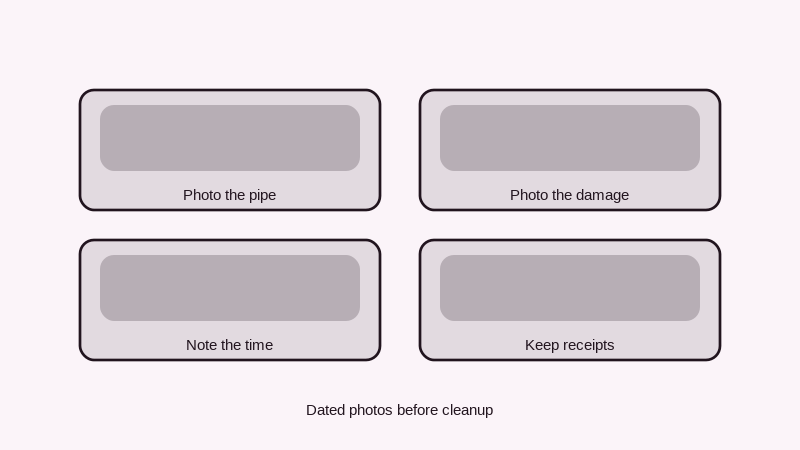
Write the date and time you found the leak and when you shut off the water. Notify your insurer promptly, since policies set notice conditions. Hold on to damaged materials until the adjuster has had a chance to see them, unless a health risk makes that impossible, in which case photograph first. The plumber's report matters because the insurer will ask whether the damage came suddenly or built up gradually. A written note from the person who saw the pipe is useful evidence.
Does it matter whether the leak was sudden or gradual?
Yes, it is often the deciding question. Coverage for water damage is commonly tied to sudden and accidental discharge. A slow, long-term leak is often treated as maintenance and excluded, or the insurer may limit what it pays. A burst from freezing or a sudden failure is usually in the sudden category.
According to the EPA, an average household loses over 9,300 gallons of water yearly through leaks, which shows how long unnoticed leaks can run. An unexplained high bill deserves an early check, since a leak found early costs less and is easier to claim. See why water bills climb and leak detection costs. If you see the signs, act quickly and keep the records.
What about renters and landlords?
A renter's insurance policy usually covers the renter's belongings, while the landlord's policy covers the building. If a pipe bursts in a rental, tell the landlord at once, in writing, and photograph the damage. The landlord arranges repair of the pipe, and your own policy may respond to your property.
Renting is common across parts of the area. Panorama City, for example, had renters at 64.8 percent of its housing stock at the 2010 census. If you rent, check what your landlord's responsibilities are and keep every message. A condo owner shares the cover with the association's policy in ways that depend on the governing documents, so ask the association.
Does making a claim push up my premium, and is it worth filing?
It can. Insurers record claims, and a claim may affect renewal or price. For a small loss close to your deductible, many owners pay directly. For a large loss, claiming is the point of the policy. We cannot advise on your case, but your agent can tell you how claims affect your account.
A practical test: get the plumber's written quote and compare it to your deductible. If the damage is clearly above it, ask your insurer how the claim process works. Get a quote from the plumber before the work begins, and pick a contractor who has a California contractor license; the CSLB explains how to check one. When the repair involves a permit, the plumber pulls it from the city building department, LADBS.
Can Mission Point Plumbing help with the plumber side?
Yes. Enter your address and what happened in the quote form, and the details reach a nearby plumbing company that arranges a visit. Someone reads form requests on weekdays, 9am to 5pm. If the house is flooding, close the main valve first and use the steps listed above.
The plumber provides a written quote before starting and can add a brief report on what failed. For prevention, see what causes pipes to burst and burst pipe prevention. Mission Point Plumbing does not process claims or speak to insurers.
Common questions
The resulting damage is often covered when the burst was sudden, while the pipe itself often is not. Some policies pay to open the wall and reach the leak, and others refuse. Your policy wording decides, so ask your insurer about tear-out and limits.
Does insurance cover a frozen pipe that burst?
A freeze burst is typically treated as sudden, so the damage is often covered. Insurers may ask whether you kept the heat on or took reasonable steps. Foothill and exposed pipes in the north Valley are more at risk on cold nights. Check your policy for any conditions.
Does insurance cover a pipe that leaked slowly for months?
Usually not, or only in part. Gradual leakage is often excluded as maintenance, and an insurer may argue you should have noticed it sooner. Document when you found it, keep your water bills for the months before and ask your insurer in writing what applies to your policy.
Will my insurer cover the plumber's bill?
It may pay for tear-out and repair of damage, and may not pay to replace the failed pipe itself. Policies differ a lot. Before the work, ask whether the plumber's emergency stop and repair costs are covered, and save every receipt and invoice.
Who comes first, my insurer or the plumber?
Stop the water first, then arrange a plumber to prevent more damage, then notify your insurer promptly. Do not wait on the insurer to stop an active leak, since you are expected to limit the loss. Photograph the damage before cleanup and before repairs begin.
Is a burst pipe covered if I rent?
Your renter's policy usually covers your belongings, while the landlord's policy covers the building. Notify the landlord in writing immediately, and keep photos of the damage plus a list of what was harmed. The landlord arranges the pipe repair, and your own insurer handles your property.