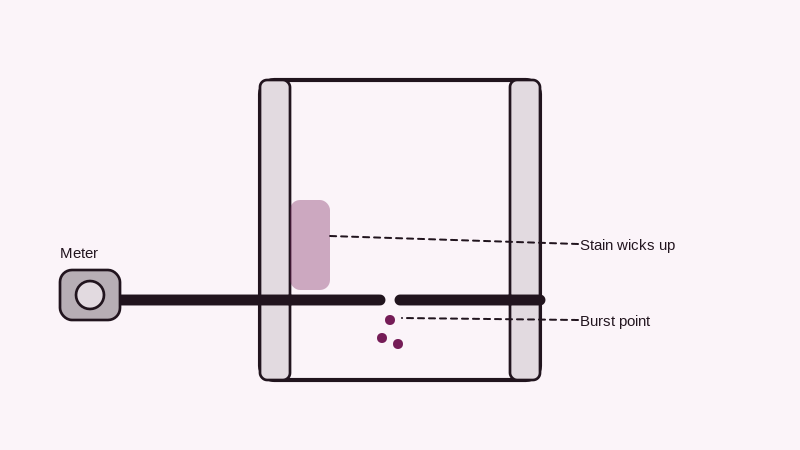
Common giveaways include a puddle with no source, a faucet that suddenly spits, a rushing sound behind a wall, or a meter dial creeping around while the house is empty. Shut the main first and investigate afterward. More plumbing topics sit on the Mission Point home page, and the quote form accepts a description of what you found.
Which symptoms most reliably mean a pipe has burst?
Watch for water that cannot be traced to a fixture: a soaked floor or wall, a ceiling that stains or bulges without warning, running water audible in a quiet house, reduced pressure, and a meter that keeps turning with everything off. Any single sign deserves action. Two together almost certainly mean a burst or major leak.
Checklist:
- the meter dial moving while every tap is closed
- cloudy, brown or rusty water right after the pressure fell
- hissing or rushing inside a wall or under the floor
- warm or damp spots on a slab floor
- bubbling paint, curling flooring or a musty smell
- a bill far above the usual
Slow leaks show signs that creep in gradually. A true burst shows them within minutes. For comparison, read signs of a water leak in the ceiling and a high bill with no visible leak.
How do I find a break hidden inside a wall?
Hold a drinking glass or a stethoscope-style cup against the wall and listen, look along baseboards for stains and swelling, feel for a warm or cool band, and watch the meter dial. If the meter runs with the house off and a damp area keeps growing, the break lies in that wall or in the line feeding it.
Walls hide leaks well. Drywall draws water upward and sideways, so the stain often sits higher or farther along than the real hole. Many plumbers bring a moisture meter or thermal camera, which pins the spot down before any cutting. Photograph the area and trace its edge in pencil to check whether it spreads.
For a leak in a bathroom or kitchen wall, close that fixture's shutoff. If the source is unclear, keep the main closed until the plumber arrives. Opening the drywall yourself can speed drying, but leave the pipe alone for the repair visit. For a buried line, see how to tell if a pipe burst underground.
What do I do in the first ten minutes?
Close the main, then drain the house by opening the lowest faucet. Switch off power to wet zones only if the panel is dry and easy to reach, carry valuables up and out, and photograph everything before touching it, building a file for the insurer. Keep out of any room where water is pooling near outlets.
Not sure where the main is? Check the meter box at the street, the wall facing the street, and the garage next to the water heater. Tract houses from the 1950s to the 1970s often have a round handle on the front wall. Do not force a stiff gate valve, because it can snap, and swapping one out is a quick plumbing visit.
A gas smell is a separate emergency: walk outside, then phone 911 or the gas utility from the sidewalk. See emergency plumber for a burst pipe and burst water pipe.
How should a wet ceiling be dried after a leak?
Stop the flow, then open the ceiling where it sags, let the water run out and dry the space with moving air and a dehumidifier. Wet drywall can grow mold within a day or two, so speed counts. Badly soaked or drooping sections generally have to be cut away and replaced rather than dried.
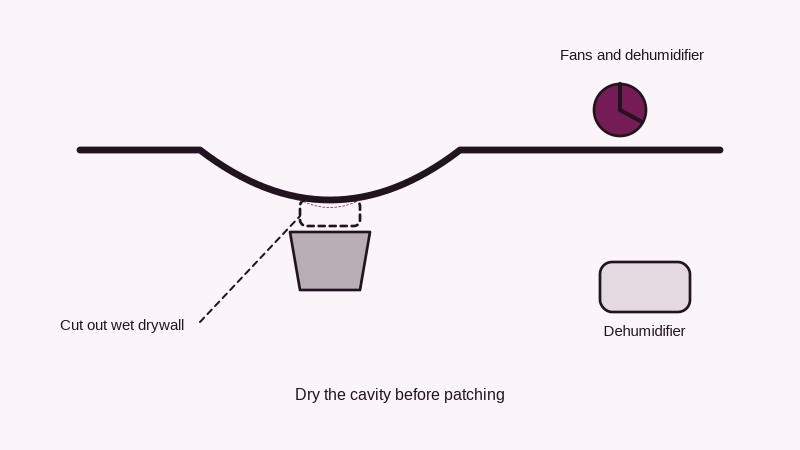
A workable order of work:
- Put out buckets, then let the water drain through a small opening at the lowest point of the bulge.
- Cut out soaked drywall so air can circulate through the cavity.
- Point fans at the opening and run a dehumidifier in the room.
- Take photos and keep damp materials in case the insurer asks.
- Let everything dry fully before patching.
Insulation that got soaked is normally replaced. If the ceiling lies below a bathroom or an upstairs fixture, check that fixture's shutoff and supply line as the source. For causes, see ceiling water leak.
Is there a way to hold back a leak for a while?
Shut the valve, drain and dry the pipe, then fit a repair clamp, a rubber-and-clamp patch or self-fusing silicone tape across a small split or pinhole. These last only briefly. Use them to get through the night and book a proper repair, since a pipe that burst once can fail again next to the patch.
For a PVC joint that drips, a wrap can slow it, though the real remedy is cutting the joint out and rejoining it with a coupling and the right cement. A clamp on a copper pinhole holds for a day, and a lasting fix means cutting out the section. Pinholes tend to cluster, because the pipe wears from the inside, so inspect the neighboring run if you find one. See how to fix a pinhole leak in copper pipe.
Soldering copper means a naked flame inside walls and should not be a beginner's project. Push-fit couplings exist for copper, but a plumber chooses the repair according to the pipe's condition.
What is involved in fixing a leaking copper line?
The usual repair removes the damaged length and splices in new copper with solder fittings, a compression coupling or a push-fit coupling. Close the water, drain the line and dry it first. Take out a longer stretch if the pipe looks corroded or shows several pinholes.
A pinhole, a freeze split and a weeping joint each call for a slightly different fix. The plumber looks at wall thickness, green crust on fittings and the water chemistry before deciding between a patch and a longer replacement. For copper dating from the 1950s into the 1970s, ask whether the rest of the run is sound before paying for a patch. Where many spots fail, repiping a house may be the better route.
Can a burst happen outdoors, and what then?
Shut the water at the main or the outside valve and look for a soggy patch of yard, a sunken spot or a spray from a hose bib or irrigation line. Outdoor lines are generally repaired by digging down to the break and cutting in a coupling. A break in the pipe feeding the house is main line work and belongs to a plumber.
Outdoor clues include wet ground, a meter spinning with the house off, no water at fixtures and noise at the meter box. A broken irrigation line is often a cracked fitting near a sprinkler head. Dig by hand near the break, and stop to ask if other utilities may be close. EPA figures show a typical household loses over 9,300 gallons a year to leaks, so even a smaller outdoor break merits a quick fix.
Common questions
Does homeowner insurance cover a burst pipe?
It varies. Many policies cover sudden water damage to floors and walls but exclude the failed pipe itself and anything blamed on long-term seepage. Your own policy wording decides, so read it or ask the insurer, and keep photos and receipts. The page on insurance and burst pipes suggests what to ask.
How much damage can a burst cause in a day?
A great deal. Flooring and drywall can soak through in hours, and mold may start within a day or two. A break concealed in a wall or under a slab can run unnoticed for days. Close the main at your first suspicion and start drying at once, because every extra hour of wetness raises the repair bill.
Might a cracked pipe seal on its own?
Not in a way you can rely on. Splits do not heal, and a weeping spot usually widens. A pipe that looks dry with the valve closed will leak again when pressure returns, so arrange a proper repair soon instead of hoping the crack closes up and the problem disappears.
At what point is a burst an emergency?
When water keeps flowing after you shut off what you can, when it reaches outlets or fixtures wired to power, or when it floods a living area. Close the main, make the room safe, then send a request. If you smell gas, go outside first and phone 911 or the gas utility from outdoors.
How do I begin searching for a break under the floor?
Feel for warm patches on the floor, listen for water in a silent house and see whether the meter still moves with everything off. Plumbers then use listening gear and thermal cameras to find the spot before opening anything. Read about slab leak detection and repair.