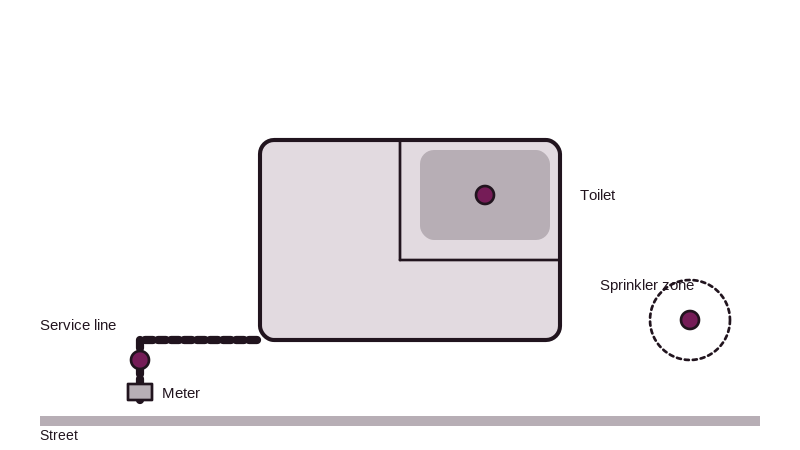
The usual suspects are a toilet that leaks or runs, a break in the pipe between meter and house, sprinklers that run longer than you think, and a billing period that covers more days than the last. Read the meter while all taps are shut and the answer often shows itself. Begin there, or find out how plumbers get matched to requests on the Mission Point Plumbing front page.
The EPA estimates that a typical household loses more than 9,300 gallons of water yearly to leaks, and many of them make no noise. North Valley homes were built between the 1950s and 1970s, so aging fixtures, shutoff valves and supply lines frequently contribute.
What is the quickest check for a leak?
Turn off all taps, appliances and sprinklers, then look at the water meter. A spinning leak indicator, typically a small triangle or wheel, or digits that climb across fifteen minutes, show water getting out. If the meter holds still, usage rather than a leak explains the bill.
The meter usually sits in a box set into the ground near the street. LADWP serves the City of Los Angeles neighborhoods across Sylmar, Granada Hills, Pacoima, Panorama City and the other north Valley areas it lists. The bill itself names your water supplier, and it is where you verify read dates and units.
Photograph the meter, leave everything unused for an hour, then photograph it once more. A different reading confirms a leak. If nothing moved, go on to the other causes below. For the concealed variety, read high water bill with no visible leak, which digs further.
Which toilet problems push the bill up?
A toilet that hisses, runs on or tops itself up unprompted is the most common cause of a sudden jump. A worn flapper lets water seep into the bowl all day, wasting plenty with hardly a sound. Drop some food coloring into the tank, then leave it unflushed for fifteen minutes.
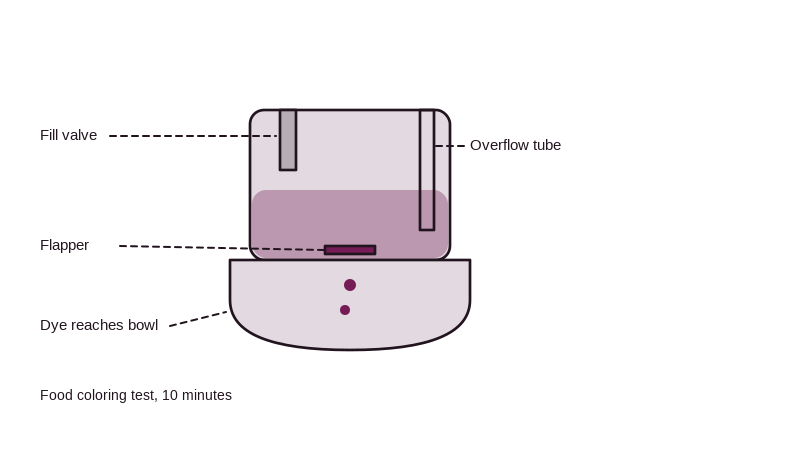
Dye that appears in the bowl means the flapper or fill valve leaks. Flappers cost little and change over in minutes. The guides on why a toilet keeps running and toilet flapper repair take you through the steps. A fill valve stuck open sends water down the overflow tube, easy to see once the tank lid is off.
Replace the faulty part instead of wiggling the handle. If the toilet still runs after a new flapper, the seat could be pitted, and then the repair goes beyond the flapper.
Might a concealed leak be the cause?
Yes. Pinholes in a supply line, trouble beneath a slab or a fracture in the line from meter to house can run for weeks with nothing wet in view. Watch for floor that feels warm, running water you can hear at night, a musty smell, weak pressure and a meter that creeps while all is off.
Older copper and galvanized steel lines in homes from the 1950s to 1970s tend toward pinholes and corrosion. A main line leak is often outside, so watch for unusually green patches, soft ground or water near the meter box.
Plumbers can use listening gear and pressure tests to find a slab leak without opening the floor. The article on leak detection pricing lists what a quote should contain. To study the outdoor clues first, read how to tell if a pipe burst underground.
Can irrigation or outdoor taps cause a high bill?
They can, and frequently do, especially in summer. A sprinkler zone stuck open, a drip line with a split, or a hose bib dripping all day adds up fast. Run each zone for two minutes and watch for geysers, soggy ground or water streaming onto sidewalks.
Outdoor faucets drip at the packing nut or the spout, and the loss is easy to miss because it soaks into the soil. Our guide to fixing a leaky outdoor faucet describes the repair. Inspect the hose attached to an outdoor tap too, since a pinhole in a pressurized hose wastes water around the clock.
After new landscaping goes in, a drip timer set for daily watering may just be too generous. Pick a schedule to suit the season, and review it when the weather cools. Many timers keep summer settings through winter, a common reason for an inflated winter bill.
Why might the bill rise in winter?
Winter bills go up when a toilet or buried line leaks, when irrigation timers hold on to summer schedules, when guests stay over, or when the billing period has extra days. Heating uses no additional water, but leaks do not stop in cold weather, so the causes mirror those of other seasons.
Check the dates printed on the statement for the number of days covered, and compare the same period last year if possible. If use per day is up, something in the house changed. If only the day count rose while daily use is flat, the bill is not abnormal.
Winter leaks hide well because the ground is damp and nobody walks the yard. Read the meter again after a rainy week, and investigate any new sound from the walls or the water heater area.
What else could inflate a water bill?
More possibilities: a leaking water heater or dripping relief valve, a softener or filter that backwashes too often, a new appliance, or a change in rates or billing. Go over the bill's line items, and ask your utility to explain odd charges or a meter reading it flagged.
A heater leaking from the tank bottom or the relief valve line raises the bill and risks damage. The signs are listed in plumber for water heater leak. A softener that regenerates too often is discussed under a water softener and a high bill.
If your utility has an app or online account, it may show daily use, which pinpoints the day something changed. Never guess at a rate change without reading the notice that came with the bill. Ask the utility directly if the numbers will not add up.
Is the banging in my pipes connected?
Water hammer, a sharp bang when a valve shuts, is a different issue from a high bill, yet both can come from high pressure or worn valves. Excess pressure stresses fixtures and can open leaks that raise the bill. Pressure is something a plumber measures with a gauge.
Causes and fixes appear in the article on the water hammer sound. If the pipes bang and the bill is high, tell the plumber about both, since a failed pressure regulator can feed each.
At what point do I need a professional, and how should I choose?
Bring one in when the meter turns with everything off, when you think a slab or wall hides a leak, or when the source stays unfound. To pick, ask for the scope in writing, the contractor license number and the contents of the visit, then set several answers side by side.
When leaks need specialist tools, lean toward a business that explains its method at the outset. To get help, ask for a quote and a nearby plumber is found to take a look. The service areas pages show whether yours is covered, and the meter photos are worth keeping for the visit.
Common questions
What is the time needed to pin down the reason for a high bill?
A meter reading and a toilet dye test together take under an hour. With a pressure gauge and listening gear, a plumber can usually zero in on a hidden leak in a single visit, though a slab or buried line can take longer. Time depends on access and on how many tests each cause needs.
Which questions come before hiring a leak finder?
Find out how the leaks are located, whether detection is billed separately from repair, what the written report contains and how long the visit runs. Obtain the contractor license number and check it with the state licensing board. Ask what the quote omits, for example patching.
Is it necessary to be home for the visit?
Ideally, yes. An adult should open the door, point out the meter and explain the bill history. It helps to know when the bill changed and which fixtures see the most use. Following every test is optional, though you should stay reachable throughout.
Will my utility forgive a bill caused by a leak?
Some utilities grant adjustments after a leak is repaired, though rules vary. Ask your water supplier if it has a leak adjustment policy, and keep the invoice from the repair along with your meter photos as proof. LADWP and other utilities publish their policies, so read the current wording on their site.