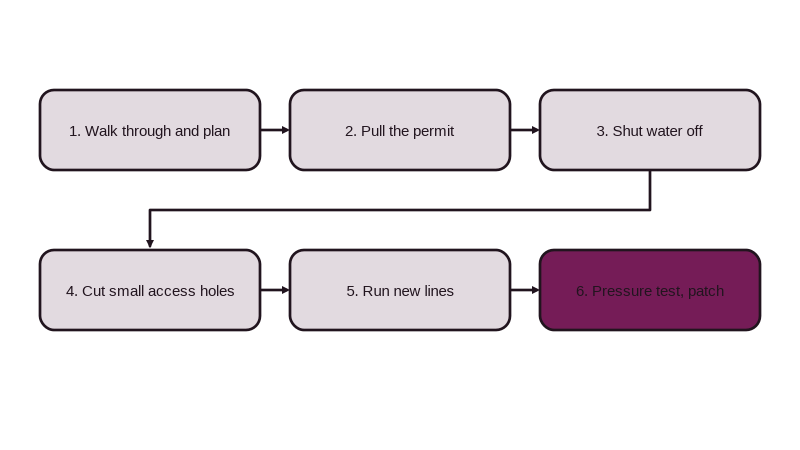
A repipe puts in fresh water supply lines, typically PEX or copper, running from the main shutoff out to each fixture, and takes out or leaves unused the old pipe. A plumber from nearby maps the routes, makes small wall openings, runs and tests the lines, then patches the drywall. Undecided? Start with the overview of repiping a house and return here for the method.
Many Sylmar and north Valley tract homes date to the 1950s through the 1970s, with supply lines of galvanized steel or copper that have served for decades. That age is the chief reason owners weigh a whole-home repipe against fixing leaks one after another.
In what order does a repipe happen?
The sequence is set: inspection and plan, permit, water shutoff, access holes, new lines from the main out to each fixture, pressure test, inspection where required, then drywall repair. A typical house needs a few days, though patching and painting can outlast the plumbing.
First the plumber checks every wall holding a pipe, the water heater, the shutoff and the pressure at the meter. Then comes the decision on where to cut. New lines usually travel through the attic or crawlspace and drop into walls through fist-sized holes, keeping damage small.
Expect the water to be off for most of each working day, so fill a few jugs and plan where to shower. The old lines are cut free and capped or removed. Everything is pressure tested before drywall returns, and the plumber should show you the gauge.
What moves the price of a PEX repipe?
No two repipes are priced the same, and this site shows no figure. The total depends on how many bathrooms there are, the size and layout of the house, how easily the attic or crawlspace can be reached, which pipe is chosen and how much drywall and paint get disturbed.
Request a written quote from each business listing materials, the permit, patching and painting, and whether water heater lines and shutoff valves are covered. A bargain quote that omits patching often ends up costing more once you add it back.
Three bids compared line by line say more than any single headline number. Be wary of a contractor asking for a large deposit upfront. Deposits on California home improvement contracts are capped, and the state licensing board publishes the rule; check its site for the current limit instead of trusting memory.
Can an owner repipe a house without a contractor?
A whole-house repipe generally needs a permit, so it is seldom a do-it-yourself project. Even where the rules allow an owner to do some work at home, a mistake inside a wall can leak unseen for months, and an unpermitted job can cause trouble when the house is sold or a claim is filed.
California requires a contractor license for jobs above a modest dollar threshold and for any work needing a permit. Ask the Los Angeles Department of Building and Safety what applies at your address; its Valley office handles such questions. Check LADBS before you go, since hours and queue rules change.
Doing part of it yourself, say a fixture shutoff valve or a short run, is a world apart from rebuilding the whole supply system. We think whole-house piping is a poor first project.
What can go wrong during a repipe?
The main risks are leaks at a badly made joint, drywall damage beyond expectation, and poor scheduling if a crew leaves partway through. A written scope, a pressure test and a clear patching plan reduce all three. Ask for the hours without water and who will be on site each day.
Beforehand, move furniture away from the walls and empty closets. Photograph walls and floors so later damage can be judged against a clear record. Ask who does the patching and painting, and whether it is included or a separate trade.
Afterward, run every faucet and read the water meter with all fixtures idle. A meter that keeps turning signals a leak and deserves an immediate report.
What is a PEX repipe like?
PEX is flexible plastic tubing. It bends around corners, so a plumber can thread it through walls with fewer fittings and cuts than rigid pipe demands. Crimp or expansion fittings join it, and it runs from a manifold to each fixture or in a trunk-and-branch layout. Today it is the most common repipe material.
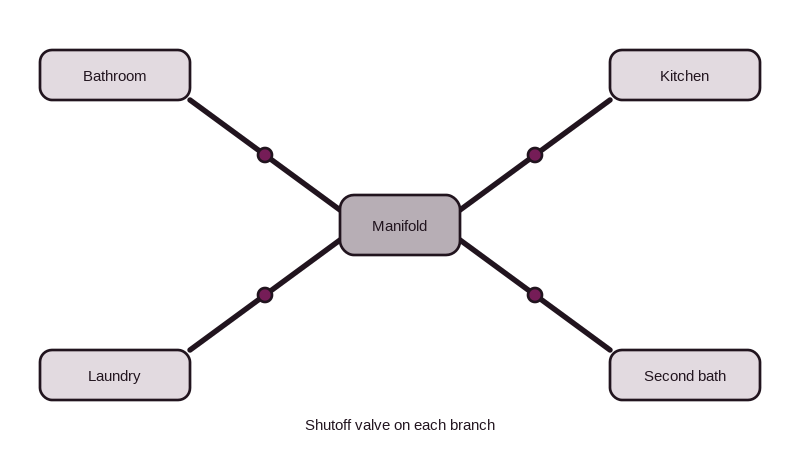
A manifold is a small box, often beside the water heater, where every line begins. It lets one bathroom be isolated without shutting off the whole house. Ask the plumber which layout is planned and which PEX and fittings brand, because the material's warranty depends on matched parts.
PEX has limits. Sunlight damages it, so outdoors it needs shielding, and it must not sit beside a flue or within set distances of a gas water heater without a metal connector. A good plumber knows these details. PEX versus copper compares the two materials, and the guide to the cost of a repipe explains in words what shifts the price.
How can I tell which pipe material my house has?
Look where the pipe enters the house by the water meter, and also at the water heater and under-sink cabinets. Silver-gray threaded pipe is galvanized steel, reddish-brown or green-stained tube is copper, and cream or white flexible tubing is often CPVC or PEX. Gray plastic stamped PB is polybutylene, a known problem material that many owners replace.
A magnet sticks to steel but not to copper. You may gently scratch a visible spot with a screwdriver and see the color beneath, but never scrape a pipe that is leaking or fragile.
A PB stamp means the polybutylene pipe replacement page applies. For steel lines choked by rust, see galvanized pipe replacement. Once the material is known, the plumber can price the work properly before visiting.
What does repiping a slab-foundation home involve?
On a slab, the old lines often run beneath the concrete. The plumber can either break into the slab to replace them, or leave them unused and install fresh lines overhead, across the attic and then down within the wall cavities. Overhead rerouting is common because it spares the floor.
Abandoned slab pipes are capped and left in place. That works well when pinhole-prone old copper under the slab is the problem. With just one known leak below the floor, the comparison of slab leak repair versus repiping shows when each option fits.
Slab houses are plentiful across the north Valley, and attics usually beat crawlspaces for working room. Confirm insulation will be replaced where it was disturbed and that flooring and furniture are protected along the route.
What should I gather before requesting quotes?
Tour the house and list the bathrooms, kitchens and laundry areas, the water heater's location and any leaks, stains or weak pressure you know of. Photograph the meter and main shutoff. With those details in hand, a plumber can say more in the first reply.
Ready? Ask for a quote and the request is passed to a nearby plumber who comes to inspect the house. A written quote, not a verbal one, should follow that visit.
If your main question is frequency, how often to repipe a house answers it, and why repipe a house covers the reasons people decide. The whole site starts at Mission Point Plumbing.
Common questions
How long does a whole-house repipe last from start to finish?
Most homes need two to five working days for the plumbing, then drywall patching and painting. A small house with easy attic access goes quicker, while a big house on two floors, or a slab house with awkward routing, takes longer. Ask the plumber for a written schedule that marks the days without water.
Which questions go to a contractor before a repipe is booked?
Ask about the permit and who obtains it, the pipe and fittings to be used, whether patching and paint are in the price, the length of the water outage and the warranty on pipe and labor. Request the contractor license number, then check it against the state licensing board's records prior to signing.
Must I move out while the house is repiped?
Usually you can stay, but the water is off for much of the day, and the job brings noise, dust and people moving through rooms. Many families arrange to be elsewhere for part of the time. Keep pets and small children out of work areas, and clear valuables from walls due to be opened.
Will home insurance cover a repipe?
Usually not on its own. Policies often pay for abrupt damage after a pipe bursts, but not for replacing pipe that is simply old or worn. Read your policy or ask your insurer, and keep photos and notes if a leak has already damaged the house. The page on whether insurance covers a burst pipe explains more.