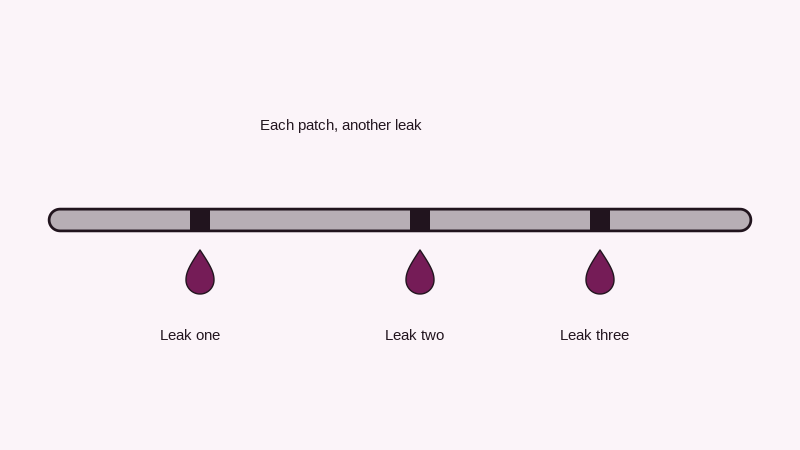
People repipe when the lines hidden in the walls give out faster than they can be patched, or when the pipe belongs to a family with a bad record. A lone leak needs a repair, not a repipe. Common triggers include two or three leaks within a few years, tinted water, or a pipe type that has failed often elsewhere. The whole process is described in repiping a house in Sylmar; this page deals with the decision itself.
What is the case for replacing every supply line?
Repeat failure. As old supply pipe corrodes or thins, each repair fixes a single spot and the next leak shows up a short distance away. A repipe swaps the entire supply system in one project, so the walls get opened once rather than five times. It also ends hidden leaks that rot framing and push up the water bill.
Delay has a cost: every leak damages drywall, floors or cabinets, and an insurer may treat slow leakage as wear. The EPA puts the typical household loss from leaks above 9,300 gallons a year, and a failing line makes that worse. Laying a written repipe quote next to the last two years of repair bills usually settles the matter.
Which warning signs point toward a repipe?
Look for repeat leaks, pinholes in copper, rusty or tinted water at the tap, pressure that sags at every fixture, green stains on pipe, and a material with a record of failure. One sign alone does not mean replace. A cluster of them, or a pattern over time, does.
A quick way to read the evidence: leaks in different spots, blue-green crust on copper, or brown water when the hot tap first opens all blame the pipe, not the fixture. Pressure that drops everywhere, not at one faucet, suggests narrowed galvanized pipe or a tired regulator. Use sudden low water pressure to tell a regulator fault from a pipe fault. A concealed leak often shows first as a bigger bill, as covered in why a water bill runs high.
Which aging pipe types make replacement worthwhile?
Two stand out. Galvanized steel, common in older houses, rusts inside, shrinks the opening and finally leaks. Polybutylene, a grey plastic put into many homes from roughly the late 1970s through the mid 1990s, has a record of breaking at its fittings. Either one is a strong argument for booking the work instead of waiting for a burst.

In the north Valley, houses from the 1950s to the 1970s may have had sections re-plumbed over time, so a single home can contain several materials. A plumber can often recognize the pipe by looking at the water heater, under a sink or at the meter, and by camera or a small inspection hole if not. If you suspect either type, read replacing galvanized pipe and replacing polybutylene pipe.
Does copper alone justify a repipe?
No. Copper can serve for decades, and plenty of homes still have their original copper without trouble. What argues for replacing it is repeated pinhole leaks, which hint that the metal is thinning from inside, usually along one line. Water chemistry and installation quality drive the cause, and it varies between houses on one street.
After one pinhole, a repair and a careful look are enough. After a second, ask the plumber to inspect the line and note where else it seems thin. For a single pinhole, see how it is mended on the pinhole leak repair page. A pattern is the moment to compare the cost of further repairs with a quote for PEX against copper.
Which reasons are weak ones?
Skip a repipe because of a hunch, one leak, or a sales pitch from a seller or salesperson. A leak at a fixture connection, a faulty valve or low pressure at a single faucet is a small repair. A repipe fits when the supply network as a whole is failing, not just one component.
If a plumber recommends a full repipe after one leak, get a second opinion. You are entitled to see the evidence: the failed section, the pipe type, the pressure test or camera footage. This work needs both a permit and a contractor license in California, so the quote should carry the license number and say who applies for the permit.
Should earthquake risk sway the choice?
It raises the stakes without being a reason by itself. The 1971 San Fernando earthquake left upper Sylmar residents without water and gas, and fires from the 1994 Northridge earthquake burned more than 70 homes there, so owners nearby take their water and gas lines seriously. No pipe material is sure to survive a major quake.
Either way, do two practical things: locate your main water shutoff and confirm that you can turn it, and ask a plumber about a seismic gas shutoff valve. City of Los Angeles rules require one when a building is sold and on certain larger jobs, and the earthquake valve guide lists what to confirm with LADBS.
How do I pick between patching and a full repipe?
Compare the repair record, the pipe type and the quote. A known problem pipe, or leaks that keep returning, often tip things toward a repipe. When the pipe is sound and the leak happened once, repairing it is the better choice. Get both numbers on paper so nothing relies on guesswork.
Request a written quote that lists fixtures, access points, drywall repair, permit, schedule and warranty, then ask for the same breakdown on a repair-only plan. The page on repipe costs shows what to compare. To begin, complete the quote form. Mission Point Plumbing has someone check incoming messages on weekdays during office hours, forwarding each to a local plumber who then comes to the house.
Common questions
Does a repipe cure weak water pressure?
Sometimes. If narrowed galvanized pipe is the cause, new pipe restores the flow. If a failing regulator, a clogged aerator or the street supply is responsible, a repipe changes nothing. A plumber should read the pressure on a gauge before suggesting any repipe, so the money goes toward the real cause of the weak flow.
Is it possible to stay home during a repipe?
Usually, though the water goes off for stretches and walls are opened. Ask for the daily number of hours without supply and whether a temporary hookup can be arranged. Drywall repair and painting count as a separate step unless the quote states they are included, so check that line before agreeing to the work.
What is the lifespan of new supply pipe?
It varies with the pipe, the water and the installation. Copper and PEX can each last decades, and manufacturers publish written warranties for their products. Get the warranty terms on paper and file the permit record, which is useful at the time of a sale. The installer's workmanship also matters, so ask what labor coverage comes with the job.
Does repiping require a permit?
A permit is normally needed to replace all the supply lines, and permitted work in California must go to a contractor with a license. Within City of Los Angeles limits, LADBS issues it. Ask the plumber whether they file it, and verify the details with LADBS for your address, since requirements can change from one property to the next.
Will insurance pay for a repipe?
Normally not, because it is treated as upkeep. Some policies cover sudden water damage after a burst pipe, but not the swap of worn pipe. Read your policy and ask the insurer before work starts. The page on insurance and burst pipes explains common patterns. Meanwhile, keep invoices and photos together.
How can I prepare before the quotes arrive?
If a leak is active, close the main, and make sure you know where that shutoff sits. Note when and where leaks happened, and photograph stains and corrosion. That record helps the plumber and any insurance claim. Keep dates, photos and repair receipts in a single folder, because a clear history also strengthens the case for a repipe.