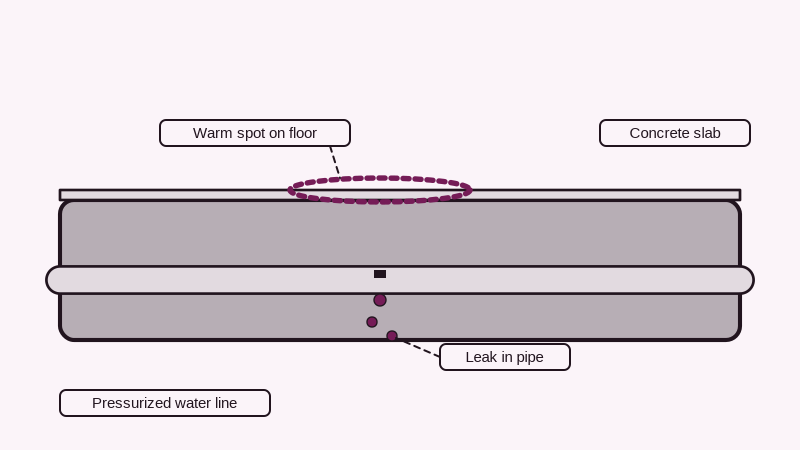
A pressurized pipe that runs beneath or through a concrete foundation slab and loses water is what makes a slab leak. It stays hidden until a hot spot underfoot, the sound of flowing water or a sudden bill increase exposes it. Plumbers locate it with a meter test plus listening or thermal gear, then fix it by digging down, rerouting the line or replacing it. To reach a local plumber, use the quote form, or start at the Mission Point Plumbing home page.
What are the signs of a slab leak?
Typical signs: running water audible with everything off, a warm patch on the floor, a water bill that rises without explanation, a meter dial that turns while taps are closed, damp carpet or baseboards, and falling pressure. One sign alone proves little, but two or three together make a leak under the slab likely.
Clues in more detail:
- Warm floor spot. A leaking hot line heats the slab above it. Cross tile or concrete in bare feet and feel for it.
- Running sound. Switch everything off, then listen on the floor near walls and near the water heater.
- Meter movement. With every fixture and appliance off, a moving meter dial suggests water is escaping somewhere. Whether that is under the slab or elsewhere takes further testing.
- Damp flooring. Carpet that is wet in one patch, lifting laminate, cracks in tile or a musty smell near a wall.
- Pressure drop. A leak before the fixtures can weaken flow at every tap.
- Foundation sign. Water at the slab edge outside the house, or soil that stays wet.
According to the EPA, an average home loses over 9,300 gallons of water a year to leaks. A slab leak can waste much more than a dripping tap, and given enough time it can undermine the soil under the foundation. For the wider check, see why the water bill climbs and a bill that grows with no visible leak.
What lets plumbers locate a slab leak without breaking the floor?
Plumbers combine a meter test with listening equipment, a thermal camera and sometimes pressure testing or a tracer gas. Each tool narrows the search, and together they can pinpoint a spot within a short distance. The aim is to open the slab in one place, not several.
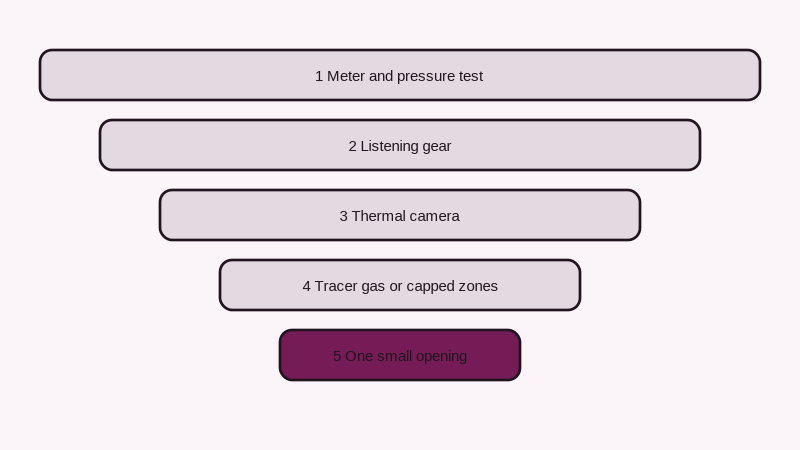
The common methods:
- Meter and pressure test. Shutting off the house isolates the leak from fixtures. Pressure testing shows whether a line loses pressure.
- Acoustic listening. A sensitive floor microphone catches the noise of escaping water and shows where it is loudest.
- Thermal imaging. A heat camera spots warm areas from a leaking hot line. It works best with hot water lines and when the slab is not covered in thick flooring.
- Line tracing and tracer gas. Harmless tracer gas goes into the line, and sensors at the surface detect it, a useful backup in difficult cases.
- Isolating zones. The plumber may cap sections of the line to learn which section leaks.
Not every method suits every house. Ask the plumber which they use and why, and ask for the result in writing, with a drawing or photo of where they think the leak sits. The leak detection cost page shows how such visits are quoted, and spotting a burst pipe underground covers outdoor lines.
Which repair options exist for a slab leak?
Four routes dominate. A spot repair cuts into the slab above the leak and swaps that piece. Rerouting leaves the failed line unused and runs a new one overhead, through walls or the attic. Lining coats the inside of the old pipe with a new layer. Repiping replaces the whole system. Each trades off mess, cost and durability.
How they compare:
- Spot repair (open the slab). The plumber cuts through the floor, repairs the line, then patches the concrete. This route is straightforward and suits a single break in sound pipe. It disturbs flooring, and the remaining old pipe is left untouched.
- Reroute. A new line goes overhead or through walls, bypassing the slab. It avoids further breaks under the floor but needs access and some wall repair.
- Epoxy lining. A resin is pushed through the pipe and cures into a new inner skin. It avoids digging. Whether it suits your pipe, and whether a given line can be lined, is the plumber's call, and local approval rules may apply.
- Repipe. The whole supply system is replaced, often in PEX, which suits a house with several leaks or old pipe. See repiping a house.
To decide between repair and repipe, read repairing a slab leak versus repiping, and slab leak repair cost shows what a quote lists.
Will a slab leak repair need a permit?
Often, since opening a slab, rerouting lines and repiping are significant plumbing work. We have not verified the City of Los Angeles rule for each type of repair, so ask LADBS and the business. The business typically files for the permit, and the CSLB says a contractor holding a license must handle any job that needs one.
LADBS has a Van Nuys office for the Valley at 6262 Van Nuys Boulevard, 2nd Floor, Room 251. Its hours differ by day, so check LADBS before you go. The CSLB further states that a license is generally required once labor and materials pass a set threshold. Treat both as general guidance and confirm them at the source.
Get the business to state in writing whether a permit applies, who obtains it and who arranges the inspection. La Crescenta sits in unincorporated county territory rather than the City of Los Angeles; its rules are different, and which office applies is something we have not verified.
How do I request quotes for slab leak work?
Enter the address, the signs you have seen and whether a meter test shows movement into the form. A local plumbing business picks up the request and reaches out to you. We do not publish dollar figures here. A written quote should separate the detection, the repair method, the flooring repair and any permit.
Compare quotes on:
- The method: spot repair, reroute, lining or repipe.
- Who patches the concrete, flooring and drywall afterward.
- The permit and inspection.
- What happens when the leak turns up somewhere other than where detection said.
- Timeline, noise and dust, and where the water will be off.
This site has no round-the-clock line; requests are read Monday to Friday, 9am to 5pm. When water floods the house, shut the main valve first, and then go to the emergency plumber page.
Which steps come first when a slab leak is suspected?
Start with a meter reading taken while every fixture is off, shut the main valve if the leak is large, and photograph any signs of damage. Never take a jackhammer or drill to the floor yourself. Then have a plumber confirm and locate the leak, since guessing can mean needless damage to your floors.
Immediate steps:
- Note the meter reading, wait twenty minutes with everything off and read it again.
- Where water is visible or a hot spot is felt, shut the main valve and the water heater's supply.
- Photograph the floor, walls and meter.
- Move belongings off wet flooring and lift carpet where you can.
- Contact your insurer about what the policy covers before large repairs, unless you have to stop the water first.
A leak under the slab can also affect gas lines or electrical conduits nearby, and a wet slab may be slippery or unsafe near outlets. Where water is near electrical outlets or the panel, stay away, and cut power only if you can get to the switch without stepping through water.
When is a repipe better than repairing one slab leak?
When the pipe has failed before, when there is more than one leak, or when the material is known for failing, a repipe usually beats another patch. A single leak in otherwise good pipe suits a spot repair. A tired system keeps leaking, and each break under the floor is costly to open.
Questions to ask:
- Is this the first leak in this line, or have there been others?
- What is the pipe material and age?
- Do other pipes in the house, such as hot water lines in the walls, show wear?
- Would a reroute cover the leaking section for good?
Many north Valley homes date from the 1950s to the 1970s, and the original copper under the slab is now old. Not every slab house has pipes under the concrete, because some homes run them through the attic. A plumber can say which yours does.
For the decision, compare a repipe quote and a repair quote side by side, and ask about PEX versus copper. If you are weighing companies, the page on picking a company for slab leak repair lists the questions.
Common questions
Will a slab leak seal on its own?
No. A leaking pressurized pipe does not seal itself, and the water can wash out soil and damage flooring. The leak may seem to ease if pressure drops, but it will return. Get it located and repaired, and watch the meter in the meantime.
How long does slab leak detection take?
Allow an hour or two for a meter and listening check, with a thermal scan or pressure test adding more time. A hard-to-find leak takes longer. We cannot promise a time, so ask the business for an estimate and what it depends on.
Is a slab leak covered by insurance?
Policies differ. Many cover resulting water damage from sudden leaks but not the cost of getting at the pipe, and some exclude slow seepage. Read your policy, and raise the question with the insurer before work begins. Insurance advice is outside what this site can offer.
Is a slab leak dangerous?
Usually not directly, but a long leak can undermine soil, ruin floors and create a risk where water meets electrical outlets. Keep away when water reaches the panel or outlets. With a gas smell as well, get out of the building and reach the gas utility from a safe place outdoors, or 911 if anyone is in danger. See our emergency page.
Can I detect a slab leak myself?
The first check is yours to do: read the meter with everything off, feel the floor for warm spots and listen for running water. Pinpointing the leak needs equipment. Ask a plumber to locate it rather than breaking concrete on a guess.