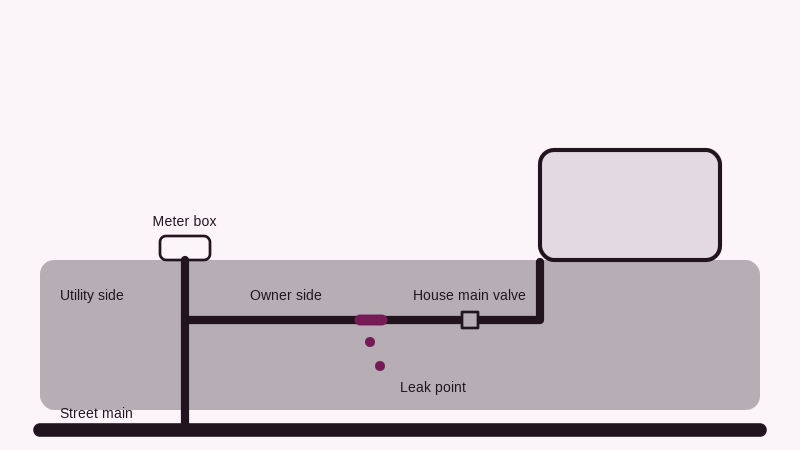
Four clues point to a break in a buried line: a meter dial creeping along although every fixture is closed, a bill that has suddenly climbed, weaker pressure at every tap, and wet ground, a sinkhole or a soft patch in the yard or street that rain or irrigation does not explain. The meter test settles it. Head to Mission Point Plumbing for what comes next.
Which signs show an underground pipe has burst?
The signs: an unexplained patch of ground in the yard or driveway that is wet or has sunk, a green and unusually lush strip of lawn, running water audible with all taps off, falling pressure, discolored water, and a bill that jumps. One alone is a hint; two or three together are a strong reason to test.
Look outdoors first. Walk the route between the meter and the house, plus any irrigation or garden lines. Lush, soggy ground in dry weather, a puddle that does not dry, or a patch where soil has settled all suggest a leak. Water can also run along a pipe trench and come up far from the break, so the wet spot is not always above the leak.
Inside the house, listen at night. A faint hiss or rush near a wall or the front of the house, with every fixture and appliance off, is a clue. Low pressure throughout the house, rather than at one tap, points toward the supply line.
Other signs: a cold or warm streak on a slab floor, damp baseboards on an outer wall, water standing in the meter box, plus a neighbor reporting low pressure too. The last one suggests the problem may be on the street side, which is the water utility's business.
A burst main supply line can also be a surprise after a ground shift. The north Valley has a history of earthquakes: the 1971 San Fernando quake left residents of upper Sylmar without water and gas, and the 1994 Northridge quake did damage across the area. If you have felt strong shaking recently, check for leaks even if nothing looks wrong.
On average the EPA counts over 9,300 gallons of water lost to leaks per household each year, and a burst line wastes far more in a single day, so act promptly.
How do I do a water meter test?
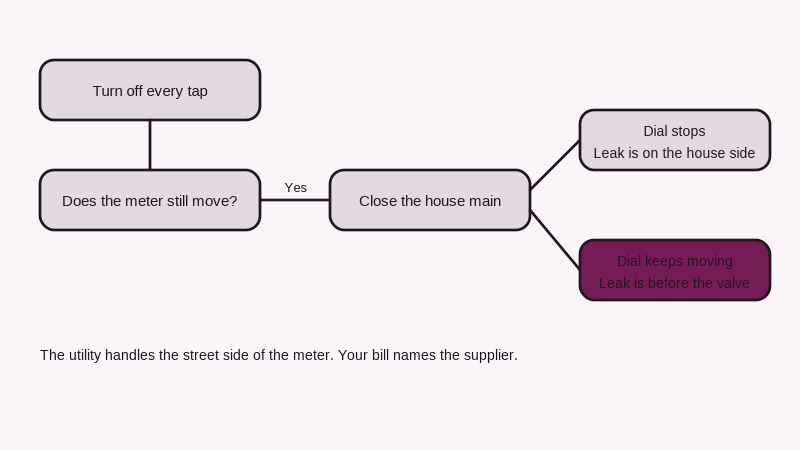
Shut off all taps and appliances, ice maker and irrigation included, then open the meter box and find the small triangle or dial that acts as the leak indicator. If it spins or the numbers move, water is flowing somewhere. Close the house main valve and look again. Should the dial halt, the leak sits within the property.
Step by step:
- Make sure nobody runs a tap, and that the dishwasher, washer, softener and sprinklers are idle.
- Open the meter lid. The box usually sits near the curb or the property line. Use a screwdriver to lift it carefully, and watch for insects and spiders.
- Find the leak indicator and write down the register reading and the time.
- Allow fifteen to thirty minutes with no water used, then read it a second time. Any change in the number shows water on the move.
- Shut the main valve at the house, wait a few minutes and look at the dial again. A stopped dial puts the leak on the house side of that valve; one that keeps moving puts it on the pipe run linking the meter to the house valve.
That last result matters. Responsibility for a buried leak on the stretch from meter to house lies with the owner. A leak on the street side of the meter is the utility's, so report it to them. In the City of Los Angeles neighborhoods of this area, the water utility is LADWP, according to its water quality report. Check your bill to see who supplies you; the City of San Fernando and La Crescenta have their own suppliers.
A running toilet can fool the test. If the dial moves slowly, check for a toilet leak by adding a few drops of food coloring to the tank, then waiting roughly ten minutes. If color appears in the bowl, the flapper is leaking, which the EPA says is a common cause. See toilet flapper repair for the fix.
Why do buried pipes burst?
Buried pipes fail from corrosion, soil movement, tree roots, high water pressure, old pipe material and the stress of a hot-and-cold cycle. In this area the ground shifts in earthquakes, and many homes still have pipe from the 1950s to 1970s. Freezing is rare in Sylmar, so age and pressure are the usual causes.
Common causes include:
- Corrosion. Inside a galvanized steel pipe the rust builds from within, while copper can develop pinholes in aggressive soil.
- Pressure. A house without a working pressure regulator can see pressure spikes that stress old pipe. See water pressure regulator replacement.
- Ground movement. Settling, earthquakes and nearby digging can shear a pipe.
- Roots. Roots look for water and can crack joints.
- Bad material. Some plastic pipe types, such as polybutylene, are known for failing. See polybutylene pipe replacement.
For more causes, read why pipes burst, and for how to reduce the chances, see ways to prevent burst pipes.
What are my next moves if I suspect a burst?
Close the house main valve and leave it closed, and keep people and vehicles off any soft or sinking ground. When the main is impossible to find, turn off the meter valve with a meter key. Photograph the ground, the meter and the dial, then pass the details to a plumber.
Safety first. Do not dig near a wet patch without checking what else is buried: gas lines, electrical conduit and other utilities run near water lines. California has a free service to mark buried utilities before you dig, and using it is the sensible step before any digging. The utility and the plumber handle anything involving gas. If you smell gas at all, leave the building, then contact 911 or your gas utility from outside.
If the house is flooding or a pipe has split inside a wall, the burst pipe pages cover the immediate steps, and what a burst water pipe means goes through it. For a hidden leak that is raising your bill, read a rising bill with nothing visibly leaking.
Photograph the damage for the insurer and keep every receipt. The insurance and burst pipes page lists the questions to put to the insurer.
Who finds and fixes an underground leak?
A plumbing business with leak detection tools finds the leak, and a contractor with the right California license repairs or replaces the buried section. Whatever lies beyond the meter on the utility's side falls to the utility. A written quote should say where the pipe will be dug, how the surface is restored and who handles permits.
Detection can use listening devices, pressure tests and sometimes cameras. Ask which method is used and what you receive afterward, for example a marked location. The page on leak detection pricing factors explains what the cost depends on, in words, and the repair side is handled on leaking water pipe repair.
California requires a contractor license when a job passes a small-job dollar threshold, and also when a permit is needed. You can verify a license on the CSLB website. Deposits are limited to 10 percent of the price on the contract, or to a fixed ceiling when that is lower. For an address in the City of Los Angeles, ask LADBS, the city building department, whether the work requires a permit; this page cannot say what applies at your address.
When ready, enter the meter test result, what you saw in the yard and photos of the area in the quote form.
Common questions
Is it possible for a buried pipe to burst with no wet spot?
Yes. Water can drain into loose soil, gravel or along a pipe trench and never reach the surface. For that reason the meter test counts for more than the yard. A moving dial with every fixture off, a rising bill and falling pressure can all signal a burst line with a dry lawn.
How can I locate a leak in an underground pipe?
Start with the meter test to confirm it and to learn which side of the house valve it is on. Then walk the line for wet or sunken spots and listen for hissing. A plumber pinpoints the break with acoustic equipment or by pressure testing. Do not dig blind. Underground utilities are close.
Is an underground leak my responsibility or the city's?
Generally the utility maintains its main and the line up to the meter, while the stretch between meter and house is the owner's job. Check with your supplier to be sure, since details differ. Your bill names the supplier. The meter test shows which side the leak is on.
How fast does an underground leak cause damage?
A burst line can wash out soil, undermine a driveway or flood a crawlspace within hours. A smaller leak does damage slowly, through a rising bill and settling soil. Either way, shut the main if water is pooling or soil is sinking, rather than leaving it running until a quote arrives.
What if the burst is beneath my slab foundation?
A leak under concrete shows up as warm floors, damp flooring, a spinning meter and the sound of water. The guide to slab leak repair or repipe explains the options. Keep the main closed when you can, and have a plumber confirm the location before any cutting starts.