A spike with nothing wet almost always has one of four causes: a toilet bleeding into its bowl, irrigation that has broken or runs underground, a buried or in-wall pipe, or simply more water use than you realize. Your meter can sort them within an hour. We take the hunt step by step below; for the site's overview, begin at Mission Point Plumbing.
How can you track down a leak that leaves no puddle?
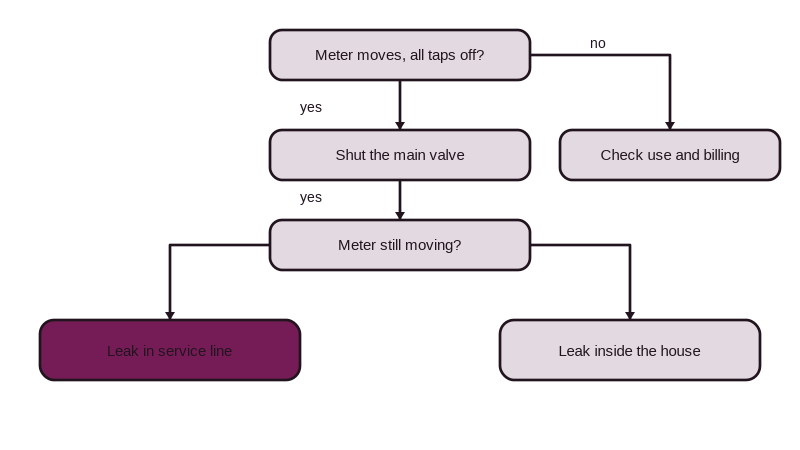
Start at the meter. Switch off every tap and appliance, note the reading and the position of the small spinning dial, leave the house unused for sixty minutes, then look again. If anything has moved, water is leaking past the meter. A dial that has not budged points the finger at habits, the season or the billing dates.
Most meters carry a low-flow indicator, a small star, triangle or wheel that spins at even a trickle, which makes it your best clue. Readings usually count hundreds of cubic feet, and one hundred cubic feet equals roughly 748 gallons, so a modest rise in the number is plenty of water.
Then divide the system in two. Shut the main valve where the pipe enters the house and read the dial once more. Still turning? The loss is in the service line between meter and house. Stopped? Look inside the walls or at irrigation downstream of that valve.
Keep notes on each step; whoever investigates will want them.
When should you bring in leak detection?
When the dial turns with everything off, and the toilet and irrigation checks find nothing, the leak is probably hidden in a wall, under the slab or in the service line. Detection relies on listening gear and pressure tests to pinpoint it, so repairs open as little of the house as possible.
A plumber can isolate sections of piping, test the hot and cold sides separately, and narrow the location before any cutting. That saves money and mess. Should the leak sit in the street-side line, ask the utility who owns that section; its bill and website show where its ownership stops.
Scale is worth knowing. According to the EPA, the average household loses over 9,300 gallons of water a year to leaks, and a hidden pipe leak can exceed that by a wide margin. How the work is priced, with no figures, is covered in leak detection costs.
Enter your meter test results in the request a quote form, and a plumbing business near you can reply; how a job runs outlines the stages. Water spots on a ceiling are a different clue, covered in water spots with no leak.
Could the bill be high even with no leak?
Yes. A longer billing period, a seasonal jump in irrigation, guests, a new appliance, a filling pool or a change in rates can all raise the total. Compare this bill's usage number, not just the amount, against the same months last year, and check the dates between readings.
Estimated reads cause surprises. If the utility could not read the meter, it may bill an estimate, then correct it later. The bill shows whether the reading was actual or estimated, and the meter itself tells the truth.
Softeners and filters can add water use for regeneration but rarely explain a big jump; see whether a softener can raise a bill. A general walk-through of other causes sits at reasons for a big water bill.
For homes served by LADWP, the utility's own bill and website explain its rate structure and read dates. Other districts, such as the one serving La Crescenta, have their own, so check your bill to learn who supplies you.
What are the most common hidden leaks?
Toilets lead the list, followed by irrigation, water heaters, outdoor spigots and buried lines. A flapper failing to seal can lose hundreds of gallons daily without any noise worth noticing, and a slab or wall pipe can leak for months before anything shows.
Dye-test every toilet: put a few drops of food coloring in the tank, wait fifteen minutes without flushing, then look in the bowl. Colored water there means the flapper seeps. Toilet keeps running and toilet won't stop running cover the fix.
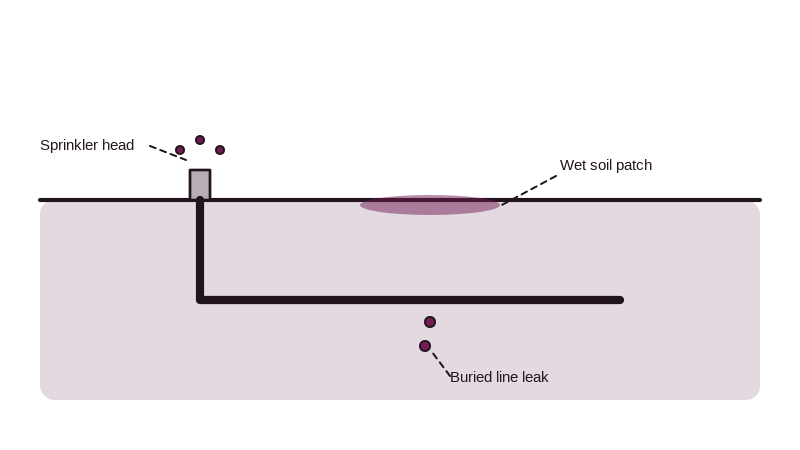
Irrigation hides well in the Valley's dry summers. A stuck valve, a cracked riser or a broken line can run without a puddle if the soil drinks it. Shut the irrigation supply and watch the meter. The water heater is another suspect: a dripping relief valve or a rusting tank can leak into a drain or pan where you never see it.
Beneath a slab, hot lines often fail first. Floor patches that feel warm, water audible overnight, or a hot-water bill that climbs by itself all point that way; slab leak detection and repair explains it.
Common questions
Will the utility remove charges for a leak?
Some utilities offer bill adjustments after a documented repair, but rules vary and nothing is assured. Ask your water supplier directly what it offers, what proof it wants and how long you have. Keep the plumber's invoice together with meter readings from before and after.
What does a leaky toilet really waste?
More than most people guess. A flapper that seeps steadily can pass hundreds of gallons in a day, and being silent, it can carry on for weeks. The dye test takes minutes, and the part that fixes it is minor next to the water lost.
Can a leak under the house cause foundation problems?
It can contribute. Water under or beside a slab can soften soil and wash material away, and long leaks may cause damage to flooring and framing. That is one reason to trace a hidden leak early. A plumber can check, and a structural expert can assess any cracks.
Whose problem is a leak past the meter?
Generally the owner's, for pipes on the property past the utility's connection. The exact point at which the utility's duty stops varies, so ask the supplier and read your bill. Never assume the street connection is yours or theirs without confirming, and save any written reply.