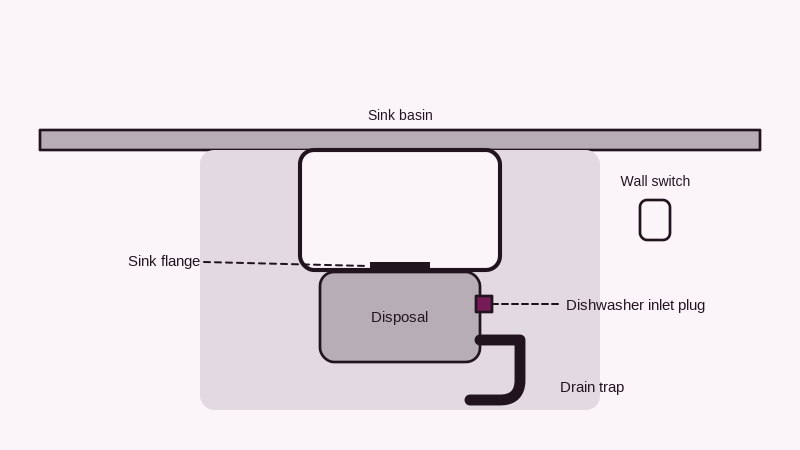
Bringing in a disposal installer means the old unit is removed, if one exists, the new disposal is mounted below the sink and spliced into the line that runs from the sink outlet to the trap, the dishwasher drain is hooked up if you have a dishwasher, the power is sorted out, and the finished job is tested for leaks and noise. It is among the fixtures in our garbage disposal repair guide, which also covers when repairing beats replacing.
What is involved in removing and installing a disposal?
The plumber turns off the breaker, detaches the drain and dishwasher hose, unhooks the old unit at the mounting ring, fits the new one onto the sink flange, reconnects the drain and dishwasher line, restores power and runs water to look for leaks. If there is no disposal yet, the sink flange, the drain and the power are all new work.
How a typical visit goes:
- Power off. The breaker is switched off and tested before anyone touches the wiring.
- Removal. The drain pipes and the dishwasher hose come off, then the mounting ring is loosened and the old unit lifted out.
- Flange and mount. In a replacement the sink flange often stays. For a first installation the plumber sets the flange in putty or on a gasket, then adds the mounting assembly below the sink.
- Connection. The disposal outlet joins the trap, and the dishwasher line goes to its inlet.
- Power. A cord into an outlet or a hardwired link, depending on the setup.
- Test. Water and unit both run, and each joint is inspected for drips.
Units mount under the sink in the space between the sink's drain and the trap, as Wikipedia describes it, and the cabinet below decides what fits. A larger motor means a larger unit, and cabinets in many 1950s to 1970s north Valley kitchens are shallow, sometimes crowded with a water filter or a soap dispenser. Measure the space and tell the plumber about it.
How is a garbage disposal connected to power?
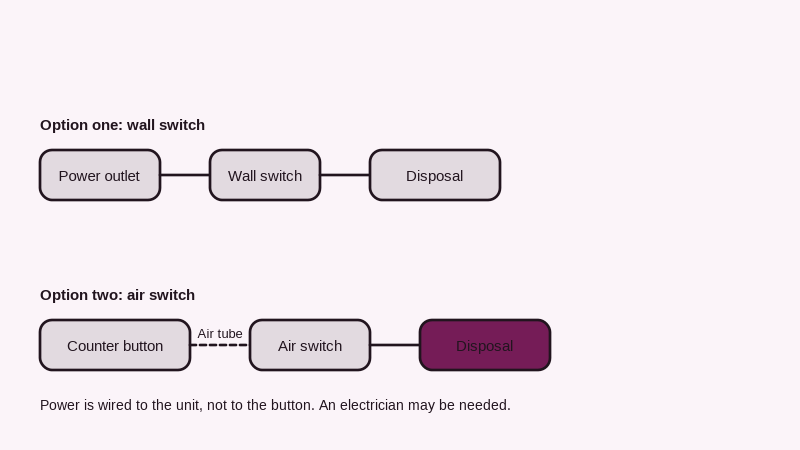
A disposal uses standard household power, connected through a cord to a nearby outlet or straight into a junction box, and is usually operated by a wall switch or a countertop air button. Wiring that is not yet there is regulated electrical work, so find out who will do it and whether a permit applies.
Wikipedia describes domestic units as typically rated at 250 to 750 watts. Use a unit sized for your use. Check the manual for the plug and wiring arrangement.
Options:
- Wall switch. The most common arrangement, switched from the wall.
- Air switch. A countertop button pushes air along a tube to a switch by the unit, so no switch needs wiring through the wall. See adding an air switch to a disposal.
- Batch feed. Some units run only when a stopper lid is in place, which Wikipedia says is considered safer because it keeps objects out during operation.
Water and electricity make a dangerous pair. Never work on a disposal while the breaker is on, and keep fingers away from the chamber even if it seems off, unless the power is cut at the breaker or the cord is pulled.
What should be agreed before the plumber begins?
Agree on the unit, the dishwasher connection, the power arrangement, the drain, what happens to the old unit, who repairs anything disturbed, and a written price. Find out whether the quote includes the unit or just the labor, and which warranty comes with the unit and with the installation.
Points to check:
- Unit and size. Name the make, model and horsepower, or the plumber's pick.
- Dishwasher. If a dishwasher drains into the disposal, the inlet has a plug that must be knocked out first, otherwise the dishwasher cannot drain. The manual describes the step; have the plumber confirm it was done.
- Power. Plug or hardwire, wall switch or air switch, and who does the wiring.
- Drain. Whether the trap and drain pipe are in good shape, and whether they will be replaced.
- Leak check. Ask the plumber to run the unit and check beneath the sink before leaving.
- Removal. Is the old unit hauled away?
If a leak shows up later beneath the sink, see tracing a leak under the kitchen sink.
A faucet swap often accompanies a disposal job, and our pages on faucet installation and faucet replacement describe in words what drives that price.
Who should do the work, and which regulations apply?
The plumbing belongs with a contractor holding the right California license, and new wiring must meet the electrical rules. Above a small-job dollar threshold a contractor license is mandatory, and any permitted job needs one whatever its size. Confirm the license number through the CSLB online lookup before agreeing to anything.
Ask whether a permit is needed. For City of Los Angeles addresses, LADBS issues permits. What applies at your address is something we cannot say, so have the plumber put it in the quote. A deposit may not exceed a fixed ceiling or 10 percent of the contract price, whichever is lower.
Renters need the owner's agreement to the work, and in most cases the owner pays. Condo owners should check association rules, since some restrict work hours or require notice.
Enter the details in the quote form: the sink type, whether you have a disposal now, the dishwasher, the cabinet space, and photos from under the sink. The request goes to a nearby plumbing business, which books the visit. The inbox is read on weekdays between nine and five. For more services, visit Mission Point Plumbing.
Can I add a disposal where none exists?
Often yes, as long as the sink's drain opening is standard, there is room underneath, and power is nearby. The work can include widening the drain opening, adding an outlet or switch and changing the drain layout. Wiring is electrical work, so some installations need an electrician with the right California license alongside the plumber.
Things that change the answer:
- Sink type. Most stainless sinks accept a disposal. Some composite sinks or those with a narrow drain do not, and a sink swap may be needed.
- Space. The unit needs clearance under the sink and for the trap.
- Power. The sink may have no switched outlet below it, and no wall switch. Adding a circuit or outlet is regulated electrical work.
- Drain. A disposal sends more solids to the drain line, so a slow or old line is a poor match. The unclogging a kitchen sink page covers the warning signs.
- Septic. If your house is on septic, ask a professional before adding a disposal. Rules and tank capacity matter. Requirements for specific areas have not been verified here, so nothing more is said.
A new disposal also means thinking about what goes down it. Wikipedia notes that especially hard objects, such as metal cutlery, can damage a unit. Ask the plumber for the maker's list of foods to keep out, and follow it. Stringy or starchy food, grease and bones are the usual problems in plumbing guides.
Common questions
How long does fitting a disposal take?
Replacing one disposal with a like unit is often a short visit, since the flange and wiring already exist. A first installation takes longer, because the drain opening, the outlet or switch and the trap may all need work. Ask the plumber for an estimate and for what could add time.
Do I need an electrician to install a garbage disposal?
When an outlet or hardwired connection already sits under the sink, the plumber can usually connect the unit. Adding wiring or a switch is regulated electrical work, in which case an electrician may be required. Check with the plumber about who does that part, and whether a permit applies.
Is a disposal a DIY install?
Plenty of homeowners do swap one, yet the job mixes electricity, water and cramped sink space. Cut the breaker before anything else, and take care with the dishwasher knockout. If wiring is needed, or the drain is in poor shape, a plumber and electrician with the right California licenses are the safer choice.
Why does my dishwasher not drain after a disposal install?
The inlet plug for the dishwasher hose may not have been knocked out, or the drain hose may be kinked or clogged. The manual explains the knockout. If the plug is still in place, remove it with the power off and fish out the piece. Have the plumber check it before leaving.
What should not go down a garbage disposal?
Follow the maker's list. Hard objects such as metal cutlery can damage a unit, as Wikipedia notes. Plumbing guides also warn against grease, fibrous or stringy food, and large amounts of starchy food. Run cold water while it works. When in doubt, put it in the trash or compost.