First bail out standing water and plunge with a cup plunger, with the other bowl of a double sink plugged, then empty the trap by hand over a bucket, and last, feed in a small hand snake. Leave chemical cleaners on the shelf. If several fixtures drain slowly, the blockage is deeper and needs a plumber. The hub on drains and clogs gives the wider picture, and the Mission Point Plumbing home page lists everything else we arrange.
What should I try first on a clogged kitchen sink?
Begin with a cup plunger. Remove loose water, block the second bowl or the dishwasher line if there is one, hold a wet cloth over the overflow, add enough water to cover the cup, and push and pull firmly for about twenty seconds. Repeat a few times. When water starts draining, run hot tap water to flush it.
Plunging works because the pressure swings shift the clog or break it into pieces small enough to pass. It is the cleanest first step since it needs no tools and opens no pipes. Choose a cup plunger, which has a flat rim, rather than the flanged kind made for toilets.
If there is a garbage disposal, turn it off at the wall first and never put your hand in it. After plunging, run the disposal briefly only if the blockage seems cleared. A jammed disposal needs a different fix, as the page on garbage disposal repair describes.
Before you start, protect yourself. Wear rubber gloves. Keep a towel and a bucket handy. Never plunge a sink that has had chemical drain cleaner poured into it, because splashes can burn skin and eyes.
How do I clear the trap under the sink?
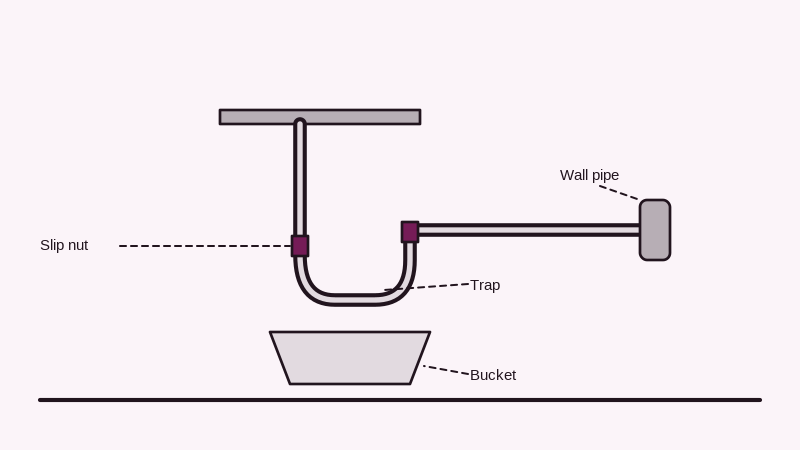
Put a bucket under the U-shaped trap, loosen both slip nuts by hand or with pliers, drop the trap down and empty it. Scrub it with a brush, check the short pipe running into the wall, then snug the nuts again and run water to check for leaks. A grease-clogged trap causes many slow kitchen sinks.
Step by step:
- Empty the cabinet beneath the sink and place a bucket under the trap. Expect a lot of dirty water.
- Loosen the slip nuts on each end of the trap. Plastic nuts usually turn by hand. Metal ones may need pliers.
- Lower the trap and empty it into the bucket. Look inside for grease, coffee grounds and food scraps.
- Scrub the trap and the stub where it meets the wall pipe. A bottle brush or an old toothbrush works.
- Look into the wall pipe. If you see a clog close by, pull it out with a gloved hand or a bent wire.
- Reassemble the trap. Make sure the washers sit flat. Tighten by hand, then a little with pliers if needed. Overtightening cracks plastic.
- Run water for a minute and watch every joint for drips.
On a double bowl sink, the trap may have a branch to the second bowl or to the dishwasher. Clear both. The dishwasher drain hose often attaches to the disposal or tailpiece, and a blocked hose can slow the sink.
If the trap is spotless and the water still drains slowly, the clog sits further into the wall. Try the hand snake.
How do I use a drain snake on a kitchen sink?
A small hand snake, sometimes called a drum auger, goes into the pipe past the trap, and turning its handle lets the tip catch or break the clog. Feed it in slowly, crank when you feel resistance, draw the snake back with the debris, and flush with hot water. Stop if the cable will not advance.
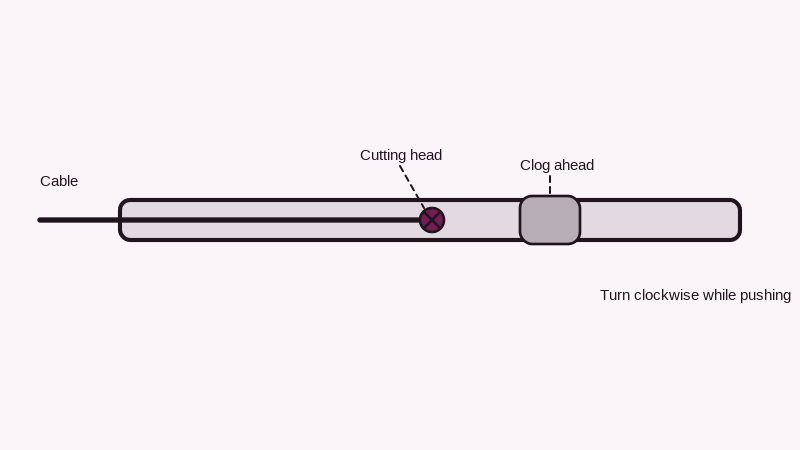
Pick a snake sized for a kitchen line. With the trap off, push it into the wall pipe, because this avoids the tight bends of the trap. Turn the handle clockwise while pushing. When it stops, you have found something. Keep turning gently and pull back. The clog often comes out as a clump of grease and food. Wipe the cable as you retrieve it.
If the snake travels a long way and meets nothing, the blockage may be beyond reach, or you may have a vent problem. If the cable catches and will not turn, stop and do not force it. Forcing it can scratch old pipe or jam the cable. A plumber has stronger tools and a camera to see what is happening.
The guides to unclogging a bathroom sink and unclogging drains in general show the same tools on other fixtures, and why a sink drains slowly helps if the water still moves but moves slowly.
Should I use chemical drain cleaner, baking soda or boiling water?
Skip chemical drain cleaners. They can damage old pipes and fittings, they splash and burn skin, and they leave a hazardous standing liquid that a plumber must then work around. Baking soda and vinegar fizz but rarely clear a real clog. Hot tap water helps with light grease, but boiling water can soften or loosen plastic joints.
Here are the points that matter:
- Never mix cleaners. Some combinations release dangerous gases.
- Tell the plumber if you used any chemical, so they can protect themselves.
- Hot tap water after a clear is a gentle flush. Never pour boiling water into a sink with plastic pipes or a porcelain sink that may crack.
- Enzyme or bacteria products are sold for slow drains. We have not found an official source on their results, so treat them as maintenance at best, not a cure for a full clog.
The north San Fernando Valley has many homes from the 1950s to the 1970s, and their drain pipes may be old galvanized or cast iron with rough inside walls. Chemical cleaners are harder on these, and clogs tend to return where rust scale catches grease. If you keep clearing the same sink, ask a plumber to look with a camera.
When is a kitchen sink clog a job for a plumber?
Hand it to a plumber when the trap and snake fail to clear it, when more than one fixture drains slowly, when water backs up in another sink, tub or floor drain, when there is a sewage smell, or when the clog returns within days. These signs point to a shared line or main, which needs bigger tools. You can ask for one through the quote form.
If wastewater backs up at the lowest drain in the house, the blockage may be in the main line. In the City of Los Angeles, public sewers are run by LA Sanitation and Environment. We have not verified who is responsible for which section of pipe at your address, so have the plumber locate the blockage before any dig. For a sense of what clearing a sink involves, read what a plumber charges to unclog a sink.
Prevention is cheap. Scrape plates into the trash, wipe grease from pans, use a strainer, and rinse with hot water after greasy washing. Keep coffee grounds, rice, pasta and fat out of the drain.
Common questions
How long does it take to unclog a kitchen sink?
A plunger or a trap clean-out usually takes fifteen to thirty minutes, and a snake adds a little more. A plumber often clears a straightforward kitchen clog within an hour. A deeper blockage, a main line problem or a pipe that needs a camera takes longer, and the plumber gives an estimate with the written quote.
What should I ask a plumber before hiring for a clogged sink?
Check whether the quote is in writing and what it includes: the clearing method, a camera check, and any charge for a second visit. Find out what happens if the cause turns out to be a damaged pipe. The state expects a contractor license on permitted jobs, so check the number on the board's website. Ask whether chemicals will be used.
Must I be home while a plumber clears my sink?
Someone should be there to show the plumber the problem, clear the cabinet and confirm that the sink drains afterwards. If you cannot be there, agree the details in writing, and mention any pets and any chemicals you have already used.
Why does my kitchen sink keep clogging again so soon?
The most likely cause is grease and food residue coating the pipe wall past where you cleared, so a new clog forms quickly. Old pipes with rough inside walls also catch debris. A camera inspection reveals whether the pipe is damaged or heavily coated, and the plumber can advise if a deeper clean is needed.
Can a garbage disposal cause my sink to clog?
Yes. A disposal grinds food into a paste that collects in the drain, especially when grease is present. It does not make fats disappear. Run plenty of cold water while it works, and keep fat, coffee grounds and starchy foods out of it. If the sink backs up with the disposal running, the clog is in the pipe behind it.