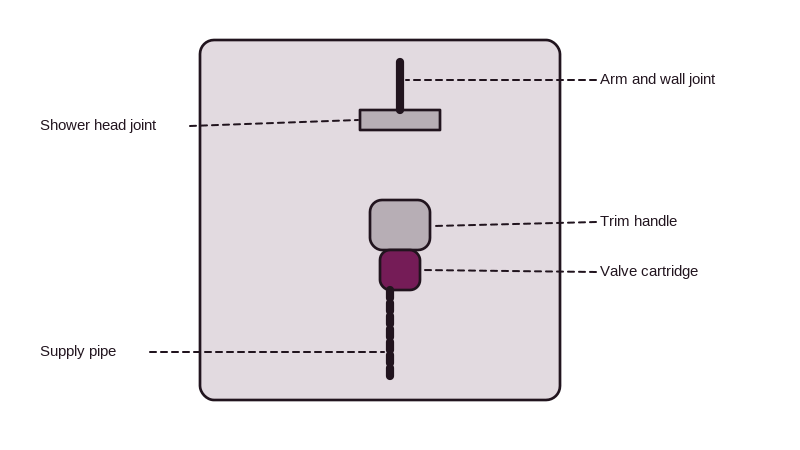
First figure out where the water shows up. Water may fall from the shower head, seep around the wall plate beneath the handle, or keep leaving through the tub spout when the shower is running. When the head keeps dripping after shut-off, the valve probably holds a worn cartridge or tired seals. A weep at the connection is an easier fix. The rest of the fixture repair pages on this site start from the fixture repair hub.
A drip per second piles up over a month, and hot water falling in drops wastes energy too. Many north Valley houses still have the shower valve fitted when the bathroom was built, so finding parts can take a little searching.
Why is my shower still dripping after I turn it off?
Drips that continue with the handle closed show the valve has stopped sealing. Usually a worn cartridge, a stem seal or the valve seat is to blame, and mineral scale can hold the cartridge open slightly. Fitting a new cartridge or cleaning the seat normally stops it. The shower head rarely causes the problem.
A bit of dripping is normal. The head retains some water and empties for about thirty seconds after you shut it off. Drops that carry on for minutes are a fault.
Scale builds fastest in hot water. Check your utility's water quality report for hardness instead of guessing, and read how to remove hard water scale when the head has a white crust.
Do weak flow or sudden scalding point to the same fault?
They can. A worn pressure-balancing cartridge lets the water swing hot or cold when another fixture is used, and scale inside the head chokes the flow. Scalding is dangerous. If the temperature lurches without warning, check the heater setting and have a plumber examine the valve.
Plenty of households turn the heater thermostat down for safety. Read the manufacturer's recommended setting on the label and confirm with a thermometer. Keep children out of the shower until the temperature holds steady.
When thin flow is the main complaint rather than a drip, a shower head built for weak pressure lists options, and you should measure pressure before buying.
How can I stop a leak where the head screws onto the arm?
Unscrew the head, wind fresh plumber's tape clockwise over the shower arm threads, then spin the head back on by hand and finish with a gentle wrench turn. Inside the head, a cracked rubber washer may be responsible, so replace that too. Most drips at this joint stop within minutes.
Water escaping where the arm meets the wall points to a loose threaded joint or a failed flange. Take the arm out, tape the threads and refit it. Avoid forcing it tight, as the pipe within the wall can twist or crack.
Arms set in tile walls are delicate. If the arm wiggles or water creeps behind the escutcheon plate, stop and ask a plumber, since the fitting behind the tile could be damaged.
Could the leak be behind the wall or visible on a ceiling?
Marks beneath the shower, soft drywall or tiles that ring hollow suggest water getting out inside the wall, and a new cartridge will not fix that. The origin may be the supply pipe, the valve body or broken waterproofing. Stop using the shower and bring in a plumber.
On a second-floor shower, inspect the ceiling below for stains. Read ceiling stains that point to a leak and the shower leak plumber guide to see how the source gets traced.
Waterproofing breakdowns at the shower pan or tile joints can look just like plumbing leaks. A pressure test on the supply lines lets the plumber tell them apart, which spares you from opening walls that did not need it.
What is the procedure for changing a shower valve cartridge?
Close the main valve or the shower stops. Pull the handle and trim plate, release the clip or nut that holds the cartridge, and extract it with a puller or pliers. Install an identical cartridge with fresh O-rings and plumber's grease, replace the clip, put everything back together and test.
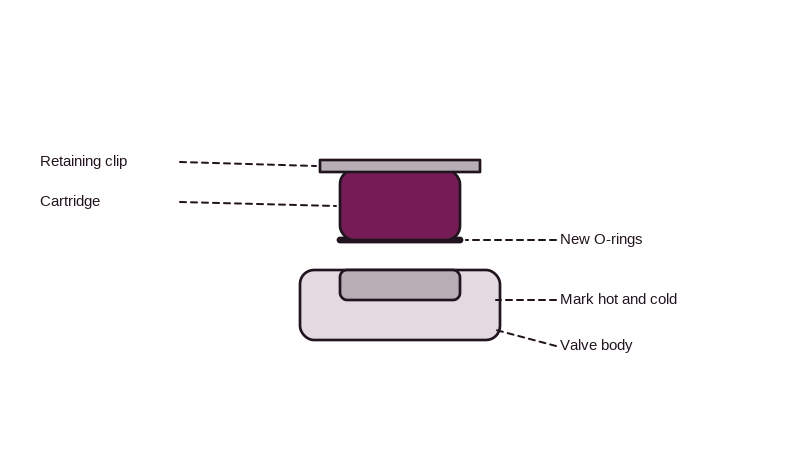
Buy the replacement by brand and model. Valve makers usually stamp their name on the handle or trim. If you cannot tell which it is, carry the old cartridge into a plumbing supply store. For one very common make, see the walkthrough on fixing a Delta shower faucet.
Note the cartridge orientation before pulling it so the hot and cold sides do not get reversed. A cartridge refitted the wrong way delivers cold when you ask for hot. In that case, remove it, turn it half a revolution and test again.
At which stage does the shower job belong with a plumber?
Let a plumber have it if the water will not shut off, the cartridge will not budge, a stain shows on the ceiling, the valve is no longer made, or your repair did not hold. Swapping the valve body requires opening the wall, then closing and sealing it correctly afterward.
Above a small value limit, and wherever a permit is involved, state law calls for a contractor license. Request the license number and look it up with the state board.
A nearby plumbing business picks up whatever you enter in the quote form and books the visit. More guides start from Mission Point Plumbing. When the written quote arrives, ask that the repair and the wall work be priced on separate lines.
Common questions
How much time does a shower faucet repair need?
A cartridge swap runs thirty to sixty minutes when parts are on hand and nothing is seized. Replacing the whole valve takes several hours, plus wall and tile work. Once the plumber has identified the valve and checked for an access panel, a firmer estimate becomes possible.
Which questions should I put to a plumber about a shower leak?
Ask whether a cartridge swap or a full valve is expected, how the wall will be opened, who restores tile or drywall, for how long the water stays off and which warranty applies. Obtain the contractor's license number and check it against the state licensing board.
Must I be home for a shower repair?
Yes, a grown-up has to open the door for the plumber, describe the symptoms and agree the plan if the wall needs opening. Water is shut off for some of the time, so clear the bathroom first. You need not watch the whole job, but stay reachable.
Does a dripping shower head matter much?
The EPA estimates that leaks cost a typical home more than 9,300 gallons per year, and a small drip loses water and energy as time passes. Fixing it early costs little. The bigger worry is a leak behind the wall, which can damage framing and invite mold.