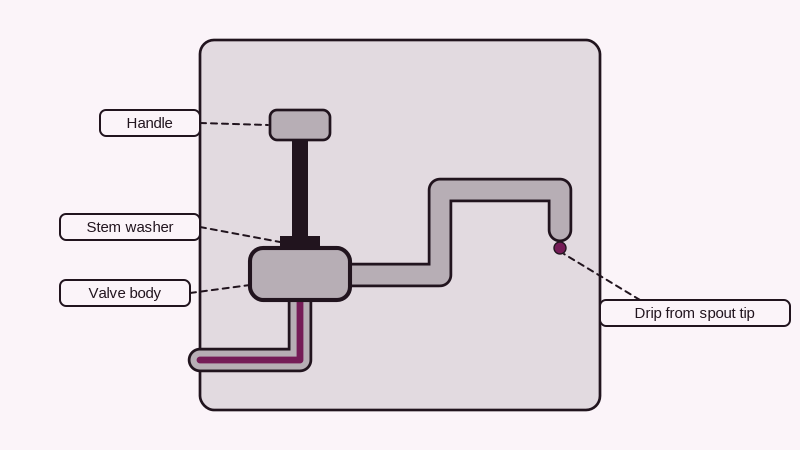
First, notice where the water shows up. Drips at the tub spout mean the valve fails to seal, most often because of a worn cartridge or washers. Damp around the handle hints at worn packing or a flattened O-ring. Water inside the wall, or coming through a ceiling below, is a pipe leak and a plumber's job. More fixture repairs sit in the overview of sink, shower, faucet and disposal fixes.
Plenty of Sylmar and north Valley bathrooms still hold fixtures from the 1950s to the 1970s: two- or three-handle tub valves with compression stems and washers. They wear the traditional way, one rubber washer after another, and replacement parts are simple to find.
What makes the tub spout keep dripping?
A spout that drips even with the handle closed means the valve leaks inside. Two-handle valves usually suffer a worn washer or pitted seat; single-handle valves, a tired cartridge or its seals. Either way, replacing the worn part cures the drip for good.
Which side is at fault? Feel the dripping water. Warm drops point to the hot side, and in a two-handle valve you replace the washer or stem on that side only.
A drip that runs overnight adds up. How small drips register on the meter is explained in why a water bill creeps up, where a dripping tub spout is a common culprit.
What if the moisture is around the handle or where the spout meets the wall?
Seepage at the handle comes from worn O-rings or a loose packing nut on the stem. Tighten the nut slightly; if the leak persists, replace the O-ring or packing. Water where the spout meets the wall comes from a worn spout seal, or from failed caulk and gasket.
A tub spout either slides over a pipe nipple or screws onto it. Look underneath for a small set screw, loosen it and take the spout off to inspect the seal. A worn rubber gasket can often be swapped, and new silicone caulk along the wall gap stops water getting behind.
When the diverter no longer holds and water pours from the spout with the shower running, replace the diverter or the spout, because the diverter is often part of it. For trouble on the shower side, see repairing a dripping shower faucet.
How can I identify my tub valve?
Count the handles and look at their shape. A pair of handles flanking the spout usually signals a compression valve. A single handle that pushes, lifts or turns suggests that a cartridge, ball or ceramic disc sits inside the valve. With three handles, they run hot, cold and a diverter that sends water up to the showerhead.
To confirm, take off a handle. Many have a small decorative cap over a screw. Lever the cap off with a thin knife, take out the screw and ease the handle free. A handle puller loosens a stuck one, and penetrating oil softens mineral buildup.
Photograph each stage and keep the screws in a cup. Take the worn part with you to the shop, or write down the brand printed on the trim, so the replacement matches exactly. Brands are not interchangeable.
What are the steps for replacing a washer or cartridge?
Close the water at the bathroom's valve, or at the main if there is none, and drain the pipes by opening a tap. Remove the handle and trim plate, then either unscrew the stem or extract the cartridge using the right tool. Install the matching new part with fresh O-rings and a smear of plumber's grease, put everything back together and bring the water back gradually.
On a compression stem, the rubber washer is at the bottom end, held by a brass screw. Fit a new washer and small O-ring and check the seat within the valve. A rough seat can be smoothed with a seat-dressing tool; failing that, the whole valve body needs replacing.
For a cartridge, note its orientation before pulling it, because it must go back the same way. If it is stuck, stop yanking with pliers and use a puller made for that brand. For another arrangement, read repairing a tub faucet leak.
How is the valve reached when the tub has no access panel?
With no panel, a plumber may cut in from behind, often through an adjoining closet or room, or from the tiled side. Some valves can be reached from the front, while others require a new valve body. Ask which route does the least damage and who patches the wall afterward.
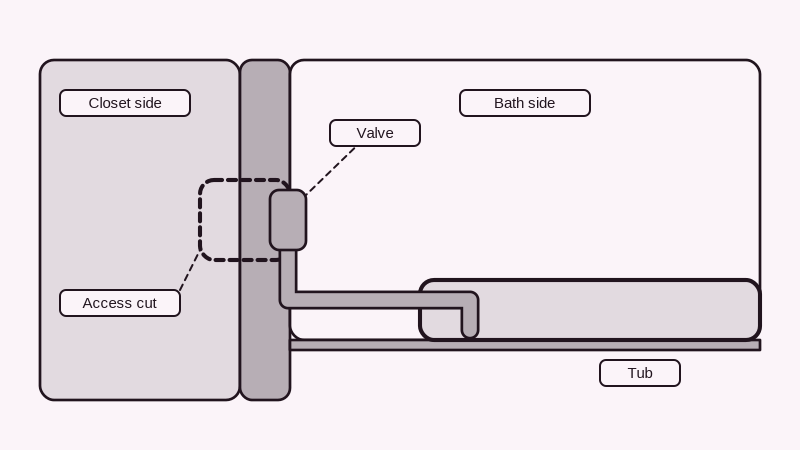
Restoring tile and surrounds costs a lot, so a neat opening is worth having. A closet beyond the wall or a hallway bath wall may give a way in without breaking the tub surround.
Stains on the ceiling below, or a soft wall, mean water is getting out behind the tile. Stop using that bath and read about water leaking through a ceiling and the plumber for a shower leak.
At what point should a plumber step in?
Hand the job to a plumber if the water will not stop, the valve will not come apart, the drip persists after a fresh cartridge, the wall or ceiling is damp, or parts are discontinued. A plumber can fit a full new valve body and also close the wall up properly afterward.
A state contractor license is required in California once a job passes a small value threshold, and whenever a permit is involved. Request the license number and check it with the state licensing board.
Begin with a quote request; Mission Point Plumbing passes the details to a plumbing business in your area. Other guides begin at Mission Point Plumbing. Insist on the quote on paper before work begins so bids can be compared; it should name the valve, the wall repair and the cleanup.
Common questions
How much time should a tub faucet repair need?
Changing a cartridge or washer typically needs half an hour to an hour when the parts fit and the screws turn freely. A whole valve takes a few hours, plus tile or wall repair. Once the valve type and access have been inspected, the plumber can give a duration.
What should the tub faucet quote answer?
Ask whether the valve is being repaired or replaced, how the wall will be opened, who restores wall and tile, for how long the water is shut off, and what warranty applies. Get the contractor's license number and verify it on the state board's site. Keep the scope in writing.
Must someone be home when the plumber comes?
Yes. An adult needs to let the plumber in, point out the tub and agree how to open the wall if needed. Water is off during part of the visit. Empty the bathroom of belongings; you need not stay throughout, but remain reachable in case a question comes up.
Can I halt the drip temporarily?
Where an access panel exposes the tub's own stop valves, close them; lacking a panel, shut the house main. Either way the dripping stops until repair day. Forcing the handle tighter rarely helps. Lay a towel across the tub bottom to prevent staining, and keep the water off until the correct parts arrive.