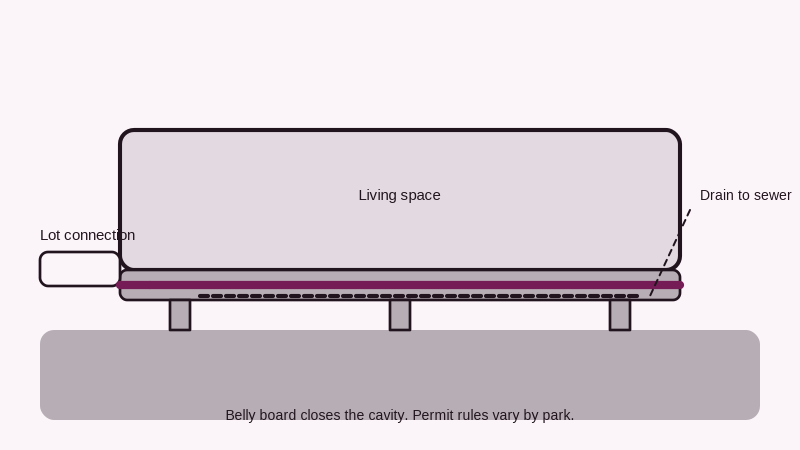
The pipes of a mobile or manufactured home live in the floor system below the living space, enclosed by a bottom board commonly called the belly. Supply lines bring water from a connection on the lot, drains slope down and out to a sewer connection, and the frame holds everything up. New pipe can be installed underneath, but the work is regulated. The Mission Point home page lists related topics, or begin with the quote form.
How is the plumbing arranged in a mobile home?
A manufactured house has the same three systems as any other: pressurized supply, drains with vents, and a water heater, only all fitted into a shallow floor cavity. Water arrives at a lot connection, travels through the floor to the fixtures, and drains slope toward one outlet beneath the home.
Differences you will notice:
- Smaller pipe runs inside the floor. Pipes pass between joists on hangers, and the belly board covers them.
- Flexible supply lines are common. Many homes use plastic pipe such as PEX or older polybutylene, and some use copper.
- One drain line serves the lot connection. Drain pipe is usually plastic and must hold a steady slope.
- The water heater is a compact unit tucked into a closet or utility space, frequently subject to special venting rules.
- Everything is exposed to the crawl space. Weather, animals and settling can all reach the pipes.
Since the home rests on a pad or piers, the pipes are not in a slab. That makes access easier than for a slab leak, though the belly board and insulation have to be opened and resealed afterward.
Who is allowed to put in pipes under a mobile home?
In California, plumbing beyond a small job size requires a contractor, as does any job that needs a permit. State housing rules also apply to mobile home work, and which office issues the permit varies with the home's location. Ask the plumber which office handles your address and whether it is the park or the city.
Do not assume the City of Los Angeles Department of Building and Safety is the right office. Parks and manufactured housing in California can fall under state housing rules rather than local ones, so the plumber and park management should tell you who handles permits and inspections. The rule at any particular address has not been confirmed here.
On your water bill, LADWP supplies most of the north Valley according to its 2025 Drinking Water Quality Report, yet the bill itself shows your supplier, and a park may operate its own meter or submeter.
What should I sort out before any pipe goes in?
A plan is needed: where the water connects, where the drain exits, which fixtures are involved, how the pipes will be supported and protected and how the belly board gets sealed afterward. A plumber will want photos of the underside, the lot connection and the water heater.
Preparation list:
- Locate the shutoff for the home and for the park, if there is one.
- Photograph the belly, the lot connection and the existing pipes.
- Note what is leaking or failing and the pipe type, if visible.
- Ask park management about work rules and who must be told.
- Find out from the plumber which permit applies and who submits it.
Check as well whether the home has polybutylene, a gray flexible pipe installed in certain houses between about 1978 and 1997 and known for fitting failures. If so, a repair may lead toward replacement. See polybutylene pipe replacement.
How are supply lines routed and held up beneath the floor?
Supply lines cross the belly on regular supports that stop them drooping, and they are shielded from rubbing, sun and cold. Plastic pipe such as PEX is popular since it bends around obstacles. Fittings should stay reachable rather than buried, and long unsupported runs invite leaks.
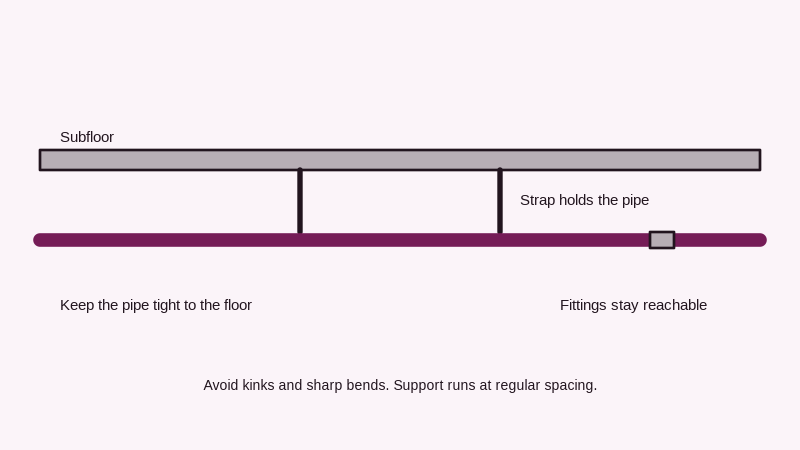
Good practice, in general terms:
- keep lines tight to the floor and clear of the ground
- use hangers or straps that will not cut the pipe
- wrap or insulate wherever lines meet cold air
- put fittings where they can be reached later
- avoid kinks and sharp bends
A shutoff at the home's entry lets you halt a leak. Drain lines must slope without a break, because a sag collects water and waste. Pipe type, size and fixture count come from the plumbing code in force. A plumber works that out and writes it into the quote.
What is the setup for drains and vents under a mobile home?
Every fixture drains to a branch line sloping to one main drain, which leaves through the lot's sewer connection. Traps hold water that blocks sewer gas, and vents admit air so water flows freely. A sag, loose joint or missing hanger beneath the home often causes clogs and smells.
Under-home problems that stand out:
- sagging drain pipe that holds water
- loose or cracked joints dripping into the belly insulation
- a damaged or missing belly board that lets animals in
- a blocked vent that makes drains gurgle
For a slow drain, check indoors first with the pages on clearing a clogged drain and slow draining sinks. If trouble comes back, the cause may be under the floor.
What about water heaters, cold weather and animals?
Mobile home water heaters have particular venting and installation requirements, so replacement is regulated work. Freezing is a limited risk across most of the north Valley, though cold foothill nights can endanger exposed lines, and animals chew insulation and wiring. Seal the belly and insulate exposed pipes.
For a heater swap, see mobile home water heater replacement. Gas appliances need a contractor, and if you smell gas, go outside and contact 911 or your gas utility from there. For a leak you cannot find, note that the EPA puts waste from average household leaks above 9,300 gallons a year, so try the meter test: take a reading, use no water for two hours, then read again.
When do you need a plumber, and what goes in the quote?
Hire one for any new run, any gas line, any water heater work, any repair that requires opening the belly, or any permitted job. The quote should name the pipe type, what gets opened and closed, who files any permit and when payment is due.
California caps deposits on home improvement jobs, usually at the smaller of a fixed sum or 10 percent of the contract, and expects a contractor license for jobs above a small threshold. Check the contractor on the CSLB website before agreeing. When ready, describe the home on the quote form.
Common questions
May I run new plumbing under my mobile home on my own?
Small repairs on reachable pipe may be within your ability, but new runs, gas, water heaters and permitted work belong to a contractor. Park rules and state housing rules may also apply. Ask the plumber and park management before starting.
Which pipe types sit under a mobile home?
Supply is often PEX, copper or CPVC, and drains plastic such as ABS. Older homes may have polybutylene. Check the markings printed on the pipe and add a photo to your request, so the plumber arrives with suitable parts for the pipe type you have.
How can pipes beneath a mobile home be protected from cold?
Keep the belly board closed, insulate exposed lines, seal gaps where animals or wind get in and consider foam sleeves on pipes near the edges. Freezing is uncommon across much of the north Valley, though cold foothill nights can matter.
What makes a mobile home smell of sewage?
A dry trap, a cracked or loose drain joint under the floor, a missing vent connection or a sagging drain line are the usual causes. Start by running water in unused fixtures. If the smell persists, a plumber should inspect the drain beneath the home.
Is a permit required for plumbing work on a mobile home?
Often yes for new work and replacements, but the rules depend on the home and the governing office, which may be the city, the state or the park. Have the plumber name the permit and who files it before any work starts.