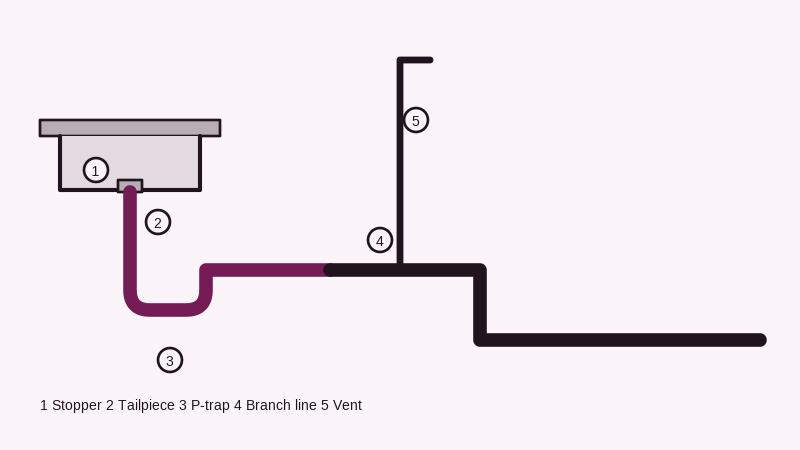
Hair tangled with soap film is behind most slow basins, and it gathers around the stopper or in the trap, both of which a hand can reach. Lift out and clean the stopper first. Still sluggish? Take the P-trap off and empty it, then work a plunger or a plastic drain tool down the drain. If none of that helps, the clog sits further along and a plumber handles it; begin with the clogged drain guide or the quote form.
Why does a bathroom basin empty so slowly?
Over weeks, a coating of hair, soap residue, toothpaste and skin oil thickens around the stopper, the tailpiece and the trap, so the basin empties a bit slower each time until water stands in the bowl. Occasionally the fault lies further on: a blockage, a plugged vent or a pipe that has partly collapsed.
Likely trouble spots, closest to farthest:
- Stopper and pop-up rod: hair winds round the crossbar of the stopper and traps soap film.
- Tailpiece below the drain opening: a slim pipe where gunk gathers.
- P-trap: the U-bend that keeps a water seal against sewer gas.
- Branch line inside the wall: the run from the trap to the main drain.
- Vent: a blocked vent pipe makes the drain gurgle and crawl.
If all the fixtures in the home drain badly, or the toilet and tub back up, the main drain is the likely culprit. Head to clearing a blocked drain.
How do I clean the stopper and the opening beneath it?
Lift the stopper out if it comes free; otherwise undo the pivot nut under the sink and slide the rod clear. Wipe away hair and gunk, rinse the stopper, then scrub the opening with an old toothbrush or a plastic drain tool. This step alone fixes a good many slow basins.
The sequence:
- Empty the cabinet under the basin and lay down a towel.
- Take out the stopper. Some twist or lift straight up; others need the pivot nut loosened so the horizontal rod behind the drain pipe slides free.
- Pull out the lump of hair and gunk, which is often surprisingly big.
- Scrub the stopper and the opening, then rinse with hot tap water.
- Refit the stopper, reattach the rod and test the flow.
Take a photo of the rod and clip before disassembly so each goes back in its own hole. A hair catcher in the drain prevents a repeat.
How do I take the P-trap off and clean it?
Place a bucket underneath, loosen the slip nuts by hand or with pliers, lift the trap away and tip it out. Clean it, inspect the washers, and put it back with the nuts hand-tight plus a small extra turn. A sludge-filled trap often slows a basin and cleans out in minutes.
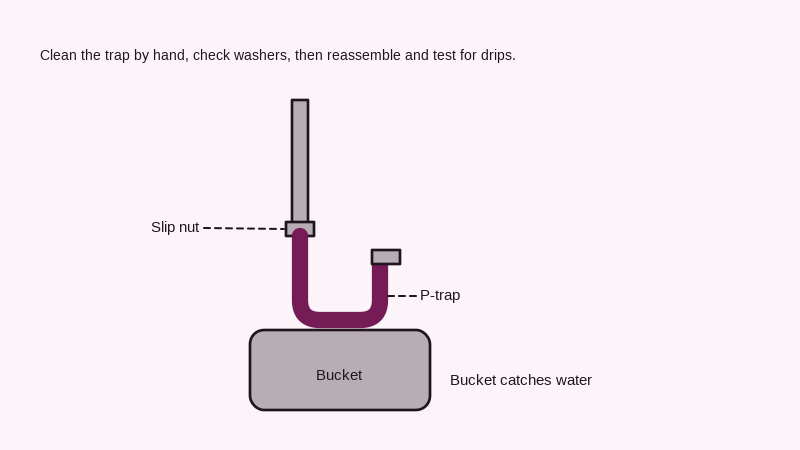
The routine:
- Expect water and a foul smell, so use the bucket and wear gloves.
- Feel for a clog with a finger or bent wire in the trap and in the stub pipe at either end.
- Rinse the trap in another sink or outdoors.
- Look at the rubber or plastic washers on the slip joints and replace worn ones.
- Reconnect, run water and watch each joint for drips.
Plastic nuts crack when overtightened. If the metal trap is corroded, or a nut will not budge, stop there and ask a plumber. If it drips after reassembly, see the guide on fixing a drip below the basin.
Will a plunger, a drain tool or baking soda and vinegar do the job?
A plunger or plastic drain tool can clear hair from the nearest stretch of pipe, and a snake reaches further. Baking soda and vinegar fizz impressively but seldom shift a true hair clog. Chemical drain cleaners are the final option, because they can harm pipes and skin. Begin with mechanical methods.
A sensible order:
- Plunger: lay a damp cloth over the overflow hole, press the cup over the drain and work it up and down firmly a number of times.
- Plastic drain tool: a long barbed strip that slides in and drags hair out. Cheap, and effective on bathroom drains.
- Small drain snake: coiled wire that breaks up or hooks a clog further down.
- Hot water rinse: finish with hot tap water, but never pour boiling water on old plastic pipe or porcelain.
If you still reach for a chemical cleaner, follow the label, never mix products, ventilate and shield your eyes. Chemical left in a standing sink endangers whoever works on the drain next, so tell the plumber what went in. Chemicals do nothing for a blocked vent or sagging pipe.
How can I tell the clog is past the sink?
Suspect the line when other drains are slow, the basin gurgles as another fixture runs, trap cleaning changes nothing, or the trouble comes back within days. A branch drain, the main sewer line, a blocked vent or a damaged pipe could be responsible, and locating it needs a plumber's equipment.
Warning signs of a deeper issue:
- water backing up into the tub or shower when the sink drains
- gurgling from drains or the toilet
- a sewage odor coming back after cleaning
- slow drains in more than one room
- standing water in a floor drain or cleanout
Many north Valley houses from the 1950s to the 1970s have aging cast iron or clay lines that gather roots and scale. Roots and breaks call for a camera inspection rather than a snake. Next, read clearing a bathroom sink clog, or look at why a sink drains slowly for the usual reasons.
What stops the basin from clogging again?
Fit a hair catcher, wipe the stopper clean every few weeks, run hot water through after shaving or washing hair, and keep grease and heavy toothpaste residue out of the drain. Five minutes with the stopper once a month heads off most slow basins. That small routine costs almost nothing.
Useful habits:
- put in a drain strainer and empty it into the trash
- clean the stopper before trouble starts
- rinse the basin after shaving or coloring hair
- never wash grease or paint down the bathroom sink
- let hot water run for a moment after use
A trap that leaks or a drip under the basin wastes water as well. The EPA reports that an ordinary home loses upward of 9,300 gallons annually through leaks, which makes a quick look under there worthwhile.
Common questions
Is boiling water a good way to unclog a slow basin?
Hot tap water is fine, but boiling water can soften old plastic traps, crack a porcelain basin and loosen glued or slip joints. It also rarely dissolves a hair clog, the usual culprit. Clean the stopper and trap instead, and finish by flushing with hot water from the tap.
Why does the sink stay slow when I have cleaned it?
Something may be blocking beyond your reach, or the vent may be plugged. A spotless stopper and trap with poor flow points to a problem further along, either the branch drain or the vent. If other drains lag as well, the main line is involved. A plumber can run a camera down the pipe to find the problem.
Is it safe to pour drain cleaner into a bathroom basin?
Be careful. Chemical cleaners burn skin and eyes, harm certain pipes and turn hazardous when combined. A slow basin holding standing water is a poor candidate, since the chemical just sits in the bowl. Try a plunger, a plastic drain tool or a cleaned trap first.
How much time does a slow bathroom sink repair take?
Budget a few minutes for the stopper and roughly fifteen for the trap, provided nothing is corroded. If neither step helps, the next move depends on the cause. Once the blockage has been found, the plumber can tell you how long the work will run.
When does a slow basin need a plumber?
Not right away. Most slow bathroom basins trace back to a stopper or trap you can clean yourself. Bring one in if the basin still drains badly after those steps, if several fixtures are sluggish, or if you notice leaks or a sewage smell.
For the wider picture, start with plumber sylmar.