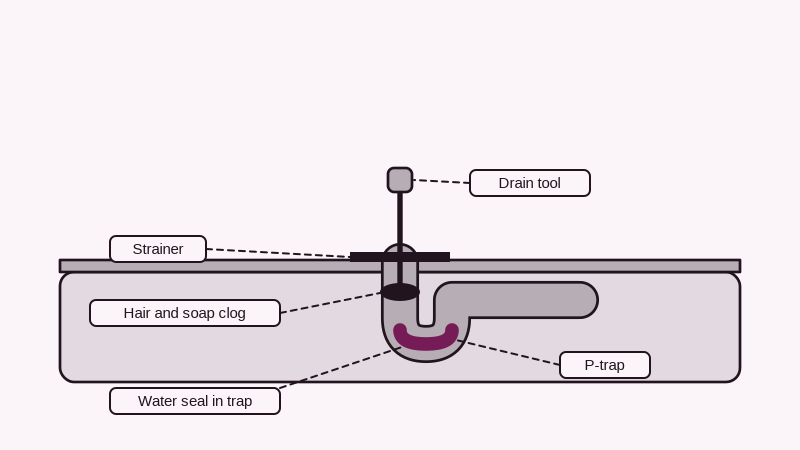
The cheapest fix comes first: lift out whatever is visible, work a plastic drain tool or small hand auger through, then flush with hot water from the tap. Most hair and soap blockages give way, and no chemicals are involved. When more than one fixture backs up at the same moment, the clog is farther down the line and belongs to a plumber. Drain cleaning and clogs gives the larger view, while this guide handles the do-it-yourself end.
Most homes in Sylmar, Pacoima and the rest of the north Valley date from the 1950s to the 1970s, and many keep their original cast iron or clay lines below the slab or yard. Such lines catch roots and scale, so a drain that "keeps coming back" deserves a closer look rather than yet another bottle of liquid cleaner.
What is the way to open up a blocked shower drain?
Remove the cover, normally held by a single screw or a pry-up cap, and pull out the hair mat with a plastic drain tool or bent wire. Follow with a minute of hot water. Hair wound around the strainer post causes most shower clogs, so removing it often solves things immediately.
If water still pools, push a small drum auger or a barbed plastic strip about a foot into the pipe, twisting as you go, then withdraw it slowly and wipe off what it brings. Do this two or three times. Wear gloves and keep a bag close, since the mass is dense and smelly.
Boiling water must not go into a PVC trap, and cleaners should never be mixed. Rinse the strainer and seat it snugly afterward. A mesh catch over the drain blocks most future clogs.
How is a kitchen sink drain replaced?
Replacing the sink drain means removing the basket strainer from beneath the basin and installing a new one with plumber's putty or a gasket. You need a basin wrench or large pliers and roughly an hour. If the old fitting is corroded or the sink is heavy composite, hiring a plumber is the safer path.
Set a bucket under the trap, loosen the slip nuts, then undo the big locknut below the basin. Lift out the strainer, clean the opening, seat the new one on a ring of putty, tighten the locknut from beneath and wipe away the excess. Reattach the trap, run water and test every joint by touching a dry paper towel to it.
How can I free a tub that holds standing water?
A tub holding water commonly has its clog at the stopper mechanism or overflow plate, not in the pipe. Take out the stopper (many unscrew, others lift out with a quarter turn) and clear hair from its stem. Then use the drain tool as described for showers.
For a lever-style stopper, remove the screws from the overflow plate in the tub's front wall and draw out the linkage. It usually comes out coated with soap and hair. Clean it, slide it back and try the lever. A plunger works on a tub only when a wet rag plugs the overflow opening; otherwise air escapes there and nothing moves.
A tub that drains slowly at first light but better by evening often has a partial clog that swells when wet. Handle it the same way. If a slow tub makes the nearby bathroom sink gurgle, stop: that points to the shared branch line.
What can I do about a clogged laundry drain or blocked vent?
Laundry drains clog with lint, soap scum and stray socks. Pull the washer hose from the standpipe, run a drain tool down it and flush with a bucket of hot water. Water bubbling back up while the washer runs means the standpipe is too short or the line is partly blocked.
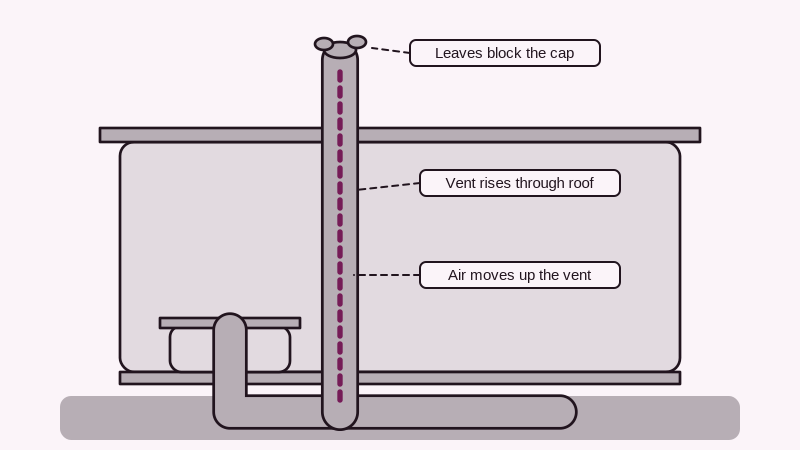
The drain vent is the pipe rising through the roof that admits air so drains can flow. When leaves or a nest block it, you hear gurgling, see slow drains in several rooms and sometimes smell sewer gas. Do not go on the roof to clear one unless you are comfortable and safe. Roof and vent work usually belongs to a plumber.
Gurgling toilets plus drains slowing at once are the typical sign, and fixture-level fixes will not reach it.
Is an AC condensate drain a clog issue too?
Air conditioners shed moisture through a small line that can fill with algae and slime. Power the unit down, locate the access tee by the indoor coil and clear the line by holding a wet-dry vacuum to the outdoor end. A monthly cup of diluted vinegar poured into the tee keeps it open.
A blocked AC drain can overflow and stain a ceiling, so deal with it before summer in the Valley. If you cannot find the line, or water has reached drywall, leave it to an HVAC or plumbing business. A water spot on a ceiling merits a quick check, because it might come from the condensate line or from a plumbing leak, and the fixes differ.
Why are baking soda and vinegar a poor choice for a clog?
Baking soda and vinegar mostly foam and make a mess. The reaction yields water, carbon dioxide and a mild salt solution, too weak to shift a hair and grease plug, and it can sit in a trap already full of water. It seems sensible but seldom clears the pipe, losing time while the clog packs tighter.
The "natural" methods that do work are mechanical. Reach for a plunger, drain tool or auger, then flood the line with hot water to melt soap film. An enzyme product can serve as slow maintenance against kitchen grease, but it will not rescue a drain that has already stopped.
Without chemicals, the rule is plain: pull the blockage out instead of trying to dissolve it. Harsh liquid openers can also damage old metal pipes, burn skin and release fumes, and whoever opens the line afterward must work around the leftover chemical. If you have already poured some in and the drain is still stuck, tell the plumber so protection is worn.
What clears a clogged kitchen sink or garbage disposal drain?
In the kitchen, let hot water run with some dish soap added, then plunge with a flat-bottomed cup plunger while a wet cloth seals the other basin. Grease and food scraps gather just past the trap. If that fails, set a bucket beneath it, undo the two slip nuts and empty the trap by hand.
With a disposal, turn off both the wall switch and the breaker before reaching inside, and never put a hand in. Use tongs, or rotate the shaft from below through the hex key slot most units have. Some regions call this a garburator; the clog sits in the same spot, the trap after the disposal outlet.
Detailed walkthroughs are in freeing a kitchen sink clog and the plumber's approach to a garbage disposal problem.
When is a drain a job for a plumber?
Hire one if the tool has failed twice, if several drains are slow, if sewage or gurgling shows in a floor drain or the shower, or if trouble returns within weeks. These signs implicate the branch line or the main, where a camera and a larger machine are the proper tools.
California requires a contractor holding a state license for jobs above a small cost threshold and for any work needing a permit. Ask any visiting plumber for a license number, and look it up on the licensing board's site before work starts.
These drain pages name no price, as the right figure turns on access, line length and camera use. Request a written quote listing those items. How to compare quotes in words is explained on the page about what unclogging a sink costs. When ready, ask for a quote and Mission Point Plumbing passes the request along to a local plumbing business.
For a sluggish sink, reasons a sink drains slowly lists the usual causes. All of this site begins at Mission Point Plumbing, and the bathroom sink page has more if the fixture is a basin.
Common questions
How much time does unclogging a drain need?
A simple hair clog in a shower or tub typically needs ten to twenty minutes with a drain tool. A kitchen trap takes a bit more because you catch the water and clean parts. A plumber running a machine on a main line usually needs about an hour, and adding a camera inspection stretches that.
Which questions should I put to a plumber about drain work?
Find out whether the quote includes a camera inspection, how far the machine reaches, whether the price shifts if roots turn up, and what happens if the clog returns. Ask for the contractor license and verify it with the state board. A written quote before the work avoids surprises.
Does someone need to be home for drain work?
Yes, so the plumber can be let in and shown the fixture. Watching all of it is unnecessary, but be present at the beginning to explain what happened and when it finishes to test the drain together. Mention any chemicals you used.
Are chemical drain openers safe?
Use them carefully, if at all. Liquid openers can burn skin and eyes, produce fumes in a closed bathroom and harm old pipes. Never mix products, and avoid plunging a drain that holds chemical. If the product fails, tell the plumber what is sitting in the pipe.