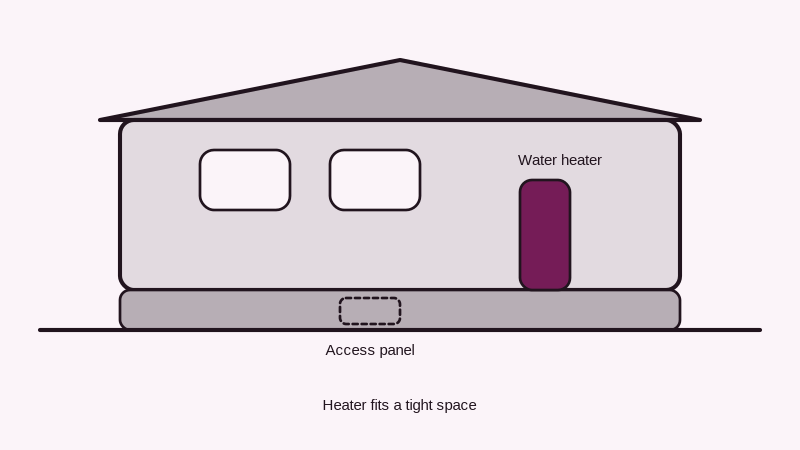
The total for a new heater in a manufactured home comes down to four things: the type of heater, its capacity, how easy the closet is to reach, and whatever the plumber discovers once the old unit is out. Heaters built for these homes differ from standard ones, so a quote will not resemble one for a house. Printing numbers here would be pointless, since only the written quote for your own home counts. It sits alongside our overview of heater servicing around Sylmar.
How is the price of a mobile home heater swap built up?
The price is the unit plus the labor. A gas or electric tank designed for a manufactured home typically runs above a basic house tank, and labor depends on access and fittings. Tankless costs more again. A quote should itemize the unit, parts, labor, hauling the old tank away and any permit.
Sylmar has no honest single figure, because mobile homes differ: some closets open to the outside, some sit inside, and connections and venting vary. Request a quote that shows every item. Judge quotes by what each includes, since a low price that omits the permit or the vent parts is not really low. For the broader picture, see water heater replacement costs.
In what ways is a manufactured home heater different?
Manufactured homes are built to a federal code, and the heater has to be approved for use in one. Gas models are typically sealed-combustion, pulling air from outdoors so flame and fumes stay out of the living area. Some are shaped for a narrow closet. An ordinary house heater is generally not permitted.
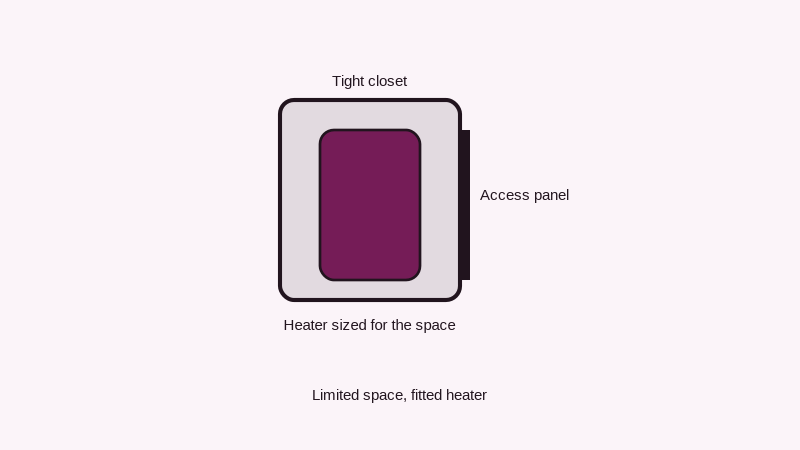
The reason is safety: the wrong heater is a hazard and can breach park rules or the home's documents. Read the data plate on the current heater and give the plumber its model number plus a photo of the closet. Plumbers who know manufactured homes understand the requirements and the maker's instructions. Have the quote state the heater type and confirm that it is built for a mobile home.
What makes the total go up or down?
The main factors are fuel, capacity, closet access, venting, the state of the water and gas connections, local rules, and whether rusted or leaking lines need repair. A new vent or gas line fix adds to the job, and a cramped closet adds hours.
Use this list to size up your own case:
- Fuel. Gas and electric units need different connections and different electrical or gas work.
- Size. Bigger tanks cost extra and might not fit the closet.
- Condition. Worn, corroded or leaking connections get replaced during the job, and the written quote ought to mention it.
- Permit and park rules. Certain parks demand approval before work begins.
- Access. A closet opening to the outside is easier than one hidden under a cabinet.
Is a gas or electric heater better for a mobile home?
That hinges on what the home already has. If it is plumbed and wired for one fuel, staying with that fuel is simplest. Switching means new gas piping or new electrical circuits, adding cost and permits. Gas heaters often recover faster, while electric ones are easier to install.
When your mobile home has gas service, the gas utility's rules and the park's rules still apply, and gas piping is contractor work. Leave the fittings alone. Should you smell gas, get everyone outside first, then contact your gas utility or 911 from there. Tankless is possible, but it needs a proper vent, gas supply and clearances, and often costs more at the start. See tank versus tankless water heaters.
Does the work need a permit, and who issues it?
A heater replacement is usually permit work, but the issuing office for a mobile home depends on its location. Inside a mobile home park, the rules can differ from those of the City of Los Angeles Department of Building and Safety, and park management or the state housing department may be involved. Ask both the park and the plumber before any work.
Do not skip this step. A job done without a permit can complicate insurance and a later sale. State law demands a contractor license once a job passes a modest value, and for any work that needs a permit, so obtain the license number and verify it on the CSLB site. The quote should name whoever pulls the permit and whether the park wants separate sign-off.
What should a written heater quote list?
The quote should name the heater's model and type, size and fuel, the vent and connection parts, labor, removal of the old unit, the permit, any park approval and the warranty. It should also list exclusions, such as repairs to a rotted floor.
Ask for the manufacturer's warranty terms for that model and the plumber's own written labor terms. Coverage varies by model and by how the unit is installed, so assume nothing. Request before and after photos of the closet. If the closet floor is soft from an old leak, have that noted on the quote, since it changes the work. For another comparison, see tankless installation costs.
How long is the job, and how should I get ready?
A simple swap often takes up part of a day, and more if the vent or floor needs attention. Water is off while the plumber works. Clear out the closet, pass along how old the heater is and what shape it is in, and let the park know when the work is booked.
Photograph the old heater's data plate and the closet, and keep the park's contact details close. When the job ends, have the plumber point out the shutoff valves, the relief valve's discharge pipe and the thermostat setting. Very hot water can scald, so find out where that setting is. To request a visit, send the quote form via Mission Point Plumbing. Requests are reviewed on weekdays from 9am to 5pm.
Common questions
Can an ordinary house heater be installed in a mobile home?
Generally no. The heater must be approved for manufactured homes, and gas versions are typically sealed-combustion. A mismatched model creates safety and rules trouble, and it can be refused at inspection. Send over the model number and a closet photo, so the quote covers the right unit.
Do I need the park's approval first?
Many parks have their own rules about work on homes, and some require notice or approval. Ask management before booking. Tell the plumber the park's name so the quote reflects any conditions, and save any approval or refusal in writing.
Should a mobile home get a tankless heater?
Possibly, but it needs the correct model, vent, gas supply and clearances for a manufactured home, and it tends to cost more initially. Get both options written down and weigh running costs, space and your hot water habits before deciding.
Will the new heater fit the existing closet?
Mobile home models are built for tight closets, though dimensions vary. Measure the closet and give the plumber the figures. A bigger tank may not fit, and the plumber can suggest a smaller or different unit when space is the limit.
How can I tell the old heater is finished?
Watch for a tank that leaks, corrosion near the base, rumbling sounds, a lack of hot water, or an age past the maker's expected life. A leaking tank gets replaced rather than repaired. If water collects in the closet, turn off the supply and the heat source and arrange a visit.