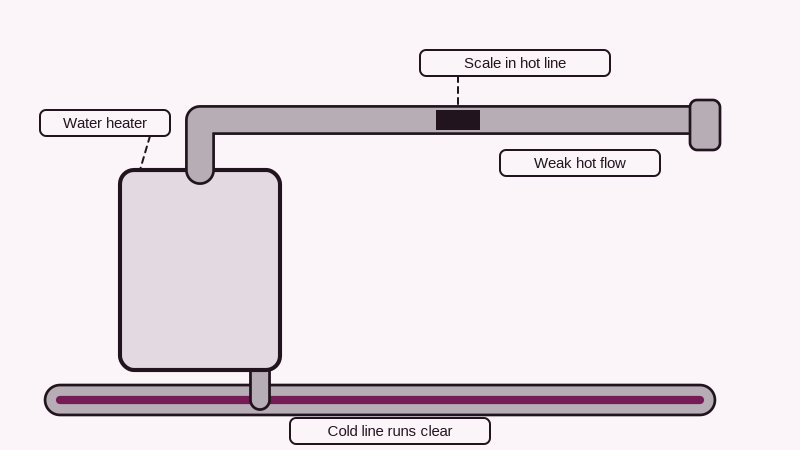
If cold flow is healthy and hot flow is poor, the fault lies on the hot supply route: the water heater, the pipe leaving it, a valve or the fixture. Scale, a valve that is not fully open and old steel pipe are the usual suspects. Test one fixture, then several, and move on to water heater repair if the heater itself is involved.
The comparison is the key. Weak water at every tap points to the supply or a regulator. Weak hot water at a single sink often means a clogged aerator or cartridge. Weak hot water at every tap implicates the heater or the pipe leaving it.
Why is only the hot side weak?
Hot water travels through the water heater and its fittings, so anything narrowing that route, whether sediment, scale, a half-shut valve or corroded pipe, cuts hot flow while cold stays untouched. The cold line bypasses all of it, which makes the contrast so obvious.
Try this. Open the hot tap in two or three places. If one runs weak and the rest are fine, the fixture is at fault. If all run weak, inspect the shutoff valve at the heater's outlet. A fully open valve has its handle lined up with the pipe, or a lever-style valve parallel to the run.
Hot water also carries more minerals out of solution than cold water, so scale builds inside hot lines first. In older north Valley homes, a hot line that has narrowed over decades is a common reason for pressure that has crept down over time.
Could a clogged aerator or showerhead be responsible?
Yes, and it is the cheapest fix to try. Mineral flakes and sediment gather inside aerators, cartridges and showerheads, and they often choke the hot side harder than the cold since scale forms when water is heated. Take off the aerator, rinse its screen and soak it in vinegar if crusty.
For a shower, remove the head and check the washers for crust. If pressure returns without it, you found the cause. If it stays low, test a different shower. When buying a replacement, a guide to showerheads for weak pressure can help you choose.
Single-handle faucets and shower valves have cartridges that can clog too, and a mixing valve can fail on one side. If cleaning the screens does not help, a plumber can replace the cartridge. The page on a leaky shower faucet examines the cartridge in detail.
Can heater sediment restrict the flow?
Yes. A tank heater collects sediment on its floor, and a heavy layer can partly block the outlet or break free and clog fixtures downstream. Draining a little water from the tank's drain valve into a bucket shows what is inside. Cloudy or gritty water means the tank needs flushing.
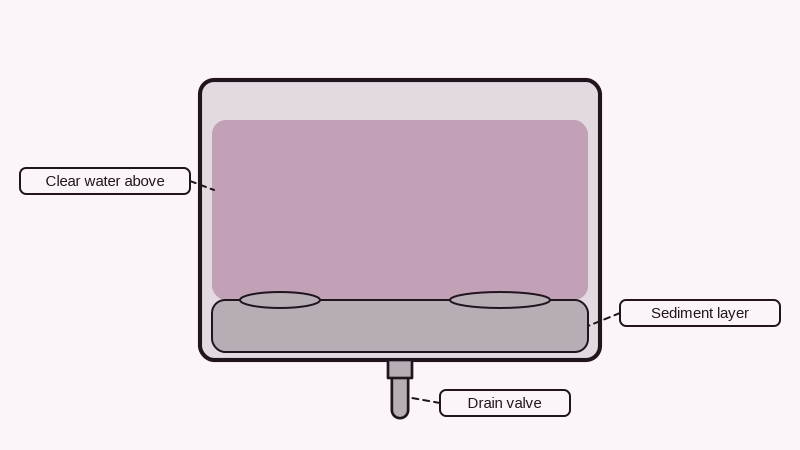
Flushing takes time, and a drain valve that sticks can leak afterward, so a plumber is the safer pick over doing it yourself. Turn off power or the gas control first and let the tank cool before draining. Hot water scalds quickly.
Hard water makes this worse. Water quality differs by street and source, so read your utility's yearly report for hardness rather than trusting a rumor. The hard water scale prevention page lists steps to slow the build-up.
Is a tankless heater the reason?
It might be. A tankless heater contains a narrow heat exchanger that scale clogs, and many units lose flow as mineral deposits grow or the inlet filter gets dirty. Descaling, performed by a plumber with the right pump and solution, often restores flow. Each manufacturer lists its own service steps.
Check the screen at the cold inlet and any error code on the display. A unit that swings between hot and cold, or runs weak under heavy demand, may be too small for the number of fixtures running together. Our guides to Navien tankless repair and instant water heater repair cover particular units.
Gas tankless units also need correct venting and gas supply. Gas line work is regulated, so leave it to a contractor who holds the right license.
Might aging pipe or a regulator be to blame?
Old galvanized steel narrows from rust and scale until water barely trickles, and it affects hot lines first. A failing pressure regulator on the main can lower pressure to the whole house, though it usually affects hot and cold equally. Look at the pipe type near the heater to decide.
Steel pipe is gray with threaded joints. If your hot lines are steel and the pressure has fallen slowly over years, the answer may be replacement. See galvanized pipe replacement. For sudden changes across the house, sudden low water pressure lists the first checks, including the meter valve.
If the regulator is the suspect, see hot water pressure regulator, which explains its location and how a plumber checks it using a gauge.
What can I try before asking for help?
Inspect the aerator and showerhead, open the heater's outlet valve fully, test several taps, flush some water through the tank drain if you can do so safely, and note whether the drop came on suddenly or gradually. These steps are free and give a plumber a clearer picture.
Record your findings: which taps, which floor, when it began and whether the water is cloudy. Photograph the heater label and the nearby pipes. Mention recent work, such as a new heater or a plumber's visit before the trouble started.
A sudden change right after work was done often means a valve was left partly closed or debris was knocked loose, so say so. For a house-wide problem, the low water pressure plumber page explains how a plumber measures and narrows it down.
When does weak hot water need a plumber?
Bring in help if the heater is the source, pipe replacement looks likely, gas is involved, or the quick checks reveal nothing. A plumber can test pressure, flush the tank, inspect valves and, where needed, plan a repair or replacement and give you a written quote.
Send a quote request and it is forwarded to a nearby plumber who visits. Some heating and air conditioning businesses also work on water heaters, so ask which trade is coming and who will connect or disconnect lines and gas fittings, since that work needs the right California license. Everything starts at Mission Point Plumbing.
Heater failures can look like pressure trouble, so describe the unit's age and type. Also say if the hot water now runs out earlier than it used to.
Common questions
How long does the fix take?
An aerator cleaning takes a few minutes. A tank flush runs a couple of hours once cooling and draining are counted. Descaling a tankless unit usually takes an hour or two. Replacing old pipe is a bigger project spread over several days. After a short test, the plumber should name the likely cause and the time needed.
What should I ask a plumber before hiring?
Ask how pressure will be tested, whether the visit includes flushing the heater, how they would respond if the pipe is the cause, and what the written quote covers. Request the contractor license and check it with the state licensing board. Keep the notes you made.
Does an adult have to be home?
An adult should be there to let the plumber in, show which taps are weak and approve the plan. The water may be off briefly, so plan around it. You need not watch every step of the work, but stay reachable at the address until the plumber finishes and leaves.
Is weak hot water a safety risk?
Alone it is not, though some causes are. Scalding water, a leaking tank or a gas smell needs fast attention. Set the heater thermostat carefully. If you smell gas, leave the building and contact your gas utility from outside, and use 911 if you think there is danger.