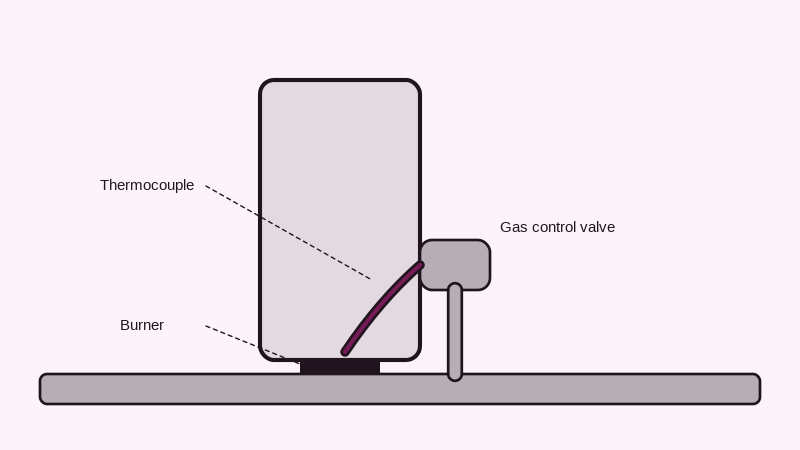
Begin with the symptom. Each of these implicates different parts: no hot water at all, lukewarm water, hot water that vanishes quickly, a rumbling sound and a puddle at the base. Gas, electric and tankless heaters fail in different ways, so first note which kind you have. Many faults can be narrowed down in ten minutes without opening anything. Anything touching gas lines or venting is for a plumber, and water seeping out of the tank body means replacement. The full range of jobs is listed on the Sylmar water heater repair page.
You will not get a diagnosis from a web page, but you can arrive at the visit knowing what to say, and you can avoid paying for a visit when the cause is only a tripped breaker or a pilot that went out.
What is included when a hot water heater is repaired?
A repair swaps out a failed part and tests the unit: a thermocouple or flame sensor, a gas control valve, a thermostat, a heating element, a relief valve, a dip tube or an anode rod. It does not cover a rusted-through tank, which is replaced. A plumber decides from the heater's age, which part gave out and what else is wearing out.
Typical repairs by type:
- Gas tank: thermocouple, pilot assembly, burner cleaning, gas control valve.
- Electric tank: upper or lower heating element, thermostat, high-limit reset.
- Tankless: flame sensor, igniter, error codes, inlet filter, descaling the heat exchanger.
- Any tank: relief valve, drain valve, dip tube, sediment flush.
When an old heater needs an expensive part, request both the repair and the replacement figures on one sheet. To weigh that choice, lifespan and replacement timing explains how long heaters typically last.
Which checks come first when the taps run cold?
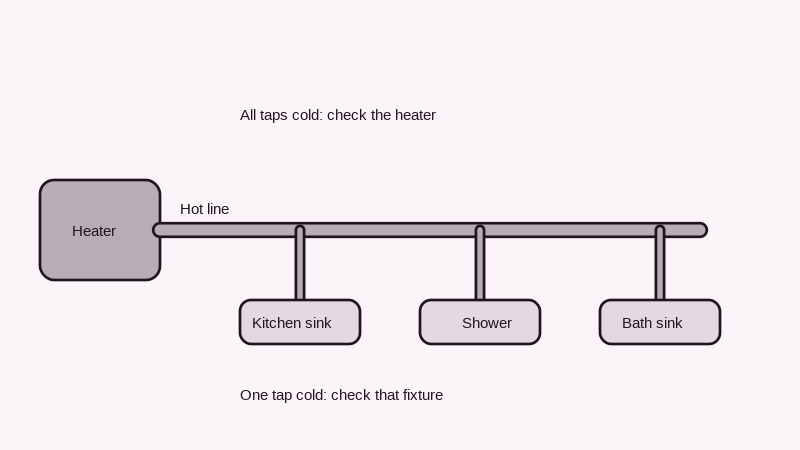
Start with the simple things. An electric heater needs its breaker inspected and the upper thermostat's red reset button pressed. A gas heater needs its pilot flame and gas valve confirmed. A tankless unit should have its display read for an error code, plus gas and power verified. If none of this helps, a part has failed.
Short list of checks that are safe for most people:
- Confirm other gas appliances work, so the gas supply is on.
- Check the breaker or the switch near the heater.
- Check the temperature setting; it may have been bumped.
- Inspect the base for water; if any is there, shut the cold supply and stop.
- Open other taps to learn whether only one fixture is affected.
When only one tap lacks hot water, the heater is probably fine; the faucet cartridge or a valve is at fault. For a shower that stays cold, see a shower that never gets hot and the broader guide on having no hot water.
Is it safe to relight a pilot or reset a heater myself?
Many manufacturers print the steps for relighting a standing pilot on a gas heater on the unit itself, and following that label is reasonable. If gas is detected, do not proceed: get everyone outside and contact 911 or the gas utility from there. Gas piping, vents and the gas control valve are off limits and need a contractor.
Electric resets are safer, but switch the breaker off before removing any thermostat cover. Mixing water with electricity is dangerous, so if the heater is leaking or wet around the wiring, leave it off and arrange a visit. Gas piping work and any permit job must go to a plumber who has a California contractor license.
If the pilot dies again after one careful relight, the thermocouple is the likely cause, covered on our page about thermocouple replacement. For electric heaters that make lukewarm water, see replacing a heating element.
What do rumbling, popping and leaking mean?
Rumbling or popping usually means sediment settled on the tank floor, where trapped water boils under a layer of scale. A yearly flush often helps. Dripping at the end of the relief valve's discharge pipe may signal excessive pressure or temperature. Water at the base can come from a loose fitting, the drain valve or a failed tank.
Find where the water starts before you decide. A loose supply connector or a dripping valve is fixable. Water seeping from under the insulation means the tank itself has failed, and no patch will last. Close the cold water valve feeding the heater, switch off the power or turn the gas control to off, then see the water heater leaks page. For a relief valve that drips repeatedly, read relief valve replacement.
Do not block or cap the relief valve's discharge. That relief valve is what keeps a tank from over-pressurizing.
Why do heater repairs cost what they do?
Price follows the part, how hard the unit is to get at and how old it is. Thermocouples are small parts and quick jobs, a gas control valve is bigger, and a tankless heater that needs descaling takes more time. Reaching a heater in a tight attic or under a hillside house takes more time. We list no dollar figures; ask for a written quote itemizing parts, labor and any visit fee.
Compare two numbers on the same page: the repair and a replacement. If the repair would approach the price of a new heater and the unit is old, replacement is the smarter spend. If the heater is young, repair makes sense. On replacement, read what water heater replacement costs and what drives it.
In rental housing, which is common in parts of Panorama City and Canoga Park, the landlord arranges heater repairs. California rental law treats hot water as a basic habitability item, so tell the owner in writing.
How do I book a repair?
Say what type of heater it is, what the symptom is, the age of the unit and what you have tried so far. Use the quote page form; requests are read on weekdays, 9am to 5pm. A nearby plumbing business then arranges the visit with you, and a written quote arrives before any work begins.
Keep the make and model, found on the rating plate, handy, since it speeds things up. Photograph the plate and the wiring or gas controls, when it is safe. To see what happens once the form is sent, read how a job runs, or go back to Mission Point Plumbing.
Common questions
How much time does a heater repair take at the house?
Replacing one part on a standard tank heater often finishes within a couple of hours. A tankless repair, a gas valve or parts that have to be ordered can stretch that. The plumber should state the time window when booking, and warn you if a second visit will be needed.
What should I ask before arranging a heater repair?
Request a written quote that itemizes parts and labor, any visit fee and the warranty on each. Check that the plumber has a California contractor license, which the state board's site lets you look up. Finally, ask which makes more sense for a heater this old: a repair or a replacement.
Does someone have to be home during the heater repair?
Yes. An adult needs to be around to show the heater, the shutoffs and the breaker panel, sign off on the quote and watch the unit run before the plumber leaves. When the heater is kept in a locked garage, mention it at booking so access is arranged.
Can a water heater explode?
A tank heater with a blocked or missing relief valve can over-pressurize, which is why that valve must never be capped. A working relief valve and a safe discharge pipe make this very unlikely. If the valve is discharging steadily, or the tank is bulging or making loud noise, switch off the heat source and stay clear.
Should an old heater be repaired at all?
It comes down to the failed part and the heater's age. A cheap part on a heater with no leaks is usually worth fixing. A repair on a heater with rust, sediment and repeated faults often is not. Ask for both prices before deciding.