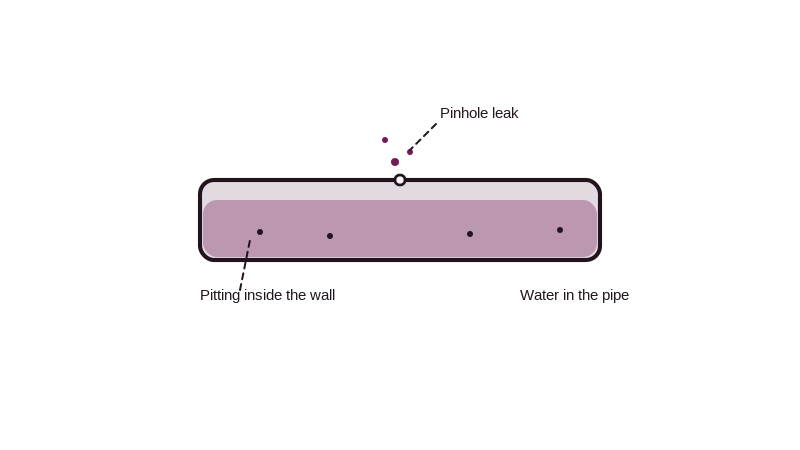
Handling a pinhole in copper begins with shutting off the water and drying the pipe. For a fast stopgap, slip a rubber-lined clamp or a push-fit coupling over the spot. The durable answer is to remove the damaged length and install fresh pipe. A stopgap can last for a while, yet a single pinhole often means thin walls along the rest of the line, so inspect it all. If you want help, send the quote form or start from the Mission Point Plumbing home page.
Why does copper develop pinhole leaks?
The culprit is pitting corrosion: small spots on the pipe's inner wall slowly eat through over the years. Water chemistry, fast flow, high pressure and heat can all speed it up. Water escapes where the wall is thinnest, not where the damage started, so one pipe can fail in several spots.
Common contributors:
- Water chemistry. Some supplies are harsher on copper. Which kind reaches you depends on your supplier, named on your bill. LADWP covers the City of Los Angeles parts of the north Valley, according to its water quality report, but its water differs by source and street, and we do not name a cause for any one house.
- Fast flow. High velocity wears away the interior, particularly at elbows and where a pipe narrows.
- Pressure. Pressure above what the system was built for strains pipe and fittings. A pressure regulator is the cure.
- Hot water. The hot line frequently fails first.
- Poor installation. Flux left inside, burrs from cutting and mixed metals in contact all start corrosion.
- Age. Plenty of north Valley houses built in the 1950s to 1970s have copper that has run for half a century or longer.
A few pinholes in otherwise healthy copper can be mended. A pattern of leaks, or green staining at several joints, means the pipe is spent. Why people repipe a house shows how owners make that decision.
At what point does a pipe need replacing?
No magic number exists, yet a further pinhole or two on one line within months strongly suggests the entire run is thinning. Patching each hole piles up cost and damage. When that happens, have a plumber assess the pipe and quote a repipe so you can compare it with repeated patching.
Questions for the plumber:
- Which sections look worn, and why.
- Whether all leaks are on the hot side or spread through the system.
- What the water pressure is, since high pressure speeds failure.
- Separate written quotes for a repipe in PEX or copper, and for the repair alone.
Options are set out in repiping a house, PEX versus copper and how often to repipe a house. A leak in or under the slab is a different kind of job, covered in slab leak detection and repair.
How can a pinhole be stopped right away?
Begin by closing the main valve, draining the line through a tap and drying the pipe. Next cover the hole with a repair clamp, a rubber patch held by a hose clamp, or two-part epoxy putty. These hold for a time but are stopgaps, not repairs, so book a permanent fix soon.
Temporary seals to choose from:
- Repair clamp. A stainless or brass sleeve lined with rubber that bolts around the pipe. The most reliable quick fix.
- Epoxy putty. Knead it, press it onto clean, dry pipe and let it cure as the pack says. Best on small holes and dry surfaces.
- Rubber and hose clamp. A strip of rubber with a screw clamp over it. Use it only when nothing else is to hand.
- Push-fit coupling. Because it replaces a section, a properly fitted one counts as a permanent-style repair.
Whatever you use, scrub the pipe first with fine steel wool or sandpaper, because dirt and moisture ruin the seal. Restore the water gradually and watch for drips. If water still escapes, shut it off again and call in a plumber. For a pipe that has split open, see burst water pipe.
Does a pinhole leak qualify for an insurance payout?
That turns on the policy and the cause. Many policies draw a line between sudden, accidental water damage and slow, long-term seepage, and might not pay for the pipe itself. We cannot say what yours covers. Go through the policy, photograph the damage and speak with the insurer ahead of repairs, unless stopping the water cannot wait.
Keep photos and receipts. Insurers generally expect you to limit the loss by stopping the leak and drying the area. Does insurance cover a burst pipe describes how such claims tend to be framed; this site cannot give legal or insurance advice.
To request a plumber, submit the quote form with the address, what you see and whether the water is off. A nearby plumbing business receives it and then reaches out to you. No around-the-clock line is staffed here, and the forms are read on weekdays between 9am and 5pm.
How do I track down a pinhole leak?
Watch for damp drywall, stains, bubbling paint, a musty smell or a wet patch on the floor, then check the water meter with all taps shut. A dial in motion shows water escaping somewhere. A pinhole can squirt a thin jet that wets just one spot, so follow the stain upward to where it begins.
Ways to narrow the search:
- Turn off every fixture and appliance that uses water, then watch the meter or its small leak indicator. Any movement points to a leak.
- Shut the main. If the dial then halts, the leak lies inside the house; if it carries on, the fault is in the stretch of line from meter to house.
- Feel the pipes you can reach. A cold damp patch on a cold line, or a warm one on a hot line, is a clue.
- Check ceilings below bathrooms and above the garage, where pipes run.
- Listen along walls for a faint hiss.
Plumbers pinpoint hidden leaks with acoustic listening gear and thermal cameras, which spares the wall from extra cutting. Further reading covers signs of a ceiling leak and leak detection cost. EPA figures say a typical household wastes more than 9,300 gallons of water yearly through leaks, so a small one still merits repair.
What is the lasting repair for a pinhole in copper?
The lasting remedy is to cut away the damaged length and join in fresh pipe with solder fittings or push-fit couplings. The replacement piece must be sound, with clean, square cut ends. Many homeowners hand a lasting repair on a pressurized line to a plumber.
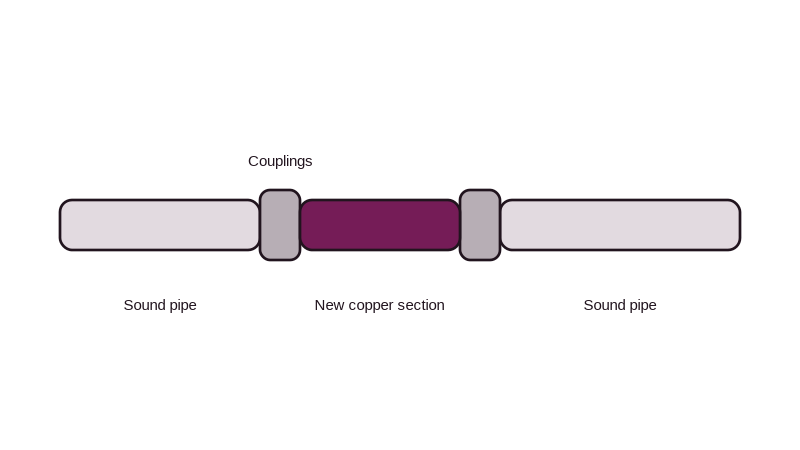
The usual order of work:
- Close the main and empty the line by opening a low faucet.
- Cut out the damaged length with a tubing cutter, leaving clean, round ends, and trim back to pipe that looks sound.
- Deburr and clean the cut ends and the fitting sockets.
- For soldered joints, brush on flux, heat with a torch and feed lead-free solder into the joint. Mind fire safety: keep a wet rag, clear space and an extinguisher close, and never solder with water in the pipe.
- For push-fit couplings, push the coupling on to the marked depth. Follow the manufacturer's instructions, since they differ.
- Bring the water back slowly, inspect the joints and check them again after an hour.
Fires tend to start when soldering inside a wall or near insulation or wood, and a push-fit repair avoids the flame. Even so, a pipe inside a wall means opening the drywall and patching it later. According to the CSLB, a contractor license is generally needed when labor and materials reach $1,000, and for any permitted job, so look at the CSLB site before taking on a bigger repair. We have not verified what LADBS requires for repairing a pipe section, so ask.
Common questions
Is it possible to fix a pinhole with the supply running?
Not dependably. Water under pressure rinses epoxy away and makes clamps hard to seat. Close the main, drain the line and dry the pipe first. When the supply will not shut off, treat it as an emergency and read the emergency plumber page.
Is epoxy putty good for a copper pipe leak?
On a small pinhole in a clean, dry pipe it may hold for a time, but it is still a stopgap. Moisture, heat and pressure can make it let go. Use it to buy time, then replace the section. If the pipe weeps again, shut the water off.
Why do older homes get pinholes in copper pipes?
Pitting corrosion inside the pipe wall is the usual cause, pushed along by water chemistry, flow and age, and older systems have had decades of it. Several leaks point to a worn line. What applies in your house hinges on the water and the pipe, so an inspection by a plumber is how you find out.
Could a pinhole leak lead to mold?
A leak that keeps drywall or insulation damp can allow mold to grow, so dry the area quickly and notice any musty smell. We cannot offer health advice here. If you discover a lot of mold, consult a qualified specialist, and see a doctor about any symptoms.
How long will the repair take?
A clamp is fitted in minutes. Cutting out and replacing a length frequently takes a few hours, longer when drywall must be opened and patched. We cannot promise a time. Ask the business for an estimate and for what could stretch it.