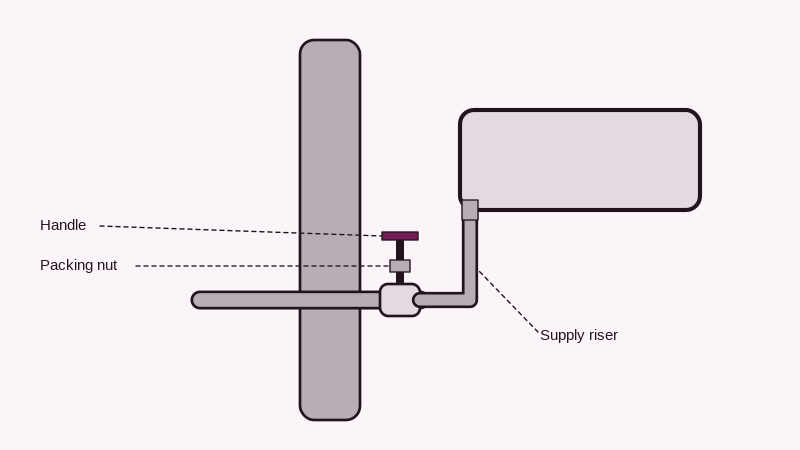
Also known as the angle stop, the toilet shut off valve sits where the supply pipe emerges from the wall or floor, connecting it to the tank hose. It lets you cut water to a single toilet without closing the whole house. When it is stiff, dripping or refuses to close, the fix is often just a packing nut or a new valve, though a seized valve can snap and flood the room. Test it gently now, on a dry day, instead of mid-leak. For other fixes around the house, see Mission Point Plumbing.
Most California homes have one of two kinds: an older multi-turn valve with a round knob, or a newer quarter-turn design. Tract homes built from the 1950s to the 1970s across Sylmar and Pacoima may still have original chrome-plated or brass valves untouched for decades, which is precisely when they fail.
How can I check that the valve still works?
Turn the knob clockwise until it halts, then flush. If the tank stays empty, the valve is sealing. Reopen it and look for moisture at the stem and connections. Do not force a knob that will not move. A valve that spins freely yet still lets water through has a worn seat or washer and needs replacing.
The check takes a minute and shows what you are dealing with:
- Spread a towel beneath the valve.
- Rotate the knob slowly clockwise and count the turns.
- Flush and watch the tank, which should stay empty.
- Turn the knob back open and look for drips.
If the tank keeps refilling after you shut the valve, it is not sealing. If a wrench is needed to move the handle, the valve is stuck and calls for a plumber. Working every shutoff in the house once or twice a year keeps them from seizing.
What makes this valve leak?
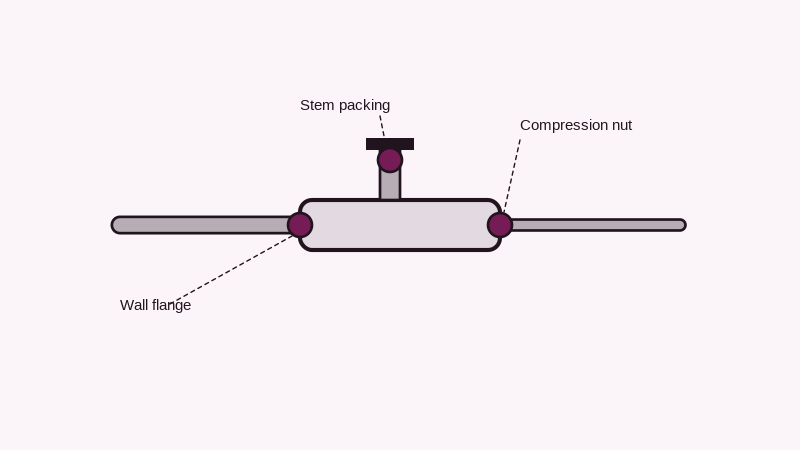
Valve leaks usually start at the packing nut around the stem, the compression nut where the tank hose attaches, or the connection to the wall pipe. A stem drip often stops after a small turn of the packing nut. A leak from the wall connection means the valve needs replacing and the pipe may need attention.
Note where the water shows. Water running along the stem points to the packing. Water at the tank hose points to the connector, which is cheap to replace. Water at the wall flange, or green crust on copper, signals corrosion. Never keep tightening a leaking compression joint, since overtightening can crack the fitting.
The EPA reports that average household leaks can waste upward of 9,300 gallons a year, and a slow valve drip adds to the total. A drip is also a warning: corrosion at a valve can turn into a burst. If the drip is steady, shut the main, put a bucket underneath and arrange a repair.
Is a stuck valve something I can free myself?
Working the knob gently back and forth with a drop of penetrating oil on the stem may loosen a stiff valve. If that fails, stop. Forcing it can snap the stem or crack the wall connection, and the water then has to be closed at the main. Swapping the valve is a small plumbing task, but it needs the right parts and a way to cut the water.
If you attempt the swap, you need to know the pipe size and type. Valves attach to copper, flexible supply pipe or older galvanized pipe, and each takes a different fitting. A wrong fit leaks inside the wall. Galvanized pipe, which can corrode internally, is best left to a plumber, because even loosening a fitting can crack it.
Check the other shutoffs at the same time: beneath bathroom sinks, the kitchen sink and the washing machine. Seized valves tend to appear in groups.
At what point is the valve due for replacement?
Replace it if it will not shut completely, keeps leaking at the stem after the packing is tightened, shows corrosion, is aging multi-turn brass, or has a hose that will not stay tight. A plumber shuts the main, cuts away the old valve, installs a new quarter-turn valve and braided supply line, and tests for leaks.
Many plumbers replace the supply line and valve together, since an old rubber hose is a weak point. Ask for both on the quote. If the wall pipe is damaged, the job grows. For related fixes, read repairing a toilet inlet valve and replacing the fill valve, which sit inside the tank and are different parts. A toilet that keeps cycling or hissing may need a flapper or the steps on our page about a toilet that keeps running.
If the whole toilet is being replaced, have the valve changed in that same visit. The toilet replacement cost guide lists what a quote should contain.
How do I request a plumber for this?
Fill in the quote form naming the valve, the room, whether it leaks and whether you can still close the water at the main. Add a photo of the valve and wall pipe if you can. A nearby plumbing business is lined up to visit, and a written quote reaches you before work begins. Forms are read Monday to Friday, 9am to 5pm.
If the valve is dripping heavily right now, close the main and put a bucket underneath. Do not wait for the form to be read. The page on how a job runs from request to visit lays out the steps.
Common questions
What is the time needed to replace this valve?
A simple valve and supply line swap commonly finishes in under an hour once the water is off. A corroded wall pipe, a main that will not close or a wall needing to be opened stretches it. The plumber should give a window at booking and say if the scope changes once the valve is exposed.
What do I ask before hiring someone?
Ask for a written quote naming the new valve type, the supply line, any pipe repair and the warranty on parts and labor. Find out whether the plumber holds a California contractor license that the state board's site lets you check, and what happens if the new connection leaks later.
Must an adult be home for the swap?
An adult should be there to show the toilet, point to the main shutoff and approve changes to the quote. Clear the area around the toilet, and take cleaning products out from under the sink beforehand so the plumber can get to the wall.
Is a quarter-turn valve better than a multi-turn valve?
Quarter-turn valves operate faster and are less prone to stem leaks, and many plumbers fit them for that reason. Multi-turn valves with washers wear and need replacing more often. Both work in good condition. Ask the plumber what is being fitted.
Can I replace the toilet supply hose myself?
Usually, as long as the shutoff valve works. Shut it, flush until the tank is empty, unscrew the old hose, fit the new braided line and look for drips. If the valve will not close, stop, shut the main and book a visit.