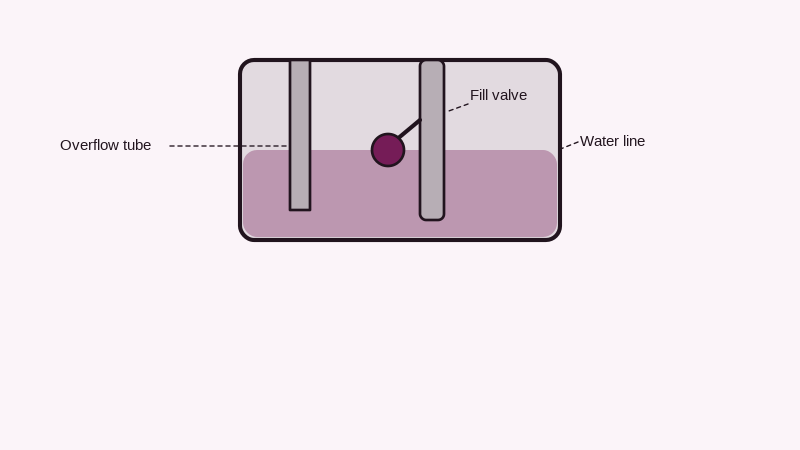
Two parts get called the inlet valve, and mixing them up wastes an afternoon. One stands inside the tank on a tall stem and refills it after each flush. The other is a small angled valve poking from the wall or floor, the one that cuts supply to the toilet. Replace the first yourself if you like; the second deserves caution. This page, from the home of Mission Point Plumbing, keeps the two apart.
What does "toilet inlet valve" actually refer to?
Most guides mean the fill valve in the tank, a tall assembly whose float opens it as the level drops and closes it as the level rises. Plumbers sometimes apply "inlet" to the supply connection or the shutoff outside the tank. Check what is hissing or leaking: if it is in the tank, it is the fill valve; if at the wall, it is the shutoff or its hose.
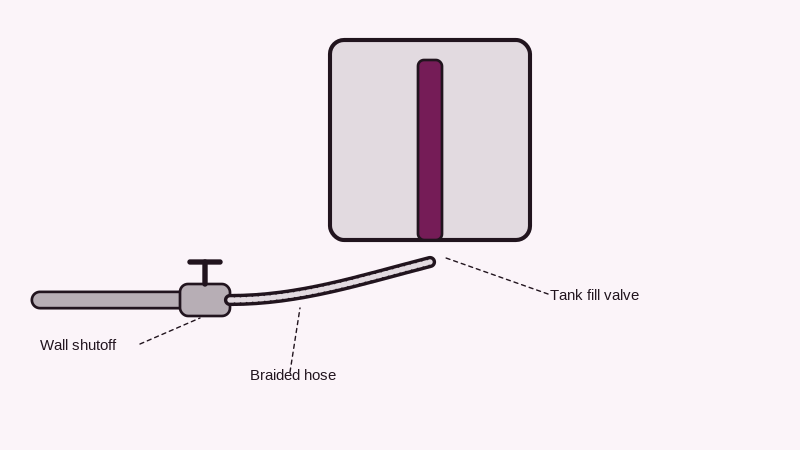
Telling them apart:
- Inside the tank, tall, with a float: fill valve, the part this page repairs.
- Out at the wall or floor, with a small handle: shutoff valve, which toilet shutoff valve repair deals with.
- Braided hose joining the two: the supply line, replaced with its own nuts.
What are the signs the inlet valve is failing?
You will hear it, see it or notice it on the bill. A continuous hiss after the tank fills, a slow or noisy refill, water trickling into the tall overflow pipe, or a bowl that refills on its own all point toward the tank-side valve. The EPA figures that the average home loses more than 9,300 gallons a year to leaks, and a worn fill valve is one quiet source.
Warning signs, in the order most people notice them:
- A hiss that never quite stops.
- A bathroom that is noisy for minutes after a flush.
- A tank that sometimes overfills and drains down the center tube.
- A bill creeping upward with no drip anywhere, a puzzle that the guide to high water bills helps untangle.
If the only symptom is a toilet that runs, the flapper may be the real culprit. To separate the two, see the page about a toilet that keeps running.
What is the safe sequence for swapping the tank valve?
Close the wall valve, flush, and mop the tank bone dry. Unthread the hose from the old valve's tail, spin off the big plastic locknut beneath the tank, and pull the valve up. Drop in the new one, snug its nut by hand plus a final quarter turn, reattach the hose, adjust the height to the manufacturer's mark, and reopen the water slowly while watching for weeping.
Take it easy with plastic nuts. Overtightening cracks porcelain, and once the tank cracks the toilet needs replacing. A fresh valve that hisses or weeps at its base needs loosening, a reseated washer, and another try.
What you need:
- Replacement fill valve of the right height
- Adjustable pliers or a wrench
- Small bucket and sponge
- A new supply hose if the old one is crusted or kinked
Float styles get more room in replacing a toilet fill valve.
At what point is a professional the better choice?
Hire a pro if the wall shutoff will not seal, drips at its stem, or the supply hose is corroded. Houses across the north Valley built in the 1950s through the 1970s can still carry old shutoff valves that seize with age. Forcing one can break it, and the bathroom floods before you reach the main.
Other reasons to bring someone in:
- Stains on the floor or on the ceiling beneath
- A cracked tank or loose bowl
- A renter who needs a written record for the landlord
- Repeated failures, which can point to water pressure
Describe the issue in the quote form, and it is forwarded to a nearby plumbing business able to schedule a visit. If leaking is the real worry, toilet leak help covers that angle.
What moves the cost of this repair?
Three levers: the tank valve alone or the wall shutoff and hose too, the effort of loosening aged fittings, and anything else the plumber finds nearby. No dollar amounts are printed on this site, so the true price arrives on paper once someone has seen the toilet.
Have the valve, hose and shutoff itemized apart. Should a whole new toilet be proposed, ask what test led there and whether the porcelain is cracked, since a fill valve alone rarely justifies one. Tank-side fixes on a sound toilet rank among the lighter plumbing jobs, so a big-looking bid warrants a question about contents.
Common questions
What is the time needed for an inlet valve swap?
A beginner can often do the tank valve in under an hour, once the part is on hand and the tank is dry. A frozen shutoff or crusty hose drags on and may need tools you lack. A plumber usually handles the swap in one short visit and inspects the whole supply line at the same time.
What should I ask when choosing a plumber for this?
Ask if the price includes the valve, hose and wall shutoff, whether parts are covered, and how long the visit lasts. Look up the contractor's classification on the state licensing board website, and get the findings in writing, which helps with a landlord or a later sale.
Can a bad inlet valve flood the bathroom?
A valve stuck open normally sends water down the center pipe into the bowl instead of the floor, though it can also leak at its base or hose and soak the boards. A failing wall shutoff can drip for weeks unnoticed. Check the floor and the ceiling below now and then.
Is the part universal?
Many fill valves are adjustable for height and fit most modern tanks, but not all. Older or unusual tanks can need a specific model. Carry the old valve into the store or note the tank brand, and read the packaging first.
Do I have to be present for the visit?
An adult over eighteen should show the toilet, find the main water valve and approve the work. Tenants need the landlord's agreement for repairs they did not arrange. Raise locked bathrooms, pets and parking when booking, and mention if anyone needs running water through the day.