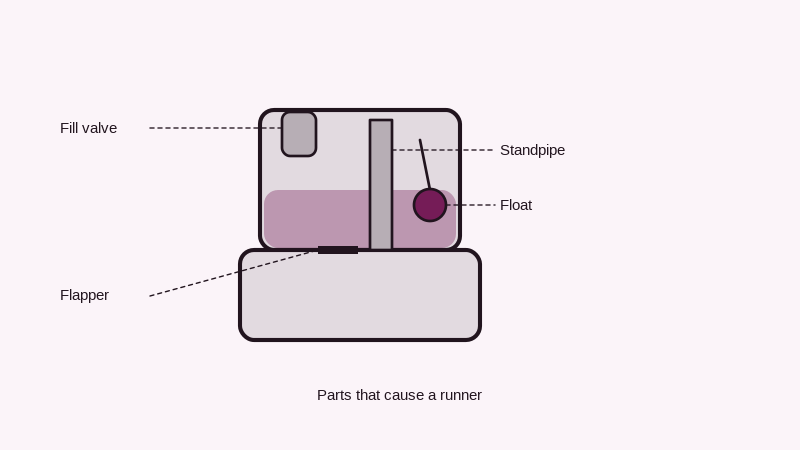
Open the tank and watch for ten seconds. Water streaming down the tall standpipe in the middle points at the float or the valve that feeds the tank. A calm-looking tank paired with a bowl that quietly refills itself every so often implicates the rubber seal over the drain hole. Between them, those two faults explain nearly every runner. If neither shows itself, Mission Point Plumbing (see the home page for where we work) can arrange a visit.
What are the noise and the water level saying?
Its noise and its water level give the answer away. Constant hissing with water brimming at the standpipe means the supply valve never closes. A brief refill that comes and goes by itself, the so-called ghost flush, means water is creeping out of the tank past a tired seal. A toilet that keeps going until you rattle the handle usually has a snagged chain.
Picture the tank as a bathtub: a drain plug (the flapper), a tap (the fill valve) and a bobbing sensor that tells the tap when to quit (the float). When one of the three misbehaves, the tank cannot reach the level where everything shuts down.
| What you notice | Probable cause |
|---|---|
| Hissing, water spilling into the standpipe | Float too high or fill valve worn out |
| Bowl tops up on its own now and then | Flapper leaking |
| Stops only after handle wiggling | Chain snagged or too short |
| Slow, rattly refill | Debris in the valve or weak supply |
| Puddle at the base | A leak rather than a running problem: toilet leak help |
How do you find the cause on your own?
Begin with the chain, which wants a bit of slack: neither taut nor tangled beneath the flapper. Then push the flapper shut with a finger. If the noise stops, blame the flapper or the ring it sits on. Last, check where the water sits against the line molded into the tank, normally an inch or so below the standpipe's rim.
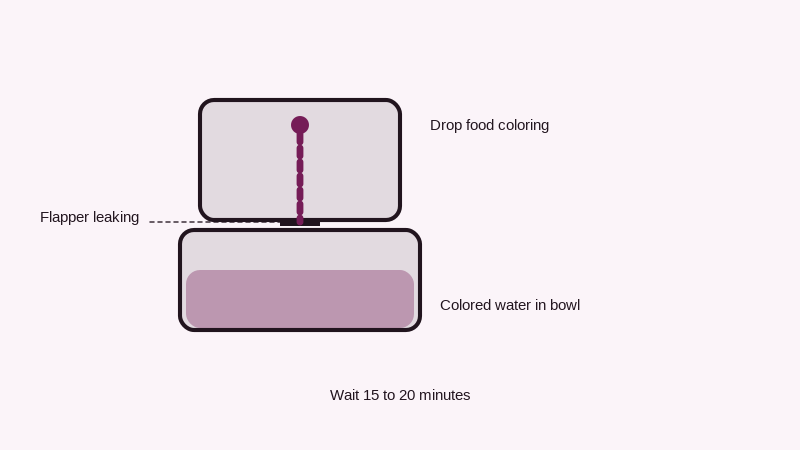
To confirm a flapper leak instead of guessing, add a few drops of food coloring to the tank, do not flush, and look again after fifteen to twenty minutes. Tinted water in the bowl proves the seal is failing. Water agencies often hand out dye tablets for this very purpose.
Leaks cost the typical household over 9,300 gallons a year, says the EPA, and a toilet that refills quietly is a classic culprit. If your bill has crept up with no visible drip, pair this check with reasons a water bill climbs.
Your sequence:
- Remove the lid and rest it on a towel.
- Look at the chain for slack and snags.
- Judge the water height against the standpipe.
- Hold the flapper down and listen.
- Run the dye test when the bowl keeps topping up.
What do you do to make it stop?
Fix the part that matches the symptom. Flappers are inexpensive and come in several styles, so the surest match is to carry the worn one to the store. A float sitting too high can be lowered using its arm or a screw on the valve. A valve that still hisses after adjustment is normally replaced, not rebuilt.
First close the small valve behind the bowl, then flush to drain the tank and mop up the last bit with a sponge. Mineral crust on the seat around the drain hole can stop a brand-new flapper from sealing, so wipe that ring clean with a damp cloth.
Part-by-part guides:
If nothing seems able to shut it off, read the guide to a toilet that never stops.
At what point does a running toilet need a plumber?
Hire one when new parts change nothing, when the small shutoff valve cannot be closed or weeps, when dampness appears on the floor, or when the flexible supply hose is crusted with corrosion. Valves in homes built decades ago, common across the north Valley, can seize or snap when turned, and forcing one can flood a bathroom.
Renters have an added reason. A landlord or property manager usually has to approve repairs, and a plumber's written findings make that conversation easier. Put the symptom and the toilet's age into the quote form, and the request goes to a nearby plumbing business able to inspect it.
Signs the problem has outgrown the tank:
- A cracked tank or bowl
- Seepage where the toilet meets the floor
- A shutoff that spins loosely or never seals
- New parts that wear out fast, which can mean pressure that is too high
Common questions
How long does it take to fix a running toilet?
A flapper swap or float adjustment is a matter of minutes after you have the part. A fill valve takes longer, often under an hour for a beginner. If the shutoff valve or hose needs work, a professional visit runs longer. The quote should state a window, so ask for one when booking.
Which questions should I put to a plumber about a runner?
Find out what the price covers, if parts are included, and if the shutoff valve and hose get tested during the visit. Check the contractor with the state licensing board, and learn how scheduling works. Get the findings in writing, since they help with a landlord, an insurer or a later sale.
Will a running toilet raise the water bill?
Yes. A silent refiller can use a great deal of water over a month while the meter keeps turning. Shut the toilet's valve for sixty minutes and keep an eye on the meter's small leak dial. If it stops spinning, the toilet was the one wasting water.
Why does the toilet keep going after a flush?
Usually the flapper fails to land squarely, or the chain slips beneath it, so tank water drains into the bowl and the valve keeps refilling. Look at chain slack, wipe the seat and run the dye test, then change the flapper before suspecting the fill valve.
Is it fine to leave a running toilet for a few days?
It wastes water but is seldom dangerous, provided nothing reaches the floor. Closing the shutoff halts the waste while parts arrive, and a bucket of water poured into the bowl flushes it. A toilet that runs and also leaks at the base should not wait.