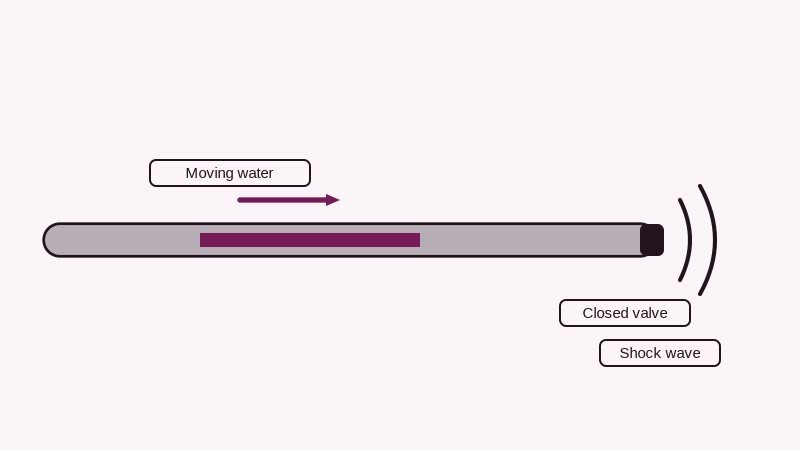
Water hammer shows up as a knock, bang or shudder right after a valve closes: the washing machine changing cycles, a faucet slammed shut, a toilet filling. The sound is a shock wave running along the pipes when flowing water meets a closed valve. Annoying first, damaging later, so diagnosis pays. This page, part of the Mission Point Plumbing site, helps you explore the causes in order of likelihood.
Why does a faucet bang when you shut it off?
The cause is water hammer: a fast-moving column of water stopped without warning reflects a shock wave through the pipe, rattling it against framing with a bang or knock. It is most common with quick-closing valves, such as washing machine solenoids and single-lever faucets, and worsens with high pressure or loose, unsecured pipes.
Picture a long hose with its end snapped shut. Moving water carries momentum, the valve kills it instantly, and that energy must be spent somewhere. Pipes jolt, straps rattle and a fitting may take the strain.
Many older houses have short vertical stubs, air chambers, behind fixtures. Each traps a pocket of air that cushions the blow. After decades the air dissolves away and the chamber floods, and with nothing left to absorb the blow, the hammering starts. In a Valley tract house from the 1950s to the 1970s, that is a common story.
File it under upkeep, not mystery. Shocks loosen joints, chew washers and can start a leak in time, which is why it appears alongside why pipes burst.
How can you fix water hammer?
Start free: close each valve more slowly, and check whether the noise belongs to one appliance. Next, refill the air stubs by closing the house valve, throwing open every faucet from roof level down to the lowest, and letting the lines run dry. If that fails, add hammer arresters, fix the pressure, and secure loose pipes.
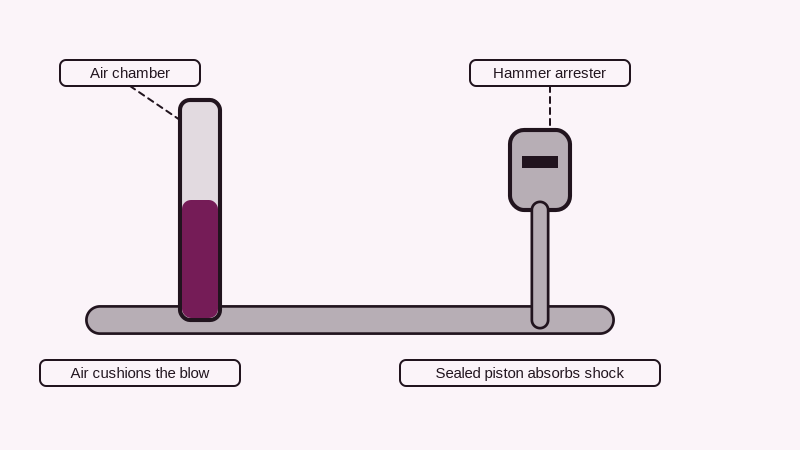
The drain-down trick works only on air chambers that are real, vertical and intact. Some houses have none, or have them capped off. Arresters are the modern answer: a threaded unit with an internal piston or bladder. They come in sizes for appliances and for whole branches.
Pressure above the comfortable range deserves a regulator. A plumber handles adjusting or swapping one as standard work. A smaller device protects the washer alone, described under washing machine pressure regulators.
If the house has pressure that is actually low yet still bangs, that is a different problem altogether; low water pressure discusses the checks.
Look for leaks after a hammering spell. A damp patch or a creeping meter deserves attention: the typical household loses upward of 9,300 gallons of water yearly to leaks, according to the EPA, and strained fittings are one place those begin.
Could the noise be something other than hammer?
Yes, several things. A single sharp bang the moment a valve shuts is hammer. A ticking or popping as the water heater warms or cools is metal expanding. A high squeal or whistle while water runs often means a worn valve or a partly closed shutoff. A low hum can come from a pressure regulator or a pump. A rhythmic thud may be a toilet fill valve.
Listen for timing. If the noise comes only as a tap shuts, suspect hammer. If it comes while water runs, look at valves and flow restrictions. If it comes when nobody is using water at all, look at expansion and heating cycles, and check whether a toilet is cycling on its own; toilet fill valve repair covers that sound.
Notice location too. A bang near the washing machine points at its inlet valves. A knock that runs along an upstairs wall may be an unsecured pipe. A whine in the garage might be the pressure regulator, which ties back to whole-house water pressure regulators.
Capture a short video clip of the noise on a handset; a plumber learns a lot from the sound.
What actually causes water hammer?
Four suspects: quick-acting valves, supply pressure set too high, pipes without firm support, and flooded air chambers. Two or three often combine, and the cure depends on which dominates, so find the trigger before spending money on parts. A helpful habit is to change one thing at a time and listen.
Pressure is the cheapest suspect to check. A small gauge threaded onto the outdoor spigot shows the resting reading in seconds. Terrain matters: pressure climbs the further a house sits below the supply, so a low-lying lot can run high with nothing broken. A regulator dialed in properly calms the bang and the wear; water pressure regulator costs describes how quotes are built.
Fast valves are the second suspect. Washing machines and dishwashers close inlet valves electrically, in a split second. Single-handle faucets can do likewise. Hammer arresters, small sealed units fitted near the appliance, absorb the shock.
Pipe support is the third. Long runs held by a few straps flop under the pulse. Extra clips and foam padding quiet the knocking, an easy task wherever pipes are reachable from a crawlspace or garage ceiling.
When should a professional take over?
Do so if the banging is loud or frequent, the drain-down fails, pressure reads high, leaks or stains appear, or the pipes cannot be reached. A plumber can measure pressure, trace the source, fit arresters and a regulator, secure the lines and retest until the knock stops.
Use the request a quote form to say where and when you hear it, and attach the clip. A plumbing business near you receives the request, and the stages that follow are outlined in how a job runs. Houses from Granada Hills to Pacoima share this complaint, and the service areas hub lists every neighborhood covered.
Common questions
Does hammering put the house at risk?
Seldom in the short run, yet it is no reason to shrug. Repeated shocks stress joints, fittings and appliance valves, and eventually something leaks or fails. Violent banging is a louder warning than a light tap. If wet patches or a creeping meter appear too, treat it as urgent.
Does high pressure make the banging worse?
It does. Higher pressure puts more force behind the water as a valve shuts, so the shock grows. Hillside homes can run high from geography alone, and a regulator that has wandered or failed adds to it. A cheap gauge screwed onto an outdoor spigot shows the number.
Will the noise fade on its own?
Unlikely. Flooded air chambers, high pressure and loose pipes do not repair themselves, and the noise tends to grow with time. Draining the system may buy a few months of quiet, but a lasting fix usually means arresters, pressure control or better pipe support.
Why does the washing machine set my pipes banging?
Its inlet valves snap shut in a split second, and the halted water sends a shock down the supply lines. A hammer arrester beside the machine, lower pressure or a regulator on the supply normally calms it, and the plumber can work out which applies.