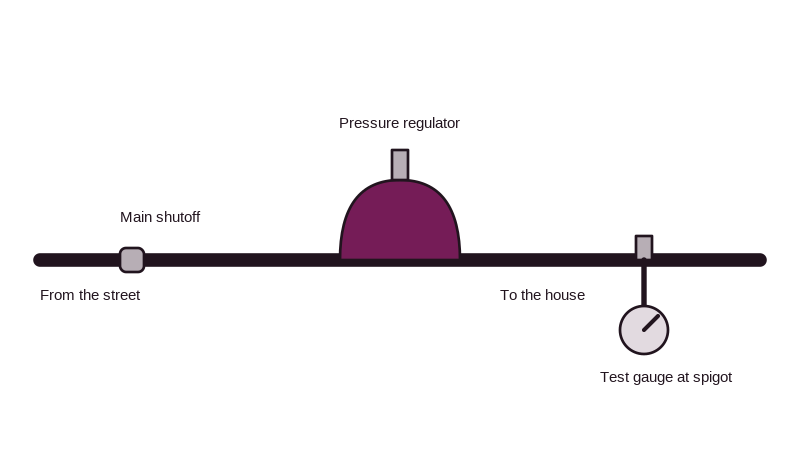
Sometimes named a pressure reducing valve, a regulator for the whole house sits on the incoming line and lowers street pressure to a level that pipes and appliances can tolerate. Homes on slopes, or near a pressure zone boundary, often need one. When it fails you may notice banging pipes, dripping faucets, a leaking heater valve or sudden weak flow. The broader pressure topics sit in water pressure and valves.
How does a regulator on the main protect the house?
It takes the pressure arriving from the utility main and trims it to a steady lower setting for the entire house. Within the valve body, a spring-loaded diaphragm opens and closes the flow as demand shifts. Lacking one, each fixture, hose and appliance gets raw street pressure, which may exceed what they were built for.
Manufacturers and installers generally aim for a comfortable middle range, though your appliances' labels and the regulator's own instructions are the real reference. A regulator is the only device that protects the whole system at once.
Find it on the supply line just past the main shutoff, usually a brass or bronze bell shape with an adjustment screw capped by a locknut. Finding the regulator in your house and how a regulator looks help you spot yours. Some homes have none at all, and some hide one in a meter box or wall.
Hillside terrain matters. Static pressure climbs the further a house sits below the supply, so a house lower on a slope can read high from geography alone. Upper Sylmar's terraces rise from about 1,100 to 1,700 feet, so pressure varies widely between streets.
How can I tell the regulator is going bad?
Warnings include banging pipes, faucets that drip or whistle, toilets that run, a heater relief valve that dribbles, appliances failing and pressure that creeps up overnight. Then test it: thread a pressure gauge onto an outdoor spigot, close everything, and read it. A number far above your target, or one that rises while nothing runs, means the regulator has failed.
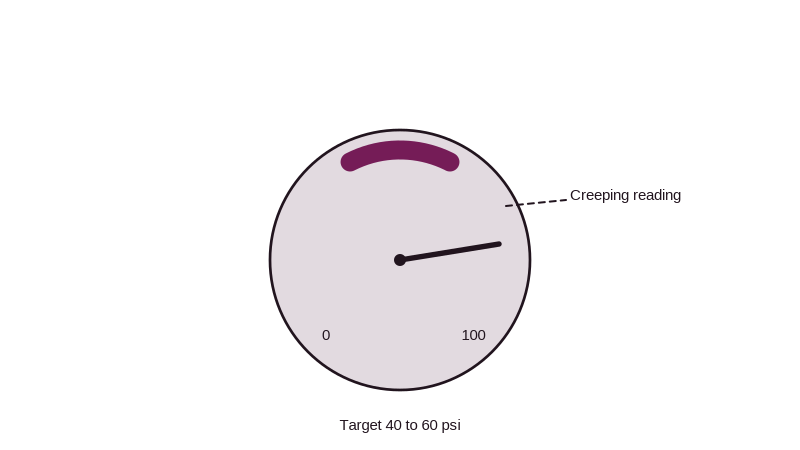
Creep is the classic failure. A worn seat lets street pressure seep through while the house is quiet, so a reading first thing in the morning beats one taken during use. Compare readings with taps open and closed; a good regulator holds steady.
A weak flow can point at the regulator too, when it has clogged or sits at too low a setting. Confirm the shutoff is fully open, then test other fixtures. A single weak fixture is usually a local fault; weak flow throughout suggests a problem with the main, the valve itself or the supply. Sudden low pressure lists other causes.
Related symptoms include water hammer, which high pressure aggravates, and a heater relief valve that drips, which can stem from pressure or thermal expansion. A plumber can tell which.
Is a regulator adjustable at home?
Often yes, provided it has an adjustment screw and you own a gauge. Release the locknut and nudge the screw in small increments, clockwise to raise and counterclockwise to lower, then recheck the gauge with a tap running and again with everything closed. Retighten the locknut afterward. If it will not keep a setting, replace it.
Go in small steps and let readings settle. Overshooting low starves showers and appliances; overshooting high defeats the purpose. Mark the starting position so that you can go back to it.
Replacing a regulator is plumbing work: shut the main, empty the lines, cut or unscrew the old valve and put a new one in, usually with unions that ease later service. Match the pipe size, such as three-quarter or one inch. Where a permit applies, California expects a contractor who holds a license. If the house has a thermal expansion issue, an expansion tank may belong in the same visit; see expansion tank replacement.
Size and type matter. Regulators come in varied pipe sizes and flow capacities, with some made for hot water or special conditions. Whole-house regulators on the main discuss the sizes in more detail.
What is a regulator's lifespan, and when do I replace it?
Regulators wear with age and mineral deposits, and no single lifespan applies; many last for years while some fail early in hard or dirty water. Replace one that creeps, will not hold a setting, leaks at the bell, or fails a gauge test. Waiting risks leaks, appliance damage and burst pipes.
Mineral content matters as well. Per the USGS, hard water that gets heated leaves deposits which clog pipes and equipment, and minerals can foul a regulator's seat or screen. Some regulators have a strainer that can be cleaned, which helps when debris is the problem.
High pressure has a price of its own. The EPA estimates leaks drain more than 9,300 gallons a year from the typical household, and high pressure makes leaks start sooner and run harder. How quotes are built is described in water pressure regulator costs and regulator replacement, without prices.
When does a plumber need to step in?
Hand it over when the gauge shows high or creeping pressure, the regulator leaks, adjusting changes nothing, your symptoms suggest you need a regulator you do not have, or you are unsure how to isolate the system. A plumber can measure, size the new unit, fit it and test the house at the new pressure.
Write the symptoms and any gauge reading into the request a quote form, and a nearby plumbing business will get back to you; see how a job runs. New here? Mission Point Plumbing explains the approach.
Add the age of the house, the address and any recent pipe or heater work. If your water comes from a district other than LADWP, such as in La Crescenta, check your bill, since pressure and rules can differ.
Common questions
What pressure should a house have?
Appliance labels and the regulator's instructions list the pressure they are built for, so start there. The reading depends on the regulator setting and the street supply. A gauge on a spigot gives the answer for your house. If the number is outside what the labels allow, a regulator adjustment or replacement may be needed.
Does every house need a regulator?
No, though many do. Houses where street pressure is already moderate may manage without, while hillside and low-lying lots often need one. A gauge reading settles it. Should the number come out high, a regulator shields pipes, fixtures and appliances from stress and leaks.
Is a regulator the same as an expansion tank?
They are different parts. A regulator lowers incoming pressure, while an expansion tank absorbs the added volume as heated water expands in a closed system. A house can need both, and a regulator or check valve at the supply line is often why an expansion tank becomes necessary.
Can I install a pressure regulator myself?
Experienced owners can manage it, but errors cause leaks and flooding. Anything involving gas or a permit, and any job that cuts into the main, should go to a contractor holding a California license. If you proceed, use unions and test thoroughly.