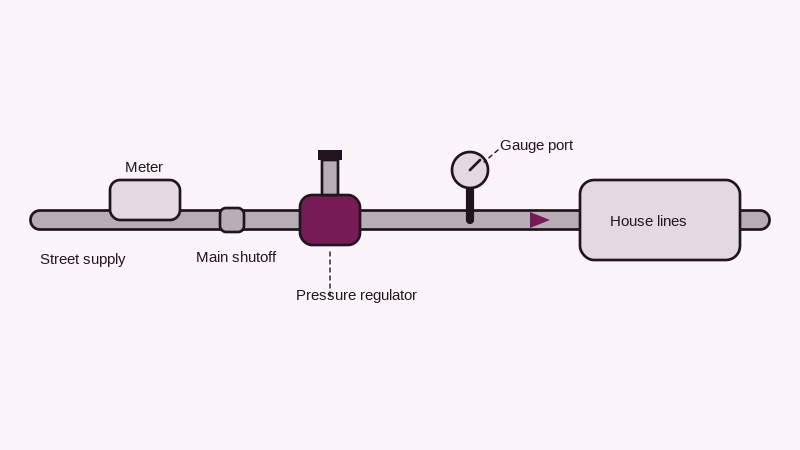
Few households need a regulator just for the washing machine. When the pressure entering the house is too high, every fixture suffers, including the washer's inlet valves and hoses, and the cure is one regulator placed on the main supply. When pressure is normal, a washer regulator only adds one more part to fail. This page helps you work out which situation you are in. For other fixture questions, begin with the guide to garbage disposals and fixture plumbing in Sylmar.
Is a dedicated washer regulator needed?
Normally not. Washers are built for typical household supply pressure, and their manuals list an operating range. If your house sits within that range, no separate regulator is required. If it exceeds the range, a main-line regulator protects every fixture together, which is the better fix.
Look up the pressure limits in the washer manual, and measure your pressure with a gauge threaded to an outdoor spigot or the washer valve. A reading inside the range means the trouble lies elsewhere. A washer that fills slowly is a separate matter, covered further down. The page on whole-house pressure regulators describes the main-line option.
What harm does excess pressure do to a washer?
Excess pressure stresses the hoses, the inlet solenoid valves and the water hammer after each fill. Over time a hose can crack, a valve can wear out or a connection can loosen, and a hose that ruptures can put water across the laundry floor within minutes. Because the damage builds slowly, it is easy to overlook until something fails.
Signs include pipes banging as the fill ends, hissing at the valve, hoses that swell or seep at the connection, and valves that start leaking after a short time. Replace rubber hoses with braided ones, and inspect them regularly. According to the EPA, an average home loses upward of 9,300 gallons a year to leaks, and a seeping washer connection is a common source. About the noise, read the water hammer sound.
How can I measure the pressure at my house?
Get a pressure gauge with a hose-thread fitting and attach it to an outdoor spigot or to the cold supply valve behind the washer, with the other taps shut. Turn the valve fully on and read the dial. Repeat at different hours, since pressure shifts during the day. Note the figure for the plumber.
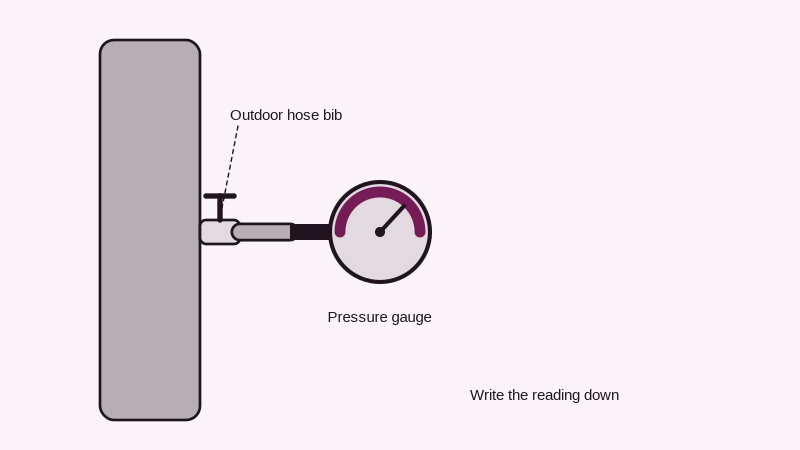
A high reading signals a house-wide problem. A reading within the manufacturer's range points you toward the hoses, filters and valves. Do not trust how the water feels from the tap. A gauge is an inexpensive tool, and a plumber can also attach one at the meter or the water heater. Include the reading when you fill in the quote form.
Should a regulator go on the washer hose?
It can serve as a patch, but it is not the best answer. A small inline regulator on the washer hose shields only that machine, and it introduces a part that can clog with sediment or fail. A main-line regulator covers the washer, the water heater, toilets, faucets and the shower.
If one fixture alone causes trouble, a hose-end regulator may be a quick stopgap, but a plumber is more likely to advise checking house-wide pressure first. If a main regulator is already fitted, it may have failed, since regulators wear and give trouble with age. See finding the regulator to locate yours.
Can high pressure make a washer fill slowly?
Unlikely. Slow filling points to weak pressure or flow at the washer, for example a clogged inlet screen, a kinked hose, a half-closed shutoff valve or a failing inlet valve. A washer that fills slowly while the taps are also weak may have a supply problem rather than too much pressure.
Look at the screens inside the hose ends for sediment, which is common after street water work. Confirm the shutoff valves are all the way open. Compare with other fixtures to learn whether the weak flow is limited to the laundry room. If the others are weak too, the usual causes are in weak flow at the kitchen sink.
Which north Valley homes see high pressure?
Pressure can vary by street and by elevation, and a house lower on a slope may read differently from one higher up. The water you receive is supplied by LADWP in most neighborhoods here, from a blend of sources that varies. Upper Sylmar and the Hubbard Street terraces rise from about 1,100 feet to about 1,700 feet, so pressure can differ a lot across a short distance.
That is why you should measure at your own house instead of guessing. Porter Ranch and other newer homes often come with a builder-installed regulator, and older homes may lack one. Your bill shows who supplies you, and the plumber can report the pressure measured on site.
What is involved in fitting or replacing a regulator?
First the plumber shuts the water and cuts into the main line close to where it enters the house. The regulator goes in, gets set against a gauge, and the joints are tested for leaks. The job is small, yet it is supply-line work, so wherever the rules require it, the plumber needs a California contractor license.
Have the plumber set the pressure and show you the gauge numbers from before and after. Also ask if an expansion tank is needed, since a regulator can turn the water heater loop into a closed system. A permit may apply, so check with the City of Los Angeles Department of Building and Safety. For general cost drivers, see what a regulator job costs. To request a visit, send a message through Mission Point Plumbing; the inbox is checked on weekdays from 9am to 5pm.
Common questions
What counts as normal household water pressure?
Most appliance and fixture manuals publish an operating range, and a plumber can take your pressure with a gauge. Aim for a reading within the range printed in your washer and water heater manuals. We give no single number because makers differ, so check your own paperwork.
Can excess pressure void a washer warranty?
It can, if the manual sets a maximum and the damage comes from exceeding it. Read the warranty wording, keep your pressure reading and ask the maker how pressure is handled. Correct high pressure before a failure happens, not afterward, so the warranty question never comes up.
How often do washer hoses need replacing?
Many makers recommend regular checks and replacement every few years, with braided stainless hoses a common upgrade. Look for bulges, rust at the fittings and seepage. Follow the manual for your washer, and shut the taps when you travel or leave the house for long.
Will a regulator stop water hammer?
Sometimes, if excessive pressure turns out to be behind it, though not in every case and not on its own. Water hammer also stems from loose pipes and fast-closing valves, and a hammer arrester may help. Tell the plumber when the noise occurs and which appliance sets it off.
Can I install a regulator myself?
A hose-end regulator simply threads on. One on the main line is supply-line plumbing and may need a permit. If you are unsure, request a written quote and let a plumber with a California contractor license put it in, so the work is done properly.