Mostly calcium and magnesium carbonate left behind as water evaporates or heats, hard water scale yields to mild acids such as white vinegar or citric acid, applied to fixtures and followed by a heater flush. That clears what is already there. Keeping it away takes a change to the water, such as a softener, covered on the plumber for water softener installation page. To get a local plumber, use the quote form.
What does hard water scale look like, and how do you spot it?
Scale is a white, tan or grey crust of dissolved minerals that stays on surfaces when hard water dries or is heated. You see it as crusty rings on faucets, white film on glass, clogged shower head holes, and a rumbling water heater. A dry, soapy-feeling film on skin and dull laundry are other clues.
Where it shows up:
- Faucet aerators and shower heads. Small holes clog and the spray becomes uneven.
- Glass and tile. White spots and film on shower doors and dishes.
- Kettle and coffee maker. A crust inside the heating element or base.
- Water heater. Scale builds up along the bottom of the tank and around the elements, causing popping or rumbling noises and longer heat-up times.
- Pipes and appliances. Over a long time scale narrows pipes and shortens appliance life.
A test strip or a test from a hardware store gives a rough hardness reading. Another source is the annual report from your water utility. LADWP, which serves the City of Los Angeles areas of the north Valley, publishes a Drinking Water Quality Report, but its hardness figures sit in tables that we could not read here, so no number is given. Water in the north Valley comes from a blend of sources that varies, so hardness differs by street and over time. Your bill shows who supplies you, since the City of San Fernando and La Crescenta have their own suppliers.
How do I clean scale from faucets and shower heads?
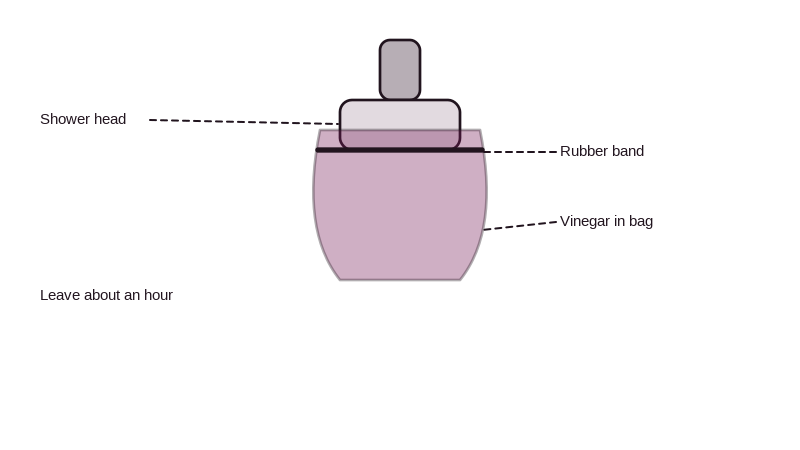
Soak the part in white vinegar for roughly an hour, then scrub and rinse. A shower head can be treated with a vinegar-filled bag tied over it for an hour. For an aerator, unscrew it, soak it and brush the holes clear. Citric acid works too, and some finishes need less time.
Steps:
- Aerator. Unscrew it from the spout with your hand, or with pliers over a cloth. Soak it in vinegar, then clear the screen and holes with a toothbrush or pin.
- Shower head. Pour vinegar into a plastic bag until half full, fasten the bag over the head with a rubber band and leave it about an hour. Check the finish after the first twenty minutes.
- Faucet body. Drape a cloth soaked in vinegar over the crusty area and leave it for an hour, then wipe.
- Rinse. Run water through and wipe dry.
Some finishes, such as brass, brushed nickel and oil-rubbed bronze, can be marked by acid left too long. If the maker supplies care instructions, follow them. Never mix vinegar with bleach, since the mix gives off chlorine gas. If a shower head stays weak after cleaning, the problem may be pressure, see low water pressure.
What removes scale from glass, tile and toilets?
White vinegar on glass or tile, a paste of citric acid or a commercial descaler on tougher spots, and a nylon pad all lift scale. Keep acids off natural stone, marble and travertine, which etch, and do not mix cleaners. In a toilet, a vinegar soak and a brush clear the rim and the waterline.
Practical tips:
- Spray vinegar on glass and give it a quarter hour or less, then wipe. A squeegee afterward slows new spots.
- For a toilet, pour vinegar around the rim, leave it and scrub. Clearing the rim holes can restore a stronger flush. See toilet flush repair.
- Use a non-scratch pad on glass and polished surfaces.
- Avoid acid on grout, since it can eat it over time.
- Rinse well and ventilate the room.
Mixing products is the real risk here. Vinegar with bleach releases chlorine gas, and some drain and bowl cleaners are strong acids. Stick to a single product at once, and read the label.
How do I descale a water heater?
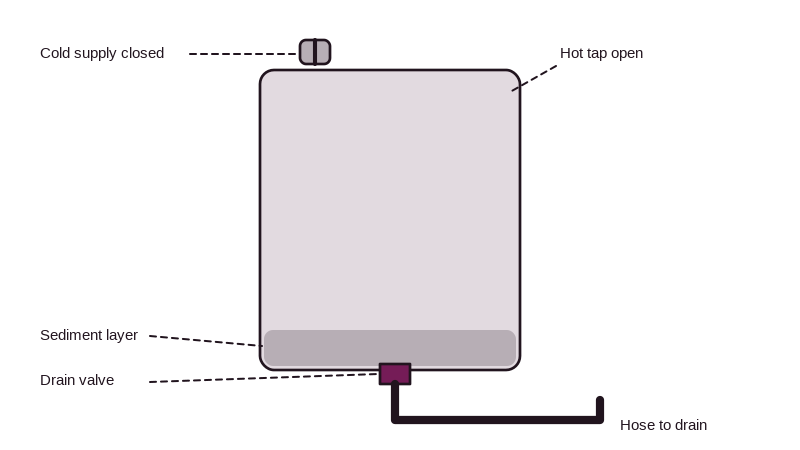
A flush washes loose sediment out of the tank, and a descaling soak can dissolve some of the crust on elements, but heavy scale is hard to clear and a worn tank may not survive it. Running off a few gallons through the drain valve as a routine flush helps. For a gas or electric heater, turn off the energy first.
A basic flush:
- Electric heater: turn the breaker off. Gas heater: put the control on pilot or off.
- Close the cold supply valve and attach a hose to the drain valve, running it to a safe drain.
- Open a hot tap in the house so air enters, then open the drain valve and let water run until it clears.
- Close the drain valve, remove the hose, reopen the cold supply and let the tank refill with a hot tap open.
- Restore power or gas.
A heavily scaled tank may pop when it heats, and chunks can clog the drain valve. If the valve will not open fully or a lot of grit comes out, stop and bring in a plumber. For a tankless water heater, descaling means circulating a mild acid through the unit using isolation valves, per the maker's manual. Another part of tank care is covered at anode rod replacement, and the wider checks are on water heater repair.
Does a water softener keep scale from returning?
A salt-based softener removes the bulk of the calcium and magnesium that cause scale, so new buildup in fixtures, appliances and the heater is reduced. Other devices claim to condition water without removing minerals, and the evidence for them varies, so request the maker's proof and the terms. A softener has running costs and needs space, drainage and power.
Points to weigh:
- What you gain. Less scale on fixtures, glass and the heater, and soap lathers better.
- What you give up. A softener adds sodium and wastes some water in regeneration, and some local rules limit the discharge. We have not checked the local rules for this page, so ask the plumber.
- Maintenance. Salt refills and an occasional check.
- Installation. It needs a drain, water lines, an outlet and a spot near the main.
For the full picture see the installation walkthrough, softener cost drivers, hard water scale prevention and whether a softener raises your bill.
Should I keep cleaning scale or install a softener?
Clean when the scale is light and you only need a fix for a few fixtures. Quote a softener when scale returns quickly, your heater is rumbling, appliances are failing early or you are replacing a water heater and want to protect the new one. Test the water first, to be clear about the problem you are solving.
A short decision path:
- Test hardness with a strip or ask your supplier for the figure.
- If it is moderate, regular vinegar cleaning and a heater flush may be enough.
- If it is high and the scale is heavy, ask for a quote for a softener.
- Compare the quote with the cost of replacing fixtures and appliances more often, which you can estimate from your own history.
Many north Valley homes built between the 1950s and the 1970s have galvanized or older copper pipes. Scale and corrosion together can narrow old pipe, so have a plumber examine the pipe when you ask about a softener. For a quote, fill in the form with your address and observations. A local plumbing business receives it and reaches out. This site shows no dollar figures. Form requests are handled on weekdays between 9am and 5pm. The rest of our services are listed on the Mission Point Plumbing home page.
Common questions
Can vinegar be used safely on scale?
White vinegar is safe on most glass, chrome and ceramic and a mild way to dissolve scale, but it can dull some finishes and etch natural stone. Test a small spot first, do not leave it on too long, and keep it away from bleach, since the two must never be combined. Rinse well afterward.
Does hard water damage pipes?
Over many years, scale can narrow pipes and clog fixtures and heaters, and it can reduce the life of appliances. How much harm it does turns on the water's hardness and the pipe's age. Check your supplier's report, and get a plumber to examine older pipe.
How do I find out how hard my water is?
Look for the hardness number in your supplier's yearly report, or buy a test strip at a hardware store. Hardness can vary by street and over time, so a home test is a good check. LADWP publishes an annual report, though we could not read its hardness table.
Can I descale a tankless heater on my own?
Plenty of owners do it, using isolation valves plus a small pump circulating a mild acid solution, following the manual. The unit may need gas or power off during the process. When in doubt, or if the unit throws scale error codes, bring in a plumber who knows the model.
Why does scale keep coming back after I clean it?
Cleaning removes what is there but not the minerals in the water. Each time the water dries or heats, more scale forms. Only treating the water, for example with a softener, slows it. Regular light cleaning keeps buildup manageable in the meantime.