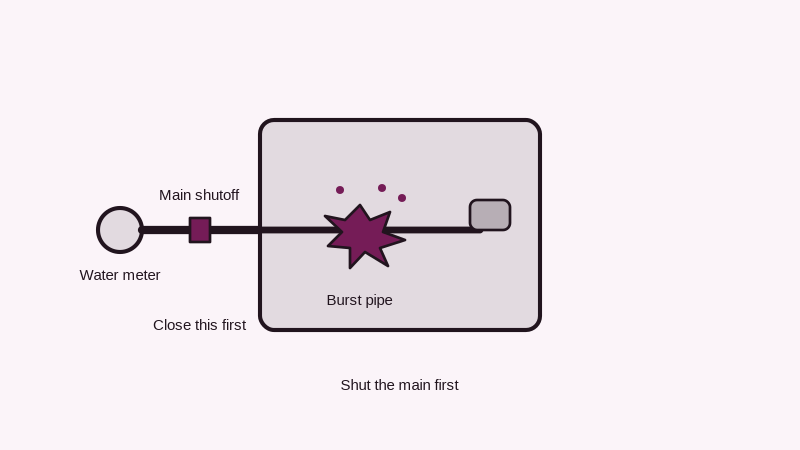
Turn off the main valve so the water stops, cut power to anything wet, and let the lines drain through a low faucet. Those three moves are the entire emergency; finding the break, drying, repair and the insurance claim are all simpler once the flow has ended. Be clear about what this site is: a request form read on weekdays from 9am to 5pm, with no emergency line. If the flow will not stop whatever you try, contact 911 and the water utility. For the planned side, the leaks and burst pipes guide and the home page, Mission Point Plumbing, describe what can be set up.
Freezing rarely splits pipes around Los Angeles. The common causes are aged corroded supply lines, too much water pressure, shifting ground, tree roots pushing on yard lines and fittings that have failed.
How do I stop the water at the main after a pipe splits?
The main sits in the street meter box or on a valve where the supply pipe enters the home. Give the lever a quarter turn, or spin the wheel clockwise. Afterward, open the bottom-most tap in the building so the rest drains. If the main is stuck or missing, shut the meter valve with a meter key or ask the water utility to help.
Rehearse this before anything goes wrong. On a calm day, locate the shutoff and confirm it moves. Many tract homes built between the 1950s and 1970s have a gate valve as the main, untouched for decades, which can snap or seize. Never push a stuck valve until it breaks. Ease the handle, and if it fights back, let the plumber deal with it.
After the 1971 San Fernando earthquake, Sylmar residents reportedly went without water and gas, and the 1994 Northridge quake sparked fires. Knowing both shutoffs and keeping a wrench nearby makes sense in the north Valley. For gas, read about shutting off gas after a quake.
What prevents the next burst?
Test the water pressure, since high pressure stresses pipes and fittings. A worn-out pressure regulator is a frequent culprit, and the article on replacing a regulator describes what it does. Swap corroded sections, keep shutoff valves moving and never shrug off small drips. A yearly checklist sits in burst pipe prevention.
The EPA estimates the typical household leaks away upward of 9,300 gallons yearly, so fix a small leak before it turns into a burst. Once a month, check under sinks, around the water heater and at the meter.
Where is the break?
Listen for hissing or running water, and watch for damp walls, bubbling paint, stained ceilings and spongy flooring. Next, check the water meter with all fixtures switched off. If the dial keeps moving while the main is open and nothing is running, a pipe has burst indoors. If it still moves after the main is closed, the fault lies in the line before the shutoff.
More detail sits in the guides on telling whether a pipe has burst and what causes pipes to burst. Leaks inside walls or beneath slabs are harder to locate. A plumber can bring acoustic and thermal equipment for detection, and the article on leak detection pricing explains how such quotes are built.
On hillside streets like the upper Sylmar terraces, a burst on a slope can send water onto a neighbor's lot, so say so when you describe the problem.
Is it safe near electrics when the floor is wet?
Stay away from outlets, a panel, light fixtures or appliances that are near water. Switch off the breaker only when the panel is reachable on dry footing. Should the panel be wet, or water be dripping from a light fitting, touch nothing and contact 911. Water mixed with electricity can be fatal.
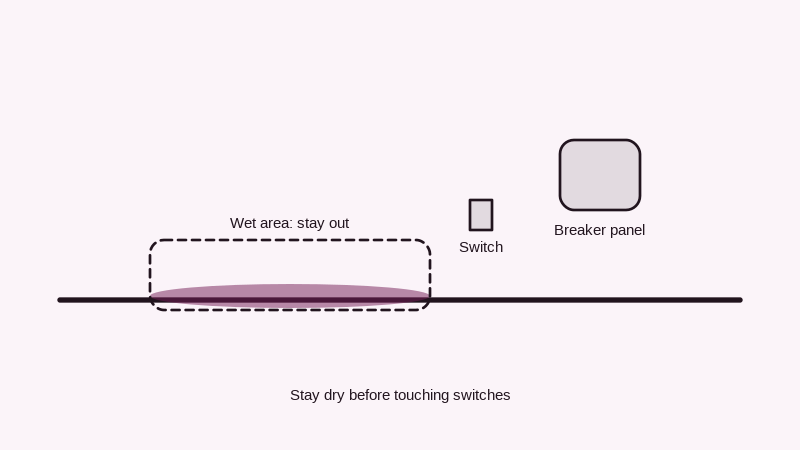
Water can run along a ceiling and collect in a light fixture, so any bulge or drip near a lamp needs caution. For that situation, read water leaking into a ceiling light.
Carry valuables and rugs out of the soaked area, raise electronics onto dry surfaces and open windows to begin drying. Leave anything plugged in near standing water alone until its circuit is dead.
How is a plumber arranged after a burst?
Once the water is off and the area is safe, use the quote form to describe what happened: where the pipe is, its type if known, what you shut off and what is damaged. Mission Point Plumbing forwards it to a nearby plumbing business that contacts you and visits, and a written quote reaches you before repairs begin.
Give exact details. State whether the main is closed, whether ceilings or floors are damaged and whether the burst is reachable. A photo of the broken section lets the plumber arrive with suitable parts. Mention any loss of hot or cold water. Keep in mind that the form is only read on weekdays.
For the repair, have the quote say whether a section is being fixed or a longer run replaced. With corroded galvanized or older copper, a patch can fail again beside the repair. If one house keeps leaking, see what a repipe involves.
Which records help with an insurance claim?
Photograph and film the damage before moving anything, keep the broken pipe section if you can, note the times and what you did, and hold on to receipts for emergency work or drying. Ask the insurer what it requires before any repair beyond stopping the water. Cover varies by policy and cause, so see what insurers pay for after a burst.
Record when the problem first came to your attention. Insurers often distinguish sudden bursts from slow leaks and corrosion, and a clear timeline helps. Hold on to wet materials until the insurer has inspected them or approved disposal, unless mold creates a health risk.
Tenants should tell the landlord straight away and keep written proof of the report. In California, the landlord organizes repairs to the building's plumbing.
Common questions
How long does it take to repair a burst pipe?
A pipe that is in plain view can often be fixed within a few hours. One behind a wall or under a slab requires the plumber to open the surface first, with drying and patching afterward. At booking, expect a time window and an explanation of which steps depend on what is found.
Which questions should go to the plumber about a burst?
Ask for a written quote that lists the repair, any access cuts and patching, who handles permits and the warranty on the work. Also ask whether the contractor has a California license; the state contractor board's site lets you verify it. Agree when payment is due before saying yes.
May a friend or neighbor open the door while I am at work?
An adult must be home to show where the main shutoff is, point out the damage and approve the quote. If that is not you, choose a trustworthy person, leave them written instructions and tell the plumber when booking, so the visit does not end at a locked door.
Will my insurer pay for a burst pipe?
Sudden bursts are often covered, while slow leaks and wear usually are not, though policies differ. Read yours, notify the insurer ahead of major repairs, and hold on to photos and receipts. Ask what the insurer expects from you in writing before any repair work begins.
Should I leave the water off until help arrives?
If you can cope without it, yes. A closed main is the surest way to limit damage. Open a tap and flush a toilet once to empty the system. If you do need water, tell the plumber, who may be able to isolate only the broken section.