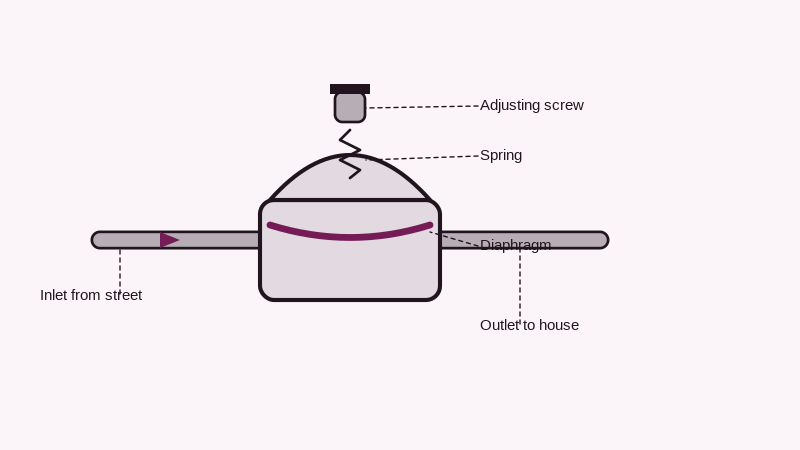
The water pressure regulator is a brass, bell-like valve fitted to the main supply line; it lowers incoming street pressure to something your plumbing can handle steadily. With age it wears out, and pressure can then rise, drop or drift, hurting taps, hoses and the water heater. If it is within easy reach, a plumber can replace it fast. This page belongs to the wider water pressure and valves section and explains when replacement makes sense and what to ask for.
Houses lacking a regulator can get one fitted. Many older north Valley tract homes were built before regulators were common, so it is worth checking yours.
What are the symptoms of a worn-out regulator?
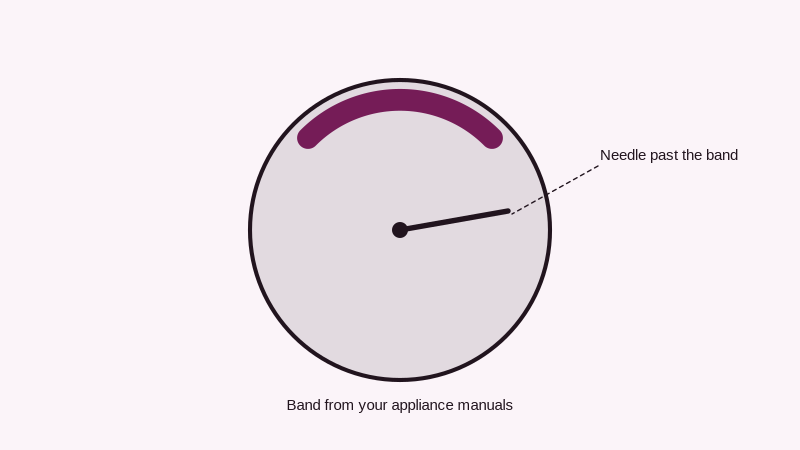
Common clues include a surge of pressure at the taps, knocking pipes, a toilet that refills over and over, a dripping relief valve on the water heater, weak flow following a spike, or pressure that shifts through the day. Attach a gauge to an outdoor hose bib to collect readings over time. A figure that creeps upward overnight is the classic sign of a failed regulator.
What to look for:
- Pipes knock or thump as a tap closes; see water hammer.
- Taps and toilet valves wear out faster than they should.
- The relief valve on the water heater drips or discharges.
- Flow is strong in the morning and weak later, or the other way around.
- Hoses and washing machine supply lines bulge or burst.
A hose-bib gauge costs little and most hardware stores carry one. Thread it onto an outside tap when the house is quiet, read the dial, and compare morning with evening. No safe figure is listed here; follow the fixture manufacturers and whatever advice the plumber gives for your house.
Where is the regulator, and what does it look like?
Look on the main supply line, normally right after the shutoff at the spot the water comes into the building. That might be a garage, a closet housing utilities, a side-yard box or a position near the water heater. Spot a brass bell shape, often capped by an adjustment screw and locknut. The guides on finding it and its appearance add detail.
If you cannot find one, it may be in a buried box in the front yard by the meter, or the house may have none. The plumber can tell from the pipe itself. In hillside houses in upper Sylmar and Tujunga, where elevation shifts pressure, a regulator is especially useful, and the plumber may set it to suit the lot.
What happens during a replacement?
First the plumber closes the main and empties the line, then cuts or unscrews the old regulator. A replacement matching in size and connections goes in, and the outlet pressure is set using a gauge. Water comes back slowly, joints are checked for leaks, and pressure is tested at a tap. Re-adjustment after a day of use may be needed.
Matching matters: pipe size (usually three-quarter inch, sometimes one inch), connection style (threaded, soldered or union) and flow capacity. For sizing, see three-quarter inch regulators and one-inch regulators. A union fitting makes the next replacement easier, so request one.
Plumbers often add a gauge port, and sometimes an expansion tank beside the water heater, because fitting a regulator turns the system into a closed one and heated water then has no room to grow. The expansion tank replacement page explains why this can arise.
Can I replace a regulator on my own?
With pipework and soldering skills it is possible, but the main must be shut and drained, and one bad joint floods the garage. Some jobs need a permit, which only a contractor holding a California license may pull. Check with LADBS, the city building department. Many owners hire out the swap and keep the gauge reading as a check.
Stop if the shutoff is stuck open or the pipe is old, corroded galvanized. Disturbing it can crack the pipe. In some neighborhoods the main valve sits at the meter and belongs to the utility, so leave the meter valve alone and ask the utility for help if water must be shut.
What should a regulator quote spell out?
Every quote should name the model and size, the pressure setting, and whether a union and gauge port come with it. It should also say if an expansion tank is part of the work, how permits get handled, and what warranty covers parts and labor. This site shows no dollar figures; line up identical items across quotes. The page on regulator costs explains what moves the total.
California limits the deposit a contractor may request on home improvement work, and the state contractor board publishes the current cap. Ask who is responsible for a leak that shows up after the job. The roundup of the best home pressure regulators lists features worth asking about.
Could a faulty regulator explain low pressure?
A regulator can seize closed or partly closed and choke the flow. Other causes of weak pressure include a shut valve, a clogged aerator or showerhead, corroded pipe or a fault on the utility side. A single weak fixture rules out the regulator. When the whole house is weak, suspicion falls on the regulator or the main.
Take gauge readings at a quiet time and a busy one. The pages on sudden low water pressure and a kitchen sink with weak flow help narrow it down. LADWP's annual Drinking Water Quality Report has service area details, and your bill names your supplier.
The EPA estimates that leaks in the average household waste over 9,300 gallons yearly, and high pressure worsens them and wears out fixtures. When ready, send a request with the gauge reading. Every other job on offer is listed at Mission Point Plumbing.
Common questions
How much of my day will the swap take?
Commonly an hour or two, provided the old unit is reachable and the fittings match. A buried box, corroded pipe or the extra work of unions and an expansion tank adds time. The plumber should give a window and say during which hours the water will be off.
Which questions go to the plumber before work begins?
Ask about the model and size, the target pressure, included fittings, any expansion tank, permit handling and warranty on parts and labor. Confirm the plumber has a California contractor license, which you can look up online through the state licensing board before any work starts.
Does someone need to be home during the swap?
Yes, an adult should point out the main shutoff and the regulator, approve changes to the quote and see the final pressure check. The water is off for part of the visit, so plan around it. You need not watch the whole job, but someone should stay at the address until it ends.
What is the lifespan of a pressure regulator?
No single figure applies; it depends on water quality, pressure swings and the unit. Many last years and they fail gradually, so check pressure with a gauge from time to time. Ask for the maker's literature for your model and note the install date somewhere you can find it.
Will a new regulator stop pipes from banging?
It can if high pressure is the cause, though water hammer may also come from loose pipes or fast-closing valves. The plumber can test pressure first and then inspect the rest. Readings taken before and after the new regulator goes in show the difference clearly.