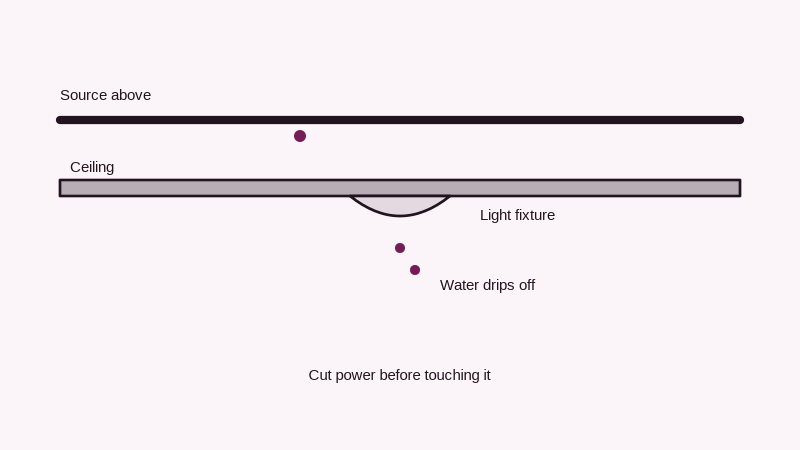
Leave the fixture and the switch alone. Water mixed with electricity can cause serious injury, so keep out from under the drip. If the electrical panel can be reached without wading across a wet floor, switch off that room's breaker. Should the panel be wet, or should you smell burning, hear buzzing or see sparks, leave the area and contact 911. After that, stop the water at its source if possible: close the main when the leak is a burst or a fast drip. Someone reads this site's request form on weekdays, 9am to 5pm, so it is no tool for the first minutes. Mission Point Plumbing arranges the plumbing visit afterward.
The light fixture is only a symptom. Water traveled along the ceiling joists or over the top of the drywall until it reached a hole, and the light is where it came out.
What makes water come through a ceiling light?
Water above a ceiling obeys gravity and follows joists until it finds an opening, and a light fixture is a hole cut in the drywall. The source is usually a plumbing leak in the floor above, a roof leak, a leaking air conditioner drain, a shower or tub leak or a failed pipe in the attic. The fixture merely marks the exit.
The spot where water appears can sit several feet from the source. Water runs across the top of a ceiling, then drips where the drywall is weakest. Check what lies directly above the light: a bathroom, a laundry room, a water heater platform, an air handler or an exterior wall.
In a one-story north Valley house, an attic pipe or a roof penetration is the likely suspect after rain. In a two-story home or a condo, look for water use above: a shower, tub or washing machine. For the full list, read signs of a water leak in the ceiling.
How do I trace where the leak is coming from?
Study what sits above the fixture, then test usage. Run a single fixture at a time, such as the shower, tub or washing machine, with a helper watching the ceiling below. If the drip begins or quickens, you have the source. If it drips only during or after rain, blame the roof or an exterior wall.
Check the water meter with everything off. If it keeps moving, a supply pipe is leaking. Inspect the shower pan, tub caulk, toilet base and drain lines above. An air conditioner's condensate line can also drip into a ceiling once clogged. The bathroom case is covered on our page about a shower leak.
A hidden leak in a wall or between floors may call for detection using moisture meters, acoustic tools or thermal imaging. The page on leak detection costs shows how that is quoted. Some stains resemble leaks yet are old; spots on a ceiling with no leak explains that.
The EPA says the typical household loses over 9,300 gallons of water a year to leaks, and a slow drip above a ceiling usually runs a long while before it shows.
Which professionals do I need for a leaking ceiling light?
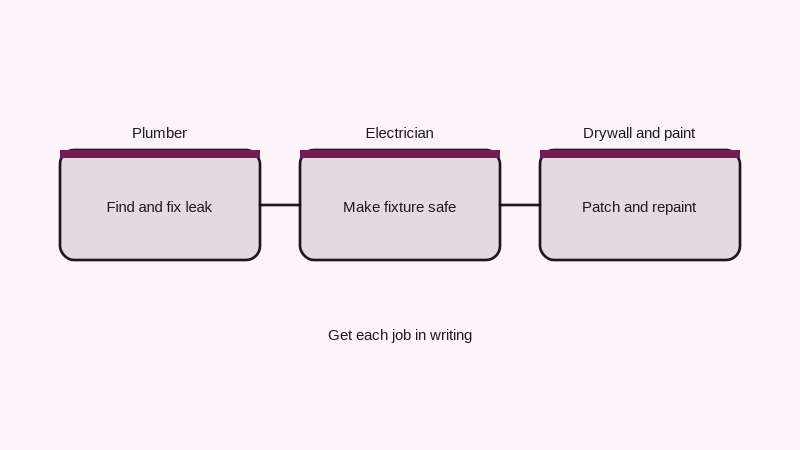
Expect two trades: a plumber to find and fix the source, and an electrician to check the fixture and wiring once dry. Drywall and paint repair follows. A nearby plumbing business takes the job and visits, and a written quote reaches you before work starts. Enter the details in the quote form.
Tell the plumber what you see: the location of the light, what lies above it, the timing of the drips, whether they stopped after you closed a fixture or the main, and what damage exists. Add photos taken from a safe spot. Mention that a light fixture is affected, so the plumber treats the wiring as a hazard.
Electrical repair is a regulated trade of its own. A plumber will not rewire a fixture. If the fixture got wet, leave it unused until an electrician has inspected it.
What is the safe order of steps when this happens?
Follow this sequence: stay clear of the fixture, cut the room's breaker if it is safe, stop the water if you can find the source, move belongings and set out a bucket, take photos, then arrange a repair. Never flick the light switch to test it, and leave the fixture unused until an electrician has examined it.
If the ceiling bulges, clear everyone from the room. A ceiling loaded with water is heavy and can fall, and wiring runs through it. Never puncture it near a light fixture; wait for a professional to release it safely.
Shut the water to the suspected source: the shower, the washing machine or the main valve. If the drip slows, you have found the area. If not, inspect the roof and attic. The article on how to know if a pipe burst helps with the check, and the page on a burst water pipe covers the main shutoff.
What about the ceiling damage and mold?
Wet drywall and insulation can sag and grow mold within a couple of days. Dry the area fast using fans plus open windows, and strip out soaked insulation and drywall once power is off and the leak is stopped. Photograph everything first for insurance. If mold is already visible or the area is large, seek a specialist's advice.
Review your insurance policy. Sudden leaks are often covered while long-term ones are not, and details vary, so contact your insurer before tearing anything out. Repair and drying are covered in ceiling water leaks.
Tenants must notify the landlord in writing at once and keep a copy. In California, the owner arranges fixes to the building's plumbing and roof. Areas with many renters, such as Panorama City, Reseda and Canoga Park, see this often, and a written report protects you.
Common questions
What is the usual repair time for a ceiling leak?
Stopping the water can take an hour or two once the source is found. A hidden source can take longer, with drying and patching to follow. The plumber should give a time window when the visit is booked and say whether the job needs a second trade.
What should I ask a plumber about a ceiling leak?
Request a written quote covering the leak search, the repair, access cuts and patching, who handles drywall and paint, and the warranty on the work. Ask whether the plumber has a California contractor license that you can check on the state board's site, and who deals with the electrical fixture.
Do I need to be home when the plumber inspects the ceiling?
An adult should be there to show the affected room, the water main and the electrical panel, and to approve any change to the quote. Warn the plumber about the light fixture hazard before arrival so the right tools come along.
Can I switch the light on once the drip stops?
No. A fixture that has been wet can have damaged wiring or a wet junction box, and it can short even after looking dry. Keep the breaker off until an electrician has inspected it. Use a lamp from another room meanwhile.
Could this be condensation and not a leak?
Sometimes, in a humid bathroom or an attic with poor ventilation, but assume a leak until it is ruled out. Test by running fixtures one at a time and by checking the roof after rain. A plumber can help sort it out.