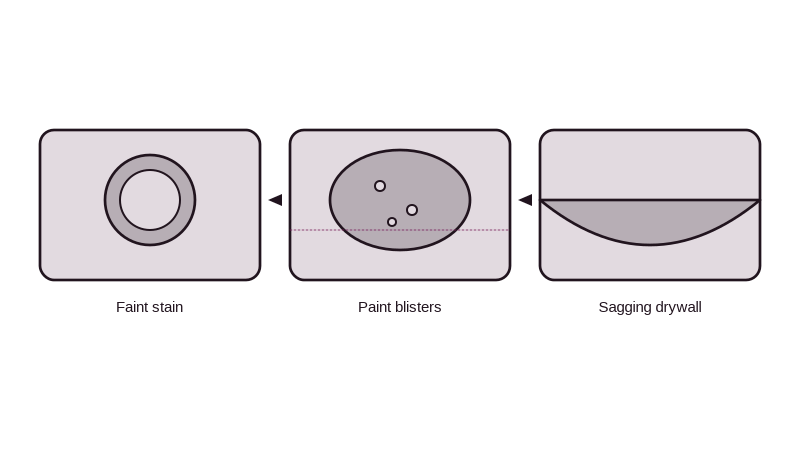
Look for a brown or yellow patch, blistering or flaking paint, a sagging area, falling drops, a musty odor, and sometimes a dripping sound overhead. A stain that grows after rain suggests the roof, while one beneath a bathroom or along a pipe run suggests plumbing. If the ceiling bulges or water appears near a light fixture, keep away and shut off the supply at the main. To get a plumber arranged, send the quote form or start from the Mission Point Plumbing home page.
Which warnings appear first, and which come last?
Early signs are subtle: a damp-looking pale spot, a slightly darker shade, a hairline paint crack or an odor you cannot place. Late signs are blatant: dark rings, peeling paint, a droop, active drips or a soft-feeling ceiling. The sooner you spot the problem, the cheaper the repair.
A rough progression:
- Discoloration. A tan or yellow patch, frequently ringed in darker color at the border as the stain grows outward.
- Texture change. Paint blisters or flakes, and drywall tape lifts.
- Sag. Water collects in the drywall and its weight forms a bulge.
- Drips. Water breaks through at the lowest point, often at a light fixture, vent or seam.
- Mold. A dark, fuzzy or spotted growth, or a musty smell, develops as time and moisture pile up.
Check from above as well. In the attic or crawlspace, look for soaked insulation, darkened wood and stained joists. A flashlight is useful, and a borrowed moisture meter even more so. Stains can outlast the leak, so mark the stain's outline in pencil and look again tomorrow to see if it has moved.
What is the source of water on a ceiling?
Water comes either from above, via the roof, a bathroom upstairs or a pipe, or as condensation from an air conditioner or cold duct. Plumbing leaks begin at supply lines, drains, shower pans, toilet seals and the water heater. Roof leaks follow rain, and condensation follows heat and humidity.
The usual suspects:
- Supply pipe. A pinhole or failed joint in a line above the ceiling. The stain grows steadily, rain or not. The pinhole leak in copper pipe page explains the cause.
- Drain pipe. A cracked or loose drain leaks only when the fixture above it runs.
- Shower or tub. A broken seal, bad grout or a pan leak drips into the room below. See the plumber for a shower leak.
- Toilet. A loose or failed wax ring upstairs leaks with every flush. See the plumber for a toilet leak.
- Heater on an upper floor or in the attic. A tank that leaks, or a relief valve that discharges.
- Roof. Worn flashing or tiles let rain in, so the stain appears or grows after storms.
- AC condensate line. A clogged drain pan overflows into the ceiling.
If a stain keeps growing while no water is used and no rain has fallen, suspect a pressurized pipe. If it grows only after rain, you need a roofer, not a plumber. If you cannot tell where it starts, a plumber's moisture meter and camera narrow it down. For next steps, see ceiling water leak.
What does a burst pipe sound like?
A burst pipe frequently produces a running or hissing sound inside a wall or ceiling while every fixture is off, sometimes with banging, followed by a gush if it fails entirely. A slow leak may only drip or tick. Shifting water pressure, a spinning meter and an expanding damp patch are further clues.
Sounds worth noting:
- Hissing. A pressurized leak, often a pinhole, spraying inside a wall.
- Running water. With every tap shut, steady flow means water is escaping.
- Dripping. Drops landing on insulation, a pan or the floor above.
- Hammering. A pipe that bangs when a valve closes. That is no leak, but it can loosen joints. See water hammer sound.
If you can hear running water and also see it coming through the ceiling, shut the main right away. The guide on how to know if a pipe has burst lists more signs, and the causes of pipe bursts explains the reasons.
How do I spot a burst pipe in the yard?
In the yard, watch for soil or lawn that stays soggy during dry spells, water bubbling up from the ground, a sinkhole or spongy earth, a sudden pressure drop, and a meter that keeps moving after every tap is off. Unusually lush green patches in dry weather can mean a buried line is leaking.
Things to check:
- Wet or muddy soil anywhere between the meter and the house.
- Water pooling along the foundation.
- The sound of running water near the meter box.
- A water meter that runs when nothing is on.
- Wet soil around the base of an outdoor faucet. See repairing a dripping outdoor faucet.
The water utility owns the meter box, so check with them before you turn anything inside it. In the City of Los Angeles areas of the Valley, LADWP is the utility according to its water quality report, and your bill shows your own supplier. A leak on the utility side is usually handled differently from one on the house side, so confirm who is responsible before you pay for a repair.
Why is my water bill high with no leak in sight?
Most often a hidden leak: a running toilet, a leak inside a wall or ceiling or beneath the slab, or a faulty irrigation line. Read the meter while all water is shut off, and check toilets with a dye tablet or food coloring. When a bill climbs with no visible cause, the meter check comes first.
The EPA suggests a toilet dye test: add a few drops of food coloring to the tank, and if color shows in the bowl within 10 minutes, the toilet leaks. It also says leaks in the average home waste over 9,300 gallons a year. A ceiling leak can add to that, but only while it is active. For the full checklist, see why the bill climbs and a big bill and no visible drip.
What do I do first when the ceiling begins to leak?
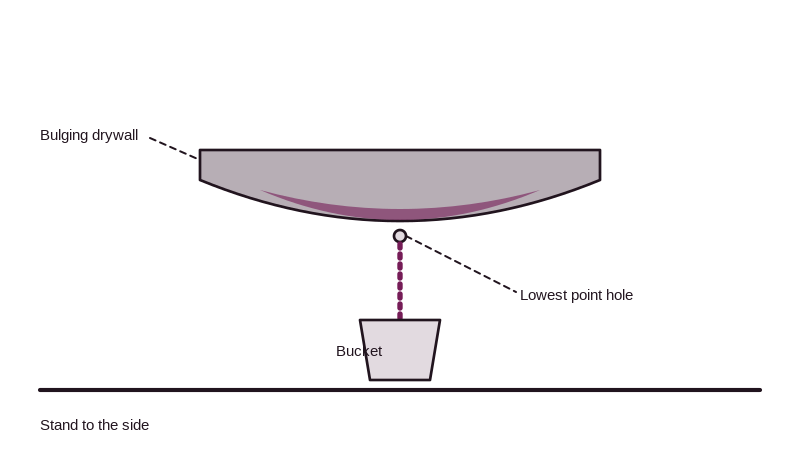
Close the main water valve, stay out from beneath the spot, cut power to nearby lights and outlets only when the panel can be reached safely, and move belongings aside. Set a bucket under every drip. If the ceiling droops, make one small puncture at its lowest point and let the water drain into a bucket.
In order:
- Shut the main valve. If the leak stops, plumbing is the cause.
- Respect the electricity. Leave wet fixtures alone. Water inside a light fixture is hazardous, so switch off that circuit's breaker if the panel is dry and you can get to it.
- Contain the water. Buckets under drips, towels on the floor, furniture shifted out of the way.
- Relieve a bulge. Puncturing the lowest point of a sagging ceiling releases the water in a controlled way before the drywall falls. Stand off to one side while you do it.
- Take photos. Insurers prefer dated pictures.
- Run a tap on the ground floor. This empties the line.
The page about a leak near a ceiling light treats that hazard, and ceiling spots with no active leak accounts for old stains. Hold off on painting over any stain until the source is known.
At what point does a ceiling leak need a plumber?
Hire a plumber if the leak keeps growing after the main is off, originates in a pipe, shower or toilet above, sits close to a light fixture, or has no findable source. The plumber finds the leak and quotes the repair, and a different trade restores the drywall and paint.
Many north Valley houses from the 1950s to the 1970s have aging supply pipes and drains in attics and walls. Two-story homes stack bathrooms over living areas, which is where ceiling leaks usually show. Ask the plumber to find the cause rather than merely stop the drip, and get a written quote. This site has no round-the-clock line; requests are read on weekdays from 9am to 5pm. If water is pouring in, use the emergency plumber page.
Common questions
Is every ceiling stain a sign of a leak?
No. A stain can be the leftover of an old leak that ended, of condensation, or of a roof problem since fixed. Outline its edge in pencil, watch it over several days, and press the spot to feel for dampness or softness. A stain that spreads or feels wet is an active leak.
Could a leaking ceiling fall down?
Yes. Water soaks into drywall and insulation until the weight pulls the ceiling down, and a visible bulge is the warning. Stay out from under it, let the water out through a small opening at the lowest point if it is safe, and turn off the water supply.
Is the leak from the roof or from a pipe?
Roof leaks tend to follow rain and show near the roofline or an exterior wall. Pipe leaks grow in any weather and sit under bathrooms, kitchens or pipe runs. Close the main: if the stain stops spreading, plumbing is the cause. A plumber or roofer can confirm.
Is it safe to remain at home during a ceiling leak?
Usually yes, provided the water is shut off, you avoid the wet zone and stay away from soaked electrical fixtures. Leave if the ceiling sags badly, water reaches the panel or outlets, or you smell gas. A gas smell means going outdoors and reaching the utility's emergency number or 911.
Does insurance pay for ceiling water damage?
It depends on the policy and the cause. Many policies pay for sudden, accidental leaks but not for slow seepage or wear. Take photos of the damage, stop the water, and check with your insurer before major repairs begin. This site cannot advise on claims. See insurance and burst pipes.