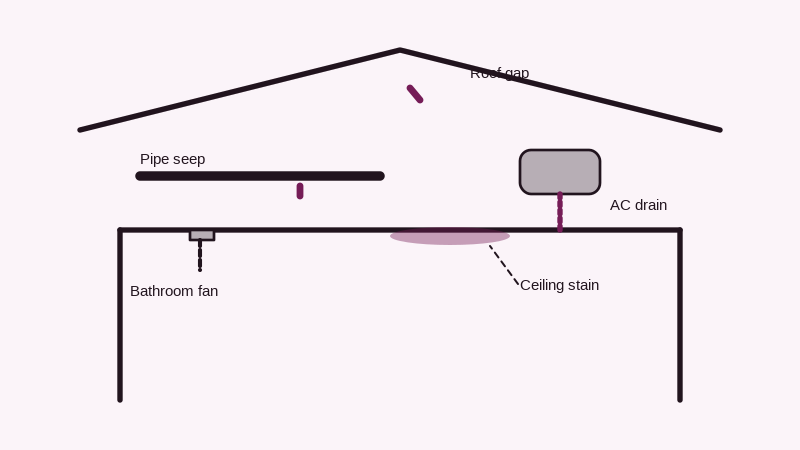
When the ceiling shows water marks yet nothing is dripping now, the cause is usually one of four: an old stain from a leak that was already fixed, an intermittent leak that appears only in rain or when a certain fixture runs, condensation from cold ducts or poor ventilation, or a slow plumbing leak that merely dampens the ceiling. Work out the pattern before anyone cuts the drywall. Other services are listed at Mission Point Plumbing.
Is the stain old, or is it still growing?
Press the stained patch and look at its edges. A dry, hard stain with a crisp ring that holds steady is often old. A damp, soft one that spreads or darkens is active. Outline it in pencil along with the date, then recheck after rain and again days later. Growth tells you more than color.
How to check:
- Draw the outline in pencil and note the date beside it.
- Take a photo with a ruler alongside for scale.
- Look again after the next rain, the next upstairs shower and a few dry days.
- Hold a dry paper towel to the stain. Dampness means moisture is still arriving.
Brown rings come from water that dried and left minerals and dirt behind. Several rings, like those in a tree, show the water has come and gone many times, which fits a leak that appears only under certain conditions.
Many north Valley homes, built from the 1950s to the 1970s, have had a new roof, a remodel or a pipe repair at some point. A stain from a repaired leak often stays visible until painted. Painting without sealing the stain first lets it bleed through, so a stain that returns after paint may be just a stain and not a new leak.
Spongy or sagging drywall, peeling paint, a musty smell or black spots mean moisture has been present for some time. Take these seriously, since wet drywall can give way and mold may follow. Keep your face out from under a sagging patch when you check it.
How can I tell whether a pipe, the roof or the AC is to blame?
Compare the timing. If the stain grows after rain, suspect the roof. If it grows in hot weather beside the air handler, think condensation or the AC drain line. If it widens after a shower, flush, washer cycle or dishwasher run, or keeps growing through dry spells, suspect plumbing.
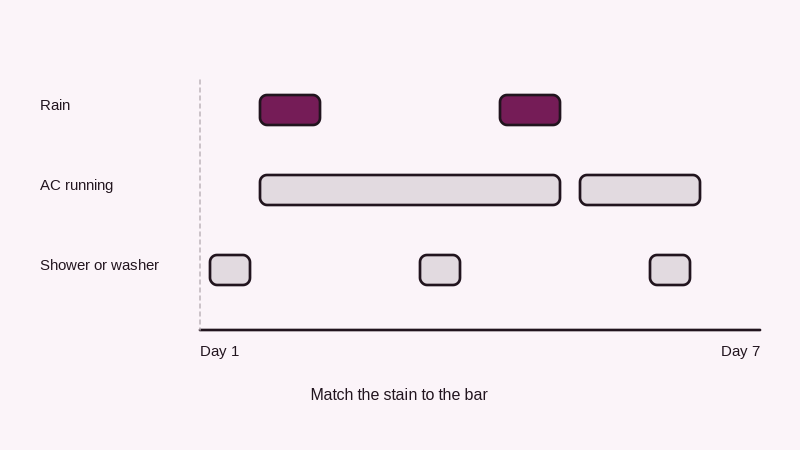
Keep a simple log. Over one week, record when the spot changes, along with the weather and when water gets used in the room above. Patterns show up fast.
The meter test also helps. Turn off all water, note the meter reading, then read it again fifteen to thirty minutes on. A dial that has advanced means water is escaping somewhere, and a slowly growing ceiling stain may be one symptom. The full meter test is in telling whether a pipe burst underground. According to the EPA, household leaks add up to more than 9,300 gallons wasted per year on average, and many are small and hidden.
Look out for other clues:
- a water bill that climbs though your habits have not changed; see a high bill with no visible leak
- a damp or flickering ceiling light fixture; see water leaking through a ceiling light, and switch off the circuit if water is near wiring
- a stain on an exterior wall under a second-floor bathroom
- a hissing noise in the wall or ceiling
Mixing water with electricity is hazardous. If water drips from a light fixture or near an outlet, cut power to that circuit at the panel when that can be done safely, and stay away from the area.
What other than plumbing can stain a ceiling?
Aside from pipes, stains come from roof leaks that run only in rain, condensation on cold air ducts in the attic, a bathroom fan venting into the attic, a clogged air conditioner drain line and wet or compressed attic insulation. Each can mark the ceiling without a pipe ever breaking.
Roof. A small gap around a vent, skylight or flashing lets water in during rain and not otherwise. The stain can appear several feet away from the actual opening, because water travels along rafters. A stain that shows within a day of rain suggests the roof.
Condensation. Cold supply or duct surfaces in a warm attic sweat. A loose or missing duct insulation sleeve can drip onto the ceiling in summer.
Bathroom fan. A fan that vents into the attic instead of outdoors fills the space with warm, moist air that condenses on cold surfaces.
Air conditioning. An attic unit's condensate drain can clog, let the pan overflow and drench the ceiling below. It tends to occur in warm months, when the system labors hardest, and the stain sits near the unit.
Plumbing in the attic or between floors. A pinhole in a supply line, a loose fitting or a drain joint can seep slowly, only while water is running. That calls for a plumber.
Stains that match neither rain nor cooling deserve a plumber's inspection. The page on spotting a ceiling water leak lists the signs, and ceiling water leaks covers the active case.
At what stage does a plumber need to be involved?
Involve one if the stain grows without rain, follows water use upstairs, the meter keeps moving while all taps are shut, drywall is soft or sagging, or you see mold. If you are unsure, a plumber can check using a moisture meter and a thermal camera before the ceiling is cut.
In the request, describe the pattern: where the stain sits, what is above it (bathroom, attic, air handler), and how and when it changes. Include photos with a ruler or coin for scale, plus the meter test result if you ran one.
Ask the plumber which tools will locate the source. Moisture meters, thermal cameras and pressure tests are common ways to check without opening the ceiling. The page on what drives leak detection cost explains in words how they are priced.
If a pipe is the culprit, leaking water pipe repair covers what to expect. When the roof or the AC is at fault, you need a roofer or an HVAC contractor instead, and an honest plumber will tell you.
Once a job passes a small cost threshold, or needs a permit, California demands a contractor license; verify it with the board. Deposits are generally limited to ten percent of the contract total or a fixed ceiling, whichever is lower. Photograph the damage for insurance before any repair, and keep the invoices.
Send the quote form; requests are read on working days between 9am and 5pm.
Common questions
Why does a ceiling stain feel dry?
A dry stain generally means the water came and went: an old repaired leak, a roof leak that appears only in rain, or condensation. A dry stain that gets larger is active. Mark its edge with the date, then watch it through rain and after water use above. The pattern reveals the cause.
Is it possible to get a ceiling stain without any leak?
Yes. Condensation on cold ducts, a bathroom fan venting into the attic, a blocked AC drain line and wet insulation can all stain a ceiling while no pipe leaks. Such causes usually follow humidity and temperature. If the pattern tracks water use or ignores the weather, bring in a plumber.
Are brown ceiling stains dangerous?
The stain alone is not, but its cause may be. Wet drywall can sag, wet insulation loses its value, and lasting moisture can lead to mold. Water near light fixtures or wiring is an electrical hazard. If the ceiling sags or smells musty, stay clear and have the source found.
Is it fine to paint over a water stain?
Hold off until the cause is known. Painting over an active leak hides it without stopping it. After the source is repaired and the area has dried, apply a stain-blocking primer to the mark, then paint. Ordinary paint alone often lets the stain bleed back through.
What damage can a slow leak cause over time?
Months can pass before a slow leak shows. It stains the ceiling, rots wood, soaks insulation, invites mold and wastes water. Because damage builds quietly, a growing stain or a rising bill merits a test even when nothing drips, so it is worth booking a plumber to check.