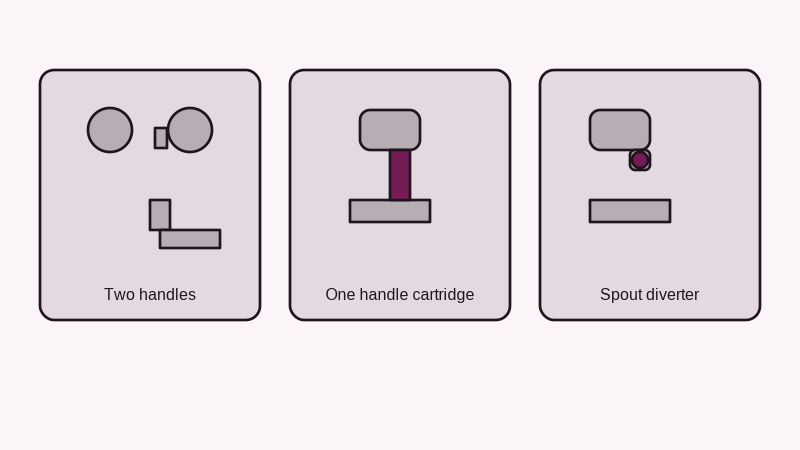
To stop a tub drip, turn the water off and count the handles: one or two. Then replace what wears out: a rubber washer and seat in a two-handle model, a cartridge in a one-handle model, or the diverter if the spout keeps running while the shower is on. It belongs with the fixture repairs in the kitchen and bath fixture repair guide.
Why is my bathtub faucet dripping?
A drip signals a worn seal in the faucet: the rubber washer and seat in two-handle models, a worn O-ring or cartridge on single-handle faucets, or a diverter that no longer closes. Mineral deposits score the seat and speed wear. The EPA estimates that one drip every second wastes more than 3,000 gallons annually.
Match the symptom to the faucet type:
- Constant spout drip, two handles: a worn washer or seat under one handle. The leaking side, hot or cold, tends to feel a little looser.
- Constant spout drip, one handle: a worn cartridge or O-rings.
- Showerhead dripping after shutoff, combined tub and shower: the diverter or the cartridge.
- Seepage around or below the handle: worn packing, an O-ring or a loose stem.
- Spout keeps flowing during a shower: the diverter is not sealing.
Faucet style follows the age of the house. Many north Valley bathrooms from the 1950s to the 1970s keep original two-handle compression fixtures, whereas remodeled ones have single-handle cartridge valves. Remember also that a tub often sits far along the hot line, so a first warm trickle may be water already waiting in the pipe. A drip that fades after a minute may be just that.
How is a two-handle tub faucet repaired?
Shut the water, remove the handle and trim plate, unscrew the stem with a wrench, change the washer and its O-ring, and run a fingertip over the seat to feel for roughness. A damaged seat can be ground smooth with a seat tool, or the whole valve swapped. Rebuild the stem, put it back and test as you open the water slowly.
In order:
- Shut off the supply at the fixture stops, or at the house main when there are none.
- Open the tap to release pressure, and stop up the tub drain so no part falls in.
- Pry off the handle cap, remove the screw and lift the handle free.
- Take off the escutcheon (the trim plate) and any sleeve beneath it.
- Unscrew the stem, a threaded brass or plastic part, using a deep socket or wrench.
- Examine the washer at the tip and the seat inside the body. Get exact matches for the washer, its retaining screw and the O-ring.
- Resurface a pitted seat or replace it.
- Reassemble, reopen the water in stages and test.
Take the worn stem to a hardware store to match it; many look alike but are not. The page on repairing a two-handle faucet leak goes through the inner parts in more depth.
Stop if the stem will not turn or is corroded in place; forcing it can crack a pipe inside the wall, a much bigger repair. Then a plumber is needed.
How is a one-handle tub faucet repaired?
Close the water, strip off the handle and trim plate, release the retaining clip or unscrew the nut, pull the cartridge out and fit an exact replacement. Many cartridges must face the way the old one did. Put it all back, then check that the hot side really gives hot water.
Cartridge designs vary by brand, and the brand matters more than anything else here. Delta, Moen and other makers each use their own. Check the handle and trim for a brand name, or the old cartridge for stamped numbers. The page on a one-lever faucet that leaks deals with the sink version, and leaky Delta shower faucets looks at one common brand.
The sequence:
- Shut off the water and cover the drain.
- Remove the handle, then the trim.
- Remove the clip, pin or nut securing the cartridge.
- Grip the cartridge with pliers and pull it straight out, wiggling it gently. Some stubborn ones call for a brand-specific puller.
- Note which way it faced, fit the new one identically and reinstate the clip.
- Refit the handle and test hot and cold.
Hot water coming out where cold belongs means the cartridge went in backward or the valve's limit stop needs adjusting.
Scale often makes cartridges stick. Check LADWP's annual drinking water quality report, or your own district's, for hardness, which varies with the supply. If scale is the cause, see getting rid of limescale.
What if the tub spout keeps flowing in shower mode?
Water that keeps coming from the spout while the shower runs means the diverter is failing to seal. With a lift-knob spout the diverter is part of the spout, so a new spout fixes it. A three-handle or valve-based diverter sits inside the wall, and a plumber should look at it.
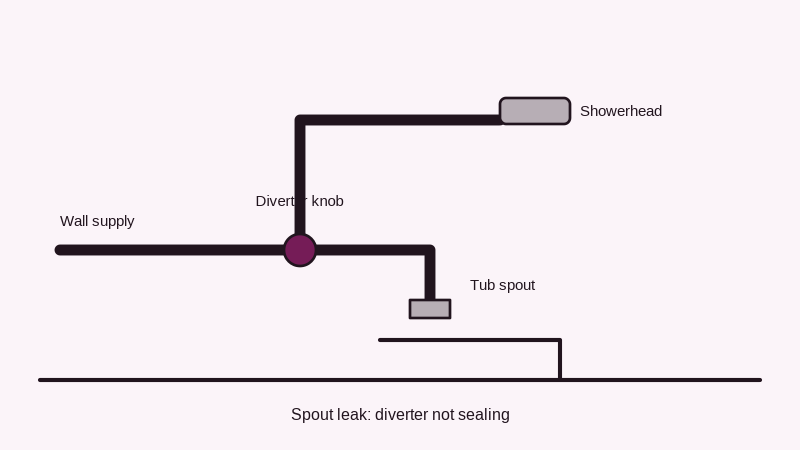
A lift knob on the spout is the easy case. Spouts either screw on or are held by a small screw beneath. Find that screw, loosen it and the spout slides off. New spouts are often inexpensive. The wall pipe must match in length and type, so photograph it and measure.
Soap residue and scale can also jam a diverter. Soak it in vinegar, if the manufacturer permits, and see whether it closes again.
If the showerhead keeps dripping with everything shut, suspect the cartridge or shower valve. Read plumber for shower leak for next steps, and another take on the bathtub side for a second view.
A wall leak is another matter. Signs of one behind the wall include a ceiling stain below, damp drywall near the tub, a musty smell or a bill that keeps going up. In that case turn the water off and submit a request. Keep clear of gas lines and wiring if the wall is opened.
When is it time to hand the job to a plumber?
Hand it over when the stem or cartridge will not budge, a seat is damaged, the valve body is corroded, water escapes within the wall, or you would simply rather not dismantle the fixture. The plumber can replace the valve or the whole faucet and write the quote down before starting.
Gather the details: the brand if known, one handle or two, where the drip appears, how long it has been dripping and what you have tried. Photos of the handle and spout help. Tenants should tell the owner first.
Swapping the full faucet or valve is more work than changing a washer. See what happens when a plumber fits a faucet and faucet replacement cost factors for what moves a quote.
Past a small dollar threshold, California requires a contractor license. Look up the contractor's license number with the state board online, and require written pricing before any work begins. Someone reads quote form submissions on working days between 9am and 5pm. For other services, return to Mission Point Plumbing.
Common questions
Is a leaky tub faucet something I can repair?
Often. Changing washers, O-rings and cartridges is a common DIY repair, as long as the water can be shut off and the parts come out freely. Stop if parts are seized, the wall pipe shifts or you notice damage within the wall. Those jobs are for a professional.
How much water does a dripping tub faucet waste?
According to the EPA, a drip every second totals more than 3,000 gallons a year, and a tub faucet that runs steadily wastes more. Across a typical home, leaks add up to over 9,300 gallons annually, which is reason enough to fix even a small drip soon.
Why is the tub faucet still dripping after a new washer?
A damaged seat can keep the fresh washer from sealing. The washer or its screw may be ill-fitting, or the stem may be worn, and scale can score the seat. Dress or swap the seat, or replace the whole valve. A corroded stem calls for a professional inspection.
How can I tell which cartridge to buy?
Find the brand on the handle or trim, and any numbers on the old cartridge. Take the worn part to a plumbing supply shop, or email photos to a plumber. Look-alike cartridges can differ in length, splines or flow, and the wrong one will neither seal nor turn properly.
Is a leaking tub faucet an emergency?
Usually not, unless water is getting out inside the wall or flooding the room. Shut the supply and submit a request. A steady drip wastes water and stains the tub, so fix it soon, but a same-day visit is rarely needed.