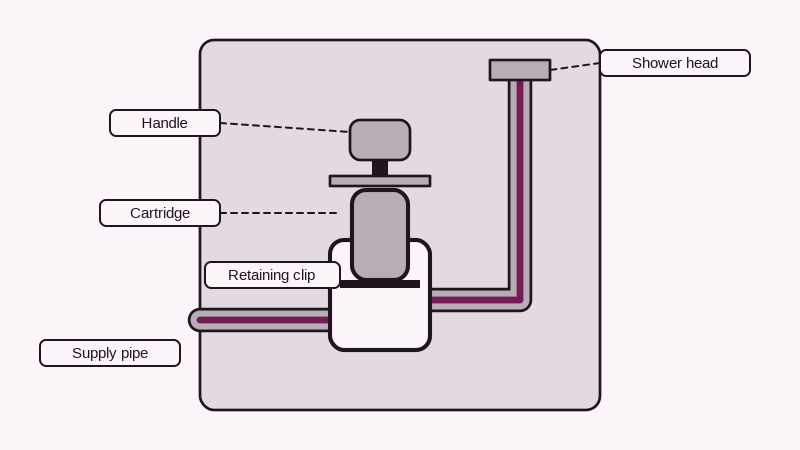
Delta sells shower valves in several designs, so start by learning which one you have. Single-handle models mostly use a cartridge; older or two-handle models rely on stems with rubber seats and springs. Either way the cure is replacing the worn inner part, and the water must be off first. More fixture topics are gathered at the fixtures hub.
How do I identify the Delta valve in my shower?
Study the handles and the trim. One handle that pushes, pulls or turns to set temperature suggests a cartridge valve. Separate hot and cold handles suggest stem valves with rubber seats. A model number or series name is often stamped on the valve body or printed in the manual; Delta's own parts guides sort by series, so find yours.
Pry off the handle cap, find the set screw, and take the handle away. Behind it you will see a round trim plate called an escutcheon. Take that off and the valve is exposed. Cartridge types show a plastic or brass cylinder held by a clip or nut. Stem types show a threaded bonnet nut.
Photograph everything before you pull it apart. Note how the cartridge's tabs and notches are placed, because Delta cartridges can go in more than one orientation, and a wrong turn reverses hot and cold or narrows the temperature range.
Mid-century homes in Sylmar and the north Valley may carry older valves that predate current parts. If your valve is very old, a plumber may suggest swapping the whole valve instead.
What causes the dripping once the valve is closed?
The inner seal is worn. In a cartridge valve, rubber O-rings or ports wear and mineral grit scratches the sealing surfaces. In a stem valve, the rubber seat hardens or the spring weakens. Either way water slips past even when the handle is off, showing up at the showerhead or tub spout as a drip.
Hard water speeds that wear. According to USGS, heated hard water deposits calcium carbonate, which can clog and damage fixtures, and scale on a cartridge acts like sandpaper on its seals. Deposits are why a rebuilt valve sometimes fails again sooner than expected; hard water scale prevention explains what helps.
Other leaks come from other causes. Water around the handle most likely means a worn O-ring or a loose retaining nut. Water on the wall around the trim suggests a failed seal behind the plate. A wet wall or ceiling elsewhere may be a pipe or drain leak; read plumber for shower leak to rule that out.
A trickle from the head after a hot shower can be normal for a minute as the pipe drains. Constant dripping is not.
How do I swap the cartridge or stem parts?
Turn off the water, open a lower faucet to bleed pressure, then remove the handle, trim plate and retaining clip or nut. Draw out the old cartridge, which may call for a cartridge puller or pliers, set the new one in facing the same way, replace the clip and trim, then bring the water back slowly and test.
To shut the water, look for stop valves behind an access panel at the back of the shower; many houses have none and rely on the main shutoff. Spread a towel in the tub to protect the finish from dropped tools, and plug the drain.
Stem valves work differently. Unscrew the bonnet, pull the stem and swap the rubber seat and spring, which usually come as a kit. A seat wrench removes the old seat; if the seat is corroded, the job may need a plumber.
Choose the replacement by model and series. Compare old and new side by side before fitting, checking length and the number of ports or tabs. When in doubt, carry the old part into the store.
Reassemble in order and turn the water on gently. Run hot and cold, look for drips at the head and around the trim, and confirm that hot comes from the hot side. Related topics: leaky shower faucets and single-handle faucets.
What can go wrong during the repair?
The usual problems are a stuck cartridge, a stripped screw, hot and cold reversed, a new part that leaks, or a cracked valve body. Go slowly, use the right puller, and do not force parts. If anything feels cracked or corroded, stop and have a plumber look, because forcing it can break a pipe inside the wall.
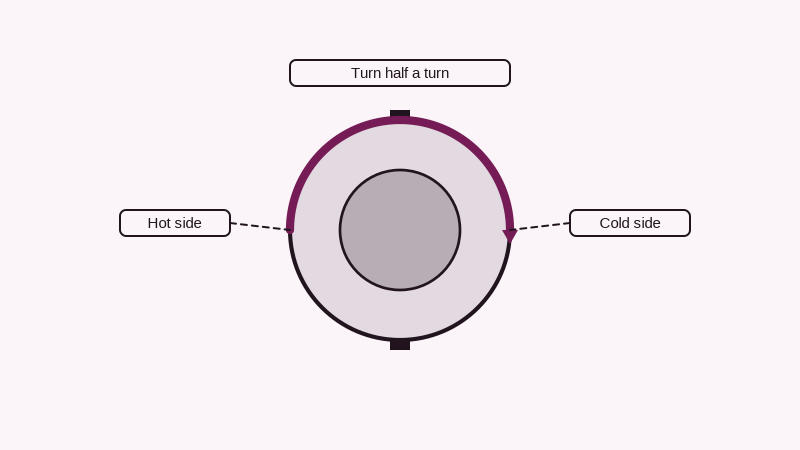
A stuck cartridge can sometimes be freed by working it side to side or by soaking the surround with vinegar for a while. Metal tools can scratch a brass body, so use the proper puller. Someone with suitable bits can drill or cut out a stripped set screw.
Reversed temperatures mean the cartridge is rotated. Take it out, turn it one-half revolution and reinstall. A new cartridge that still drips may be seated wrongly or have a damaged O-ring.
A corroded valve body, or one that is loose in the wall, can only be replaced by opening up the wall behind the shower. That is plumbing and tile work; plumbing for a bathroom remodel shows how those stages are sequenced.
When is a plumber the better choice?
Give it to a plumber if the water cannot be stopped at the shower, the cartridge or stem will not budge, the valve body is damaged, the wall is wet, or the repair has failed twice. Add details and photos to the request a quote form so a local plumbing business can respond, and read how a job runs.
California requires a contractor license for jobs above a small size and for any needing a permit, so check the number if the job grows. How requests are handled is explained on the Mission Point Plumbing front page. Name the Delta series if you know it, and say whether the leak is at the head, the spout or the trim.
Common questions
How much time does a leaky Delta shower repair take?
Roughly an hour for a cartridge swap once you have the part, plus a trip to buy it. Stem and seat repairs run a little longer. A stuck cartridge or an old valve takes more, and replacing a valve body behind tile takes much longer and is plumbing and tile work.
Do I need to buy a specific cartridge for my Delta?
Yes. Delta cartridges are specific to each series, so identify your valve and match the part. Compare old and new before installing. The wrong cartridge can look right yet leak or give odd temperatures, so check length, tabs and ports.
Does a leaking shower faucet push up my water bill?
Yes. A drip runs around the clock, and hidden leaks can go unseen for weeks. The EPA says leaks in an average household waste more than 9,300 gallons of water a year. Repair drips early, and watch the meter if a bill jumps for no clear reason.
Should I replace the whole valve instead?
Replacing the body can be wiser when the valve is very old, corroded or already repaired several times, though it means opening the wall. Where a cartridge or seat kit exists and the body is sound, repairing is simpler. A plumber can inspect it and advise.