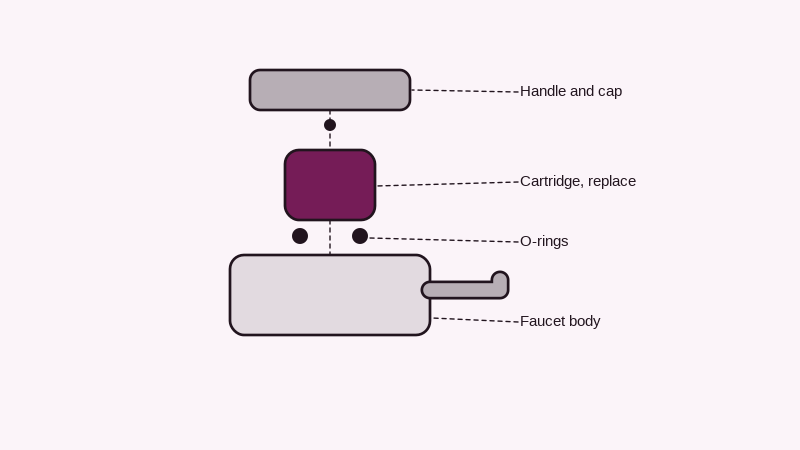
Behind nearly every bathroom drip sits a single worn component: a rubber washer, an O-ring, a valve seat or a cartridge. Close the supply, take the faucet apart, and install an identical replacement for the piece that failed. If the shutoff valve will not seal, or the faucet body is eaten by corrosion, stop and bring in a plumber. Wider fixture topics are collected in fixture plumbing in Sylmar.
What makes a bathroom faucet leak?
Wear is the usual cause. Washers harden, O-rings go flat, ceramic discs crack, and scale roughens the seat until water slips through. Where the wetness appears tells you which part to blame. A flow from the spout points at the cartridge, washer or seat. Moisture around the base or beneath the handle suggests a tired seal ring or a slack packing nut.
EPA figures show US households losing more than 9,300 gallons annually through leaks, with steady faucet drips a contributor. Hard water accelerates wear, so check the yearly LADWP water quality report for your supply. White crust on the fixture is covered in the page about preventing hard water scale.
Which type of faucet is on my sink?
Look at the handles first. Two handles generally mean compression or cartridge valves. One lever suggests a cartridge, a ball or a ceramic disc. A widespread set with three pieces has independent valves. Pull the handle and you can see the part within; the brand stamped on the fixture lets you order the right replacement.
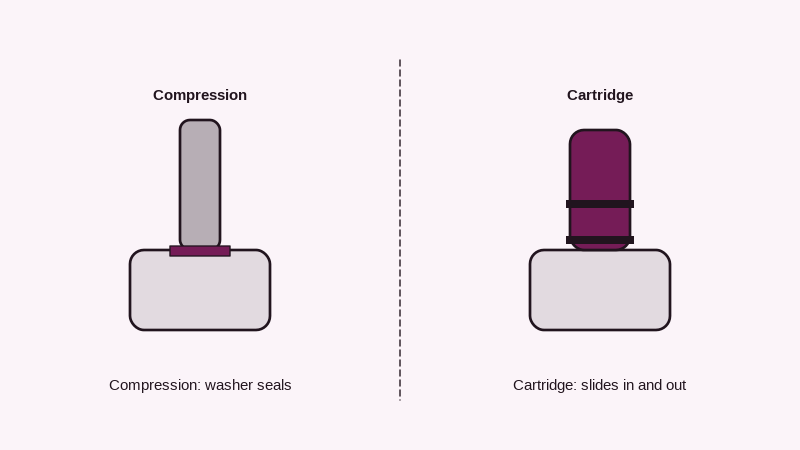
Compression faucets are the oldest design: a rubber washer is pushed onto a seat to stop the flow. Cartridge designs slide a stem back and forth. Ball designs, mostly kitchen ones, turn a slotted ball. Ceramic disc designs use two polished discs. Dimensions vary between makers and an almost-right part tends to drip again, so carry the worn one into the shop or snap a photo that shows the brand. For that style in detail, see fixing a two-handle leaky faucet.
How do I stop the water first?
Under the basin you will find two little valves, hot and cold. Twist each valve fully to the right until it stops. After that, run the tap to drain the lines and confirm that no water comes out. Plug the drain with a rag or the stopper so that no tiny screw disappears into it.
Never force a valve that is stuck or that keeps weeping when closed. Old ones snap, and then the whole house supply has to be closed at the main, which you should locate beforehand. If neither works, bring in a plumber, because a failed valve can flood the room. While down there, check the supply hoses for moisture, since a wet cabinet floor may hide the true leak. Read chasing a drip below the basin for that case.
What are the steps to swap the damaged part?
Lever off the decorative cap, remove the screw beneath it, and lift away the handle. Next free the retaining nut or clip. Withdraw the cartridge or stem, noting which way it faces, and push in the matching new one. For compression types, replace the washer and the O-ring together. Smear plumber's grease thinly on the O-rings, reassemble backwards through your steps, and open the supply gently.
Take a photo at every stage so the reverse order is simple, and park small parts in a cup. A pitted seat inside calls for a seat tool or a replacement faucet. Overtightening cracks cartridges and nuts, so stop at snug. Let water run for a minute afterwards and look under the sink and around the base for drops. Dripping that continues means a mismatched part or a damaged body.
When is a new faucet the better choice?
Buy a new one when corrosion has eaten the body, the seat is badly pitted, spares are discontinued, the plating has worn off, or you have fixed it more than once already. The upfront outlay is higher, yet it ends the cycle of repairs, and modern fixtures use less water.
Before swapping, shut the supply and measure the hole spacing on the current faucet. Choose a WaterSense label if conserving water matters. Old or stiff supply lines and valves are worth changing in the same visit because they add little to the labor. Pricing is explained in the charges for fitting a faucet.
Do older homes in the north Valley make this harder?
A lot of houses across Sylmar, Pacoima and Panorama City date from the 1950s to the 1970s. Their bathrooms may keep original valves, brittle supply hoses, or an odd mix of old and new fittings. Shutoffs under older basins can be stiff, frozen in place, or untouched for decades.
Replace any valve that looks green or crusty, or that seeps at the stem. Chrome-plated brass from that era is hard to match, so photograph it and carry the old pieces along. Renters should report a dripping tap to the landlord in writing, as the landlord normally pays for repairs. In Panorama City, renters occupied 64.8 percent of housing at the 2010 census.
At what point should I hire a plumber?
Hand it over when shutoff valves refuse to close, water appears inside the cabinet or wall, the faucet body is cracked, no matching part can be found, or the drip returns after your fix. The same applies if the drain is slow too, because the cause may sit elsewhere.
A plumber shows up carrying common parts and can swap valves and supply hoses in one trip. Fill in the quote form at Mission Point Plumbing and your details are passed to a nearby plumbing business that sends someone out. The inbox is attended on working days, nine to five. Describe the faucet type, where the water escapes and what you attempted. Insist on a written price ahead of any work.
Common questions
How many gallons does a drip lose?
It depends on the drip rate, but over twelve months the waste adds up. Per the EPA, leaks drain a typical household of over 9,300 gallons every year, and dripping fixtures are among the sources. Repairing a single faucet is a quick way to cut that loss, at modest expense next to the water it conserves.
The faucet drips even with a new cartridge. Why?
Possibly the cartridge is the wrong match, the seat is pitted, an O-ring has shifted out of place, or debris is lodged in the line. Take the faucet apart again, check how every piece sits, and flush the line through. If the drip carries on, the body itself is likely worn out and replacing the whole faucet is the sensible next step.
Can the repair be done with the water left on?
No. Pulling a cartridge under full pressure sends water across the room and may damage the bathroom. Turn both shutoff valves under the sink clockwise, and use the main for the whole house if they will not close. Once the supply is off, the work goes quickly, so treat closing the water as step one every time.
Does a faucet repair need a permit?
Fixing or exchanging a faucet usually needs none, while moving pipes inside a wall does. When unsure, ask a plumber or LADBS, the city's building department, before you begin. California further demands a contractor license for work above a modest value, which matters if you plan to hire someone.
What if the water leaks around the handle?
Wetness at the handle usually means a perished O-ring, a slack packing nut, or a cartridge seal that has tired. Shut off the water, remove the handle, and renew the O-ring or the cartridge. If it still weeps after that, the faucet body itself might be cracked, and a replacement faucet is the likely answer from there.